 Follow Us on Google News
 Follow Us on Google Discover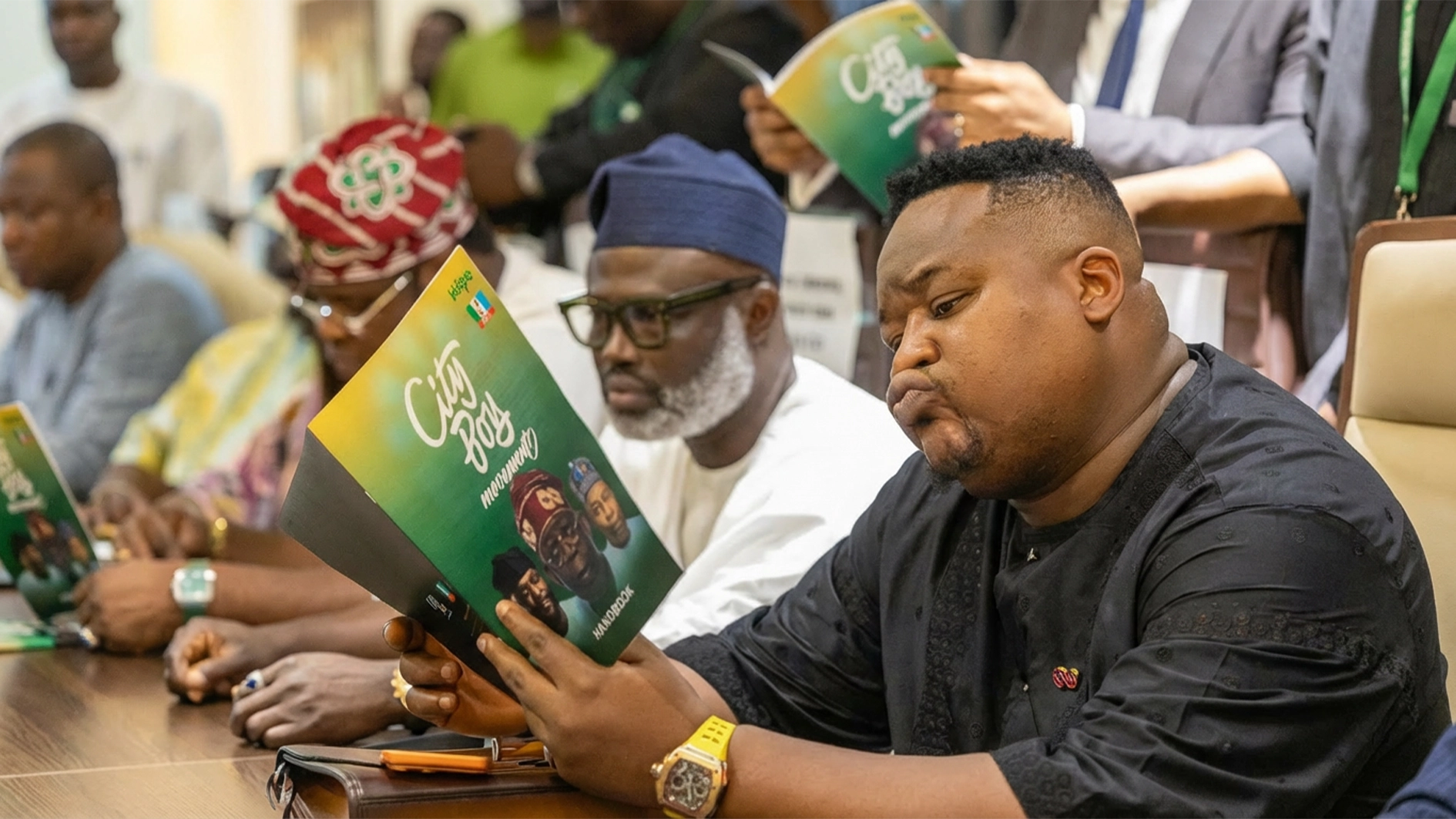
By Arabinrin Aderonke
Sir: If the maiden National Retreat of the City Boy Movement (CBM) in Abuja was designed to ignite a movement, then the days that have followed have shown that the fire is already spreading. The retreat may have ended, but the assignment it produced has only just begun.
Across Nigeria, the transition from strategy to execution is already evident, demonstrating that the City Boy Movement intends to be remembered not for the speeches delivered in Abuja but for the work carried out in communities across the country.
Political movements are often judged by the size of their rallies or the excitement they generate on social media. Yet history consistently tells a different story. Elections are not won on timelines or hashtags. They are won in polling units, communities, markets, campuses, religious centres and homes where citizens make decisions based on trust, relationships and consistent engagement. Social media can amplify a message, but only grassroots organisation converts support into votes.
That reality was the central message that echoed throughout the Abuja retreat. The Minister of Youth Development, Comrade Ayodele Olawande, challenged members to organise and mobilise. The Patron of the movement, Barrister Seyi Tinubu, reminded participants that the retreat was “not a celebration of yesterday, but a preparation for tomorrow.”
Director-General, Francis Oluwatosin Shoga, reinforced the same message when he declared that “10 million votes will not come from slogans or social media. They will come from real people, real structures, real engagement and real work at the grassroots.” Encouragingly, those words have not remained mere rhetoric.

Barely days after the retreat, implementation began in earnest. Lagos State moved swiftly to inaugurate its executive committee, signalling that the movement was determined to translate resolutions into action without delay. Across several states, collaboration among state chapters has intensified, with leaders exchanging ideas, harmonising strategies and building a coordinated national structure capable of sustaining year-round engagement rather than seasonal political activity.
Equally significant has been the increasing involvement of respected political leaders. The active engagement and encouragement of Rt. Hon. James Abiodun Faleke have further strengthened confidence in the movement’s direction. His continued support underscores the importance of disciplined organisation, strategic mobilisation and grassroots leadership in building a political structure that can effectively connect government with the people.
More importantly, the movement is already demonstrating that politics is about service before elections.
Medical outreaches, community development initiatives, youth engagement programmes and other humanitarian interventions are being organised across different parts of the country. These activities are helping to reposition the City Boy Movement as more than a political support group. They are creating opportunities for citizens to experience the values of service, compassion and community participation long before campaign season.
This is exactly how enduring political movements are built. Across the world, successful political organisations maintain a visible presence between elections. They solve problems, build relationships, develop local leadership and earn the confidence of communities through consistent engagement.
They understand that elections are not won in the final months of a campaign but through years of sustained grassroots work.
Another noteworthy development is the growing number of individuals from opposition political platforms who are identifying with the movement. While political realignments are common in every democracy, such developments often reflect confidence in a movement’s organisation, direction and capacity to influence national conversations. The City Boy Movement must, however, see this growing support not as a trophy but as a greater responsibility to remain disciplined, inclusive and focused on service.
Young Nigerians remain central to this mission. They are not merely campaign volunteers; they are innovators, entrepreneurs, students, professionals and future leaders whose energy can shape Nigeria’s democratic future. A movement that genuinely listens to them, equips them with opportunities and gives them meaningful roles will build loyalty that extends far beyond any election cycle.
As Nigeria gradually approaches the 2027 general elections, the assignment before the City Boy Movement is becoming clearer. Every state director, every national director and every member must become an organiser. Every ward must become a centre of engagement. Every local government must become a hub for mobilisation. Every community must become a place where the Renewed Hope Agenda is not only explained but also demonstrated through visible impact.
The Abuja retreat provided the blueprint. What is happening today across the states is the implementation. The inauguration of state executives, expanding collaborations, growing grassroots activities, community service projects and increasing public engagement all point to one reality: the movement has moved beyond planning. The retreat is over. The work has truly begun.
If this momentum is sustained with discipline, humility and service, the City Boy Movement will not merely be preparing for the 2027 elections. It will be building a grassroots movement capable of deepening democratic participation, supporting the implementation of the Renewed Hope Agenda and leaving an enduring imprint on Nigeria’s political landscape.
Arabinrin Aderonke is an award-winning investigative journalist, 2016 Finalist, CNN Africa Journalist Award, author, and policy analyst.

