

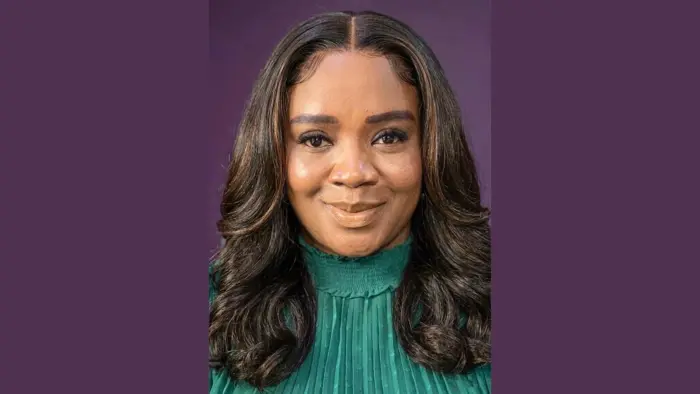
Ololade Hector-Fowobaje is a psychologist, child advocate and executive director, O5 Centre for Children and Women (a non-profit organisation). She also runs an educational outfit, O Five Educational Services in Lagos, Nigeria. She is a member of UNICEF Child Protection Network (CPN) Lagos and Child Sexual Abuse Protection Partners (CSAPP). She shares her passion for advocacy for children and women’s rights. She also emphasised the need to raise boys and girls to value respect, equality, empathy and nonviolence in this interview.
Can you share the inspiration behind O5 Centre for Children and Women?
The inspiration behind O5 Centre for Children & Women came from years of seeing the silent pain experienced by vulnerable children and women. I encountered many cases of abuse, neglect, exploitation, and families that simply did not know where to turn for help. I realised that protecting children goes beyond responding to abuse; it involves prevention, education, advocacy, and strengthening families. We established O5 Centre to become a voice for those whose voices are often ignored. Our vision is to build communities where every child is safe, every woman is respected, and every family understands that protection is everyone’s responsibility. We believe that when children are protected and women are empowered, society becomes stronger. Indeed, we can never have too many NGOs working in this thematic area. Gender-based violence has become an epidemic, and addressing it requires the collective effort of government, civil society, communities, and committed organisations.
What were the challenges you encountered initially while starting out and how were you able to cope?
Like many non-profit organisations, funding was one of our biggest challenges. It was also difficult to convince some people that child protection and safeguarding deserved urgent attention because many forms of abuse were seen as family matters.
Another challenge was changing deeply rooted cultural beliefs and getting institutions to adopt safeguarding policies and practices. We coped through persistence, building strategic partnerships, volunteering our time and expertise, and remaining focused on our mission. Every child we protected and every family we supported reminded us that the work was worthwhile. Over time, our consistency helped build trust and opened more doors for collaboration.

Do you have any support?
Fair support, I’d say. However, there is still a great need for more partnerships, funding, technical support, and volunteers. Child protection is a collective responsibility, and sustainable impact can only be achieved when government, civil society, businesses, faith-based organisations, and communities work together. One of our greatest sources of support has been networking.
Our organisation is a member of the Child Protection Network (CPN) Lagos and CPN Nigeria, and I currently serve as the Vice Coordinator for the Ikeja Local Government Chapter. Being part of this network has significantly strengthened our work by connecting us with hundreds of child-focused NGOs across Nigeria. It has made referrals much easier, particularly for long-distance cases and matters that fall outside our direct scope of intervention.
In your opinion, what are some issues affecting women in our present society and how can these be tackled?
Women today continue to face numerous challenges, including gender-based violence, domestic abuse, economic inequality, limited access to quality education in some communities, harmful cultural practices, discrimination, and poor access to justice. Addressing these issues requires a multi-sectoral approach. We need stronger law enforcement agencies whose personnel receive continuous training, effective implementation of existing laws, economic empowerment opportunities, quality education, public awareness, and safe reporting mechanisms for survivors. Most importantly, we must raise boys and girls to value respect, equality, empathy, and non-violence. Prevention begins at home.
As an advocate for women and children, what are some ways women can empower themselves or those around them?
Empowerment begins with knowledge. Women should know their rights, pursue education, develop diverse skills, and strive for financial independence wherever possible. They should also build healthy support networks, mentor younger women, speak up against abuse, and refuse to remain silent when they witness injustice. Empowered women empower others. Every woman who supports another woman contributes to breaking cycles of abuse, poverty, and discrimination.
Aside from championing the cause of abused women and children, do you have other projects you are working on?
Yes. Beyond responding to abuse cases, we are passionate about preventive education. One of our flagship initiatives is Project N.E.W.S., through which we publish and distribute child protection flyers across Nigeria. The acronym N.E.W.S. represents our vision of reaching the North, East, West, and South of the country with life-saving child protection messages. This project has proven highly effective, with our volunteers distributing educational materials and conducting sensitisation sessions on child protection and body safety in communities across the nation. We also leverage social media extensively to raise awareness and educate the public. One of our other major focus areas is child safeguarding in schools.
We work with educational institutions to develop child protection policies for them, train teaching and non-teaching staff, and create safer learning environments. We are also expanding our advocacy through community sensitisation programmes, parenting education, capacity-building workshops, and public awareness campaigns that promote children’s rights, positive parenting, and safeguarding best practices.
Our key goal is to create systems that prevent abuse before it happens, rather than merely responding after harm has occurred. Under our “Project Educate,” we also support indigent students financially in schools; an inspiration from my late dad; knowing education transforms lives.
With a lot of things going on in our society, what do you think schools and parents should teach young children?
Schools and parents must intentionally teach values alongside academics. Children need to learn empathy, perseverance, respect, honesty, responsibility, resilience, digital safety, emotional intelligence, and critical thinking. They should also be taught body safety, personal boundaries, age-appropriate behaviour, how to recognise unsafe situations, and how to confidently speak up and report concerns to trusted adults.
Our website, which we share widely during students’ fora and awareness programmes, is replete with resources that encourage children to report abuse and find their voice. Experience has shown that many abused children suffer in silence simply because they do not know they can speak up or where to seek help. Equally important is teaching kindness, integrity, and respect for human dignity. The future of any nation depends not only on educated children but on children with strong character and sound values.
