

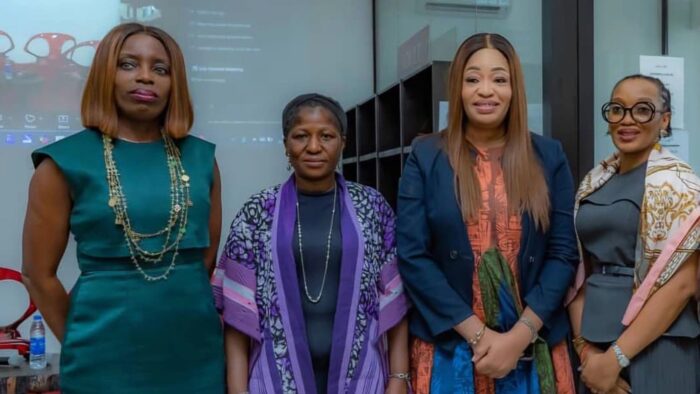
The International Women’s Society Nigeria (IWS) has called for stronger collaboration among government, the private sector, civil society and development organisations to expand economic opportunities for women and ensure grassroots initiatives translate into sustainable impact.
The call was made at the Society’s July General Meeting in Ikoyi, Lagos, themed “Service Beyond Self: From Grassroots to the Global Stage.”

The meeting brought together women leaders and professionals across government, business and international development to examine the role of women in public service, economic development and inclusive growth.
The panel featured Aderele Adesina, former Ogun State Commissioner for Economic Planning and Budget; Bisi Omojare, representing the Lagos State Commissioner for Tourism, Arts and Culture; and Adaorie Osademey Udechukwu, Senior Gender and Economic Inclusion Advisor, International Finance Corporation (IFC Africa). The engagement was led by Ifemena Oji, President of IWS Nigeria.
Central to the conversation was the need to move beyond conversations about women’s empowerment to building systems that give women meaningful access to finance, markets, leadership and economic opportunities.
Udechukwu highlighted persistent barriers confronting women entrepreneurs, particularly their access to finance and other resources required to build and scale sustainable businesses. The panel examined practical approaches to addressing these structural constraints while exploring the role of the private sector in advancing women’s economic participation.
Speakers also challenged businesses to move beyond surface-level diversity commitments and create workplaces and economic systems where women can participate, lead and contribute meaningfully to growth. They stressed the importance of measurable outcomes, noting that investing in women delivers both commercial and broader societal value.
The discussion further looked at opportunities emerging in high-growth sectors, including digital innovation, climate finance, infrastructure and the creative economy. Women were encouraged to strategically position themselves for opportunities within these sectors as Africa’s economies evolve.
Another key theme was the gap between grassroots organisations and major development institutions. The panel explored how community-based organisations can strengthen their structures, document measurable outcomes and build strategic partnerships that enable them to attract funding, expertise and support from development partners.
For IWS Nigeria, strengthening that bridge is central to its evolving approach to service and social impact.
Oji said the Society remains committed to creating platforms that connect women’s experiences and initiatives at community level with institutions, opportunities and conversations at national, continental and global levels.
She also highlighted the Society’s Innovation Hub as part of its broader ambition to build a long-term, flexible platform for deploying “responsibility capital” across different levels of society.
The meeting ultimately reinforced a simple message: grassroots impact cannot operate in isolation. For women-led initiatives to move from community-level interventions to sustainable, large-scale change, they require stronger institutions, strategic partnerships, access to capital and systems that support long-term growth.
With its longstanding commitment to service and community development, IWS Nigeria continues to provide platforms for women to engage on issues affecting society and contribute to development across multiple sectors.
