


The joy of motherhood starts with the ability to be physically available to care for your helpless infant. However, in a society where all hands have to be on deck to earn a living and provide for the family especially in an era where this generation of men now constantly demand that women should equally bring money to the table, nursing mothers no longer have the luxury of staying back home 24/7 to play the role of motherhood on standby.
More so, Nigeria’s maternity leave duration according to data from the International Labour Organisation (ILO) is approximately 12 weeks, which requires new mothers to return to their workplace when their babies are barely three months old.
The question then is what happens to the three-month-old infant whose mother has to return to work if she must keep her job? Who will take care of the baby? Where will the mother take the child? How does she successfully breastfeed exclusively for at least the required six months to aid seamless nurturing and growth? When she leaves for work what happens to the infant? Where does the baby stay while the mother works and who takes care of the child? What happens to the child in a case of emergency when the mother is far away at work?
How Does A Mother Really Breathe When She Leaves A Three Month Old Infant Behind For Work?
The connection between a mother and her baby is a deep physical and emotional bond driven by oxytocin hormones that stimulates shared feelings built from conception to delivery and close contact.
Thus, it becomes very difficult for new mothers to stay away from their infants for as long as 9am-5pm and remain completely mentally and emotionally stable.
This means that she can be at work but her mind is partly at home where the child is, wondering and worrying if the baby is well. Meanwhile, her attention to work becomes divided thereby leading to poor performance and productivity, hence the need for workplace crèche.

Why Workplace Crèche Should Be Considered By Employers Of Labour
For many working mothers, returning to a 9-to-5 job after the three-month duration maternity leave, this often means navigating the demanding responsibilities of their careers alongside the equally demanding responsibilities of motherhood. For nursing mothers, the challenge can be even greater as they try to meet their babies’ nutritional and emotional needs while fulfilling expectations at work.
Although employment provides financial stability and professional growth, the demands of long working hours, commuting, childcare and breastfeeding can leave many mothers struggling to maintain a healthy balance between their careers and family life.
According to a paediatrics and child health expert, Professor Adeboye Muhammed Nurudeen, the needs of a three-month-old baby include affection, breastfeeding, care, warmth, protection, hygiene and immunisation. He said babies at that age are still heavily dependent on their mothers.
Acknowledging the necessity for some working mothers to return to work after the three-month maternity leave, he advised the need for a close-by crèche, preferably workplace crèche.
The professor of paediatrics however noted the importance of standard care for children at the crèche, stating that hygiene should be maintained, the baby should be protected and the child’s feeding should be handled carefully.
Nurudeen also said in a situation where there is no available workplace crèche and the mother had to take the child to a caregiver or a crèche elsewhere, he emphasised the need for natural exclusive breastfeeding but noted that if a mother had to express breast milk, she must pay attention to how the milk is collected, stored and fed to the baby. “Strict hygiene must be maintained during the process,” he said, warning that contamination could expose the baby to infections. “This is particularly important because the first six months are the period in which exclusive breastfeeding is recommended.”
According to the United Nations Children’s Fund (UNICEF), breastfeeding support remains inadequate in Nigeria and identifies insufficient maternity leave policies and lack of workplace support among the challenges that mothers encounter.
The World Health Organisation and UNICEF recommend exclusive breastfeeding for the first six months of life. UNICEF says only 29% of Nigerian infants aged 0–5 months are exclusively breastfed.
In a 2023 statement, UNICEF Nigeria said only 9% of organisations had a workplace breastfeeding policy, with the figure falling to 1.5% in the public sector at the time. The organisation called for paid maternity leave, flexible return-to-work arrangements, lactation breaks and adequate facilities to enable mothers to continue breastfeeding.
At state level, maternity leave policies also vary. UNICEF reported in 2025 that only 12 of Nigeria’s 36 states and the Federal Capital Territory provided paid maternity leave of up to six months.
This means the experience of a working mother can depend on where she works, the policy of her employer and the kind of job she does.
Speaking to The Guardian on her experience, Mrs Ekezie Celina said returning to work meant leaving her baby with a caregiver because her workplace had no crèche. Her maternity leave lasted about three months, and her baby was also about three months old when she resumed work. “It was difficult at first, but I gradually adjusted,” she said.
Ekezie said she maintained regular contact with the caregiver and made efforts to ensure her baby was properly cared for while she was at work. But balancing her responsibilities was tough. “My biggest challenge was balancing my work responsibilities with caring for my baby, especially dealing with tiredness and making sure my baby’s needs were met,” she said.
She also continued breastfeeding after returning to work, breastfeeding before leaving home and immediately after returning. When possible, she expressed and stored breast milk.
Her experience was made easier by the support she received from her employer. She said her office was patient and lenient with her as a new mother. But she believes it could have been better and easier if her employer had provided a workplace crèche and reasonable breaks for breastfeeding mothers”.
For Omoyeh Ebhota, a banker, returning to work came even before her baby was three months old. Her maternity leave lasted 60 working days, and her baby was two months and three weeks old when she resumed.
She said: “Seriously I wasn’t mentally ready when I resumed work, but I just had to. My organisation does not have a crèche, so I had to look for a school with a day-care facility close to her home. It was a difficult time. Most times I felt like crying. I wish I could just resign and take care of my baby but I couldn’t, the family needs the money.”
Ebhota also revealed that she had planned to breastfeed her baby exclusively for six months, but returning to work before the baby reached three months changed the plan. “My baby had to start taking formula.”
She further noted that once she resumed work, she was expected to perform her duties. The support she received came mainly in the form of some flexibility in her working hours. She could sometimes close by 3pm or resume at 9am, depending on the arrangement available to her. Still, the adjustment did not remove the pressure of having a very young baby far away from her during the working day.
Ebhota believes maternity leave should be extended to six months. “It will be a great relief for nursing moms,” she said.
Also speaking, Mrs Ruth Ozor, a cashier who works six days a week, the challenge became particularly difficult when her child fell ill recently. “After informing my supervisor, I was given permission to take the child to the hospital. Then I had to bring my mother to help care for the child while I returned to work.”
Reflecting on the experience, she said balancing her responsibilities as a mother and an employee was difficult, particularly when her child needed attention and she had limited childcare support.
Akinwale Oluwafunke Ebunoluwa, a Personal Assistant to the Chief Security Officer at Lead City University, the challenge is particularly overwhelming because she is breastfeeding.
She said the regular breastfeeding needs of a baby could sometimes conflict with work schedules, meetings and other professional responsibilities, requiring her to carefully plan her day around her child’s needs while maintaining productivity at work. “The biggest challenge I encounter is striking a balance between my job and motherhood. Managing the demanding responsibilities of my career while ensuring that my breastfeeding baby receives adequate nourishment, attention and emotional care,” she said.
Ebunoluwa also described the physical and emotional demands of combining work with breastfeeding as exhausting, particularly when there is limited time for adequate rest. She said: “Sometimes I feel guilty when work takes me away from my child. However, I try not to let the guilt overwhelm me, as my job is also important because it helps me provide for the family and secure a better future for the child too. I focus on making the time I spend with my child meaningful and ensuring that my child receives adequate care when I am at work.”
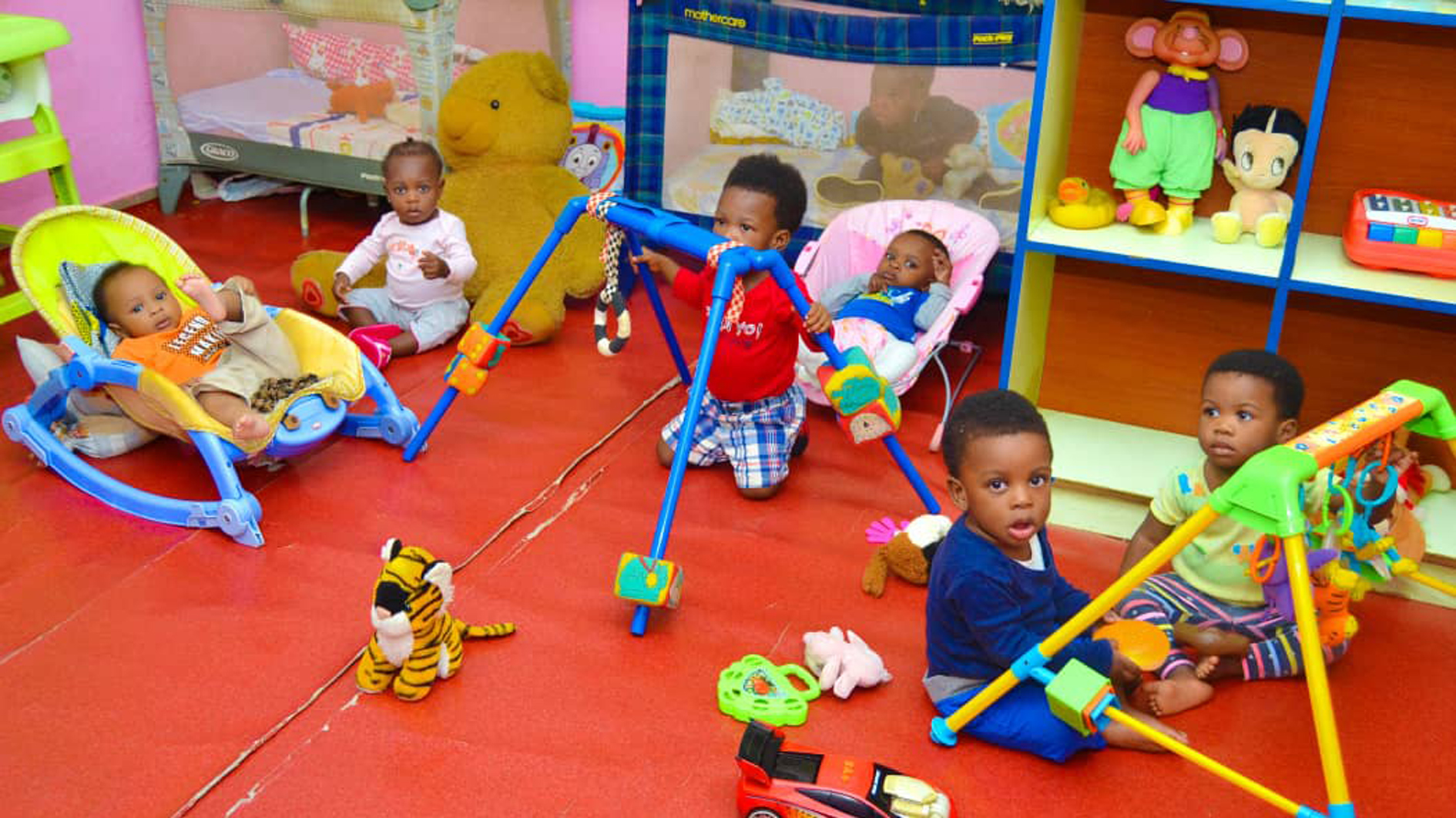 A school receptionist and mother of a four-month-old baby, Mrs Tofunmi Fashola, said the transition from maternity leave back to work was made easier due to her workplace crèche, as it allowed her to concentrate on her duties while checking on her baby from time to time.
She also applauded her understanding boss and supportive husband helping her manage the demands of work and motherhood.
According to her, without the support she received, returning to work could have jeopardised the career she had spent five years building.
Pros And Cons Of Setting Up Workplace Crèche
Human Resources professional and lead of Fasthire, Richard Okiasi, said the lack of accessible and reliable childcare affects working parents, particularly women.
According to him, some women take career breaks for several years to care for their children before returning to the workforce. He said the lack of accessible and reliable childcare negatively affects working parents, particularly mothers and this can result in organisations losing experienced workers, potential talents and brilliant minds that could otherwise contribute significantly to organisational and economic growth.”
Okiasi said workplace crèches could make returning to work easier for nursing mothers because the proximity of their children could provide a sense of security.
Knowing that a child is nearby and accessible, he said, could make it easier for mothers to settle into their roles after maternity leave.
Okiasi however said that establishing a crèche is not straightforward for every employer. “Funding is one of the major challenges. Not every organisation can afford to establish and maintain such facilities. Limited awareness among organisations about the value of workplace childcare is another challenge. For some employers, childcare may be viewed as an additional expense rather than part of workplace support.”
Okiasi argued that organisations should see childcare support as an investment in employees. “A settled mind is a productive mind,” he said, explaining that mothers who are worried about the welfare of their children may struggle to give their full attention to work.”
He also called for flexible working arrangements for nursing mothers where the nature of the job permits them.
Among the options he suggested are hybrid work, adjusted resumption times and earlier closing hours, particularly during the first year after childbirth.
But he maintained that childcare support should be treated as part of an organisation’s investment in its workforce. “By creating an environment where mothers feel secure, supported, and at peace, organisations are indirectly investing in employee retention, engagement, and productivity,” he said.
“When a nursing mother is settled and confident that her child’s needs are being adequately addressed, she is more likely to focus fully on her responsibilities and give her best to the organisation.”
The Making Of Workplace Crèche
The question of workplace childcare therefore extends beyond simply providing a room where babies can stay.
A workplace crèche for very young babies would need to meet basic facilities and standards of infant care including hygiene to avoid infections such as diarrhoea and respiratory tract infections as it is easy for infection to pass on to infants.
The issue of safety therefore becomes central to any workplace that chooses to provide childcare for employees.
For a mother returning from maternity leave, the appeal of a workplace crèche is not only that her child is close. It is also that the mother may be able to check on the child, breastfeed during breaks and respond quickly when the child needs her.
PHOTO SLUG: Workplace Crèche 1-4
PHOTO CREDIT: Pinterest.
