 Follow Us on Google News
 Follow Us on Google Discover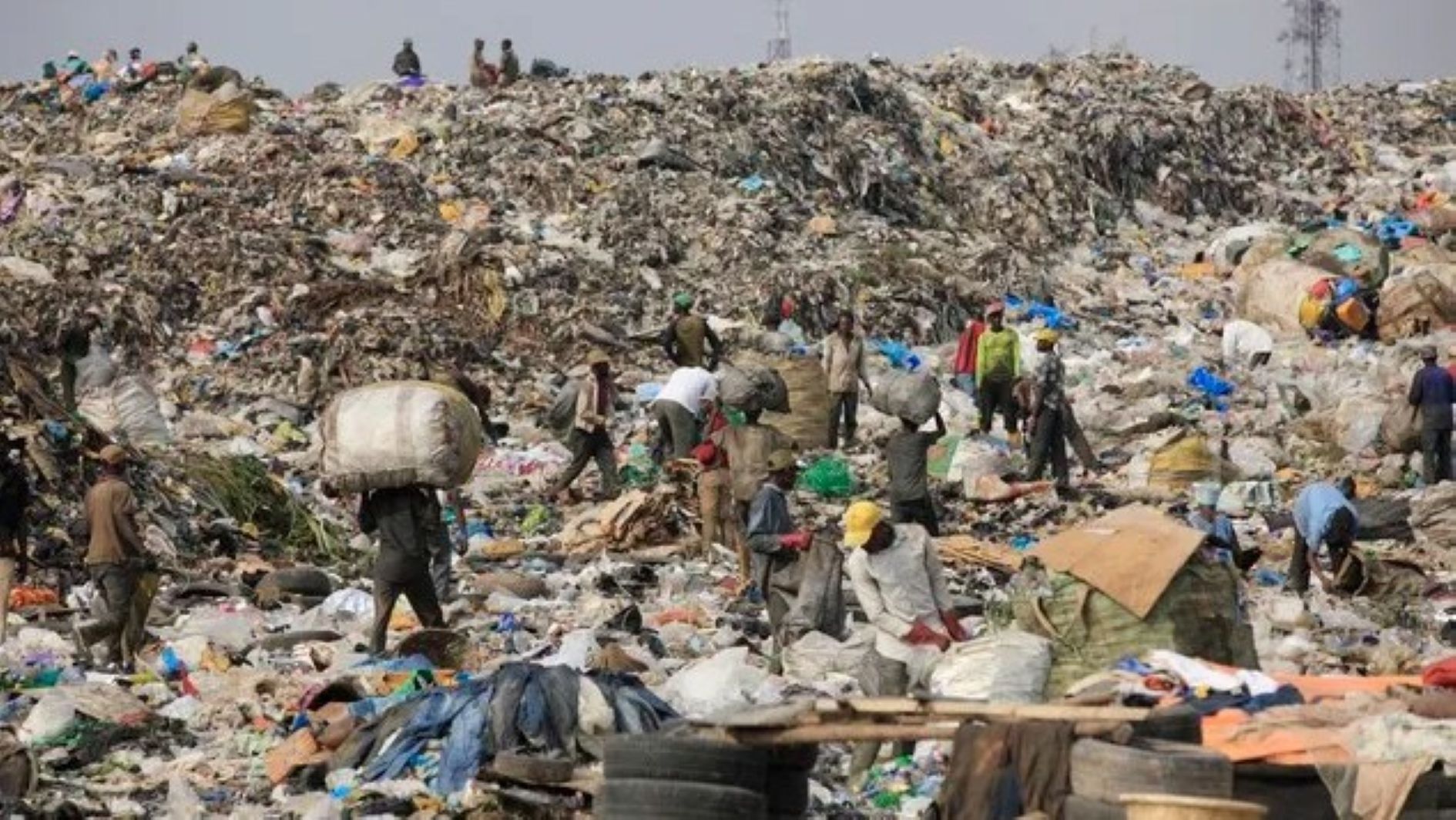
As Lagos battles mounting refuse and irregular waste collection, its renewed push to convert waste into energy is raising fresh questions over the feasibility, sustainability and regulation of the ambitious transition. With the state seeking to phase out ageing dumpsites and replace them with waste-to-energy plants and other waste-valourisation solutions, the latest drive is also reviving concerns over the fate of previous projects that failed to move beyond ambitious plans, WALIAT MUSA writes.
Lagos State’s renewed push to move away from ageing dumpsites and convert municipal waste into energy is facing a crucial test on the streets, where rising refuse generation, irregular collection and the emergence of informal dumping points are exposing weaknesses in the state’s waste management system.
The challenge has become more pronounced as the volume of waste generated in the state has risen sharply. Deputy Governor Obafemi Hamzat said recently that Lagos now generates about 17,000 tonnes of waste daily, up from the 13,000-tonne estimate previously used by the government.
Hamzat, who disclosed this during a radio programme monitored by the media, attributed the increase to population growth, urbanisation and the growing number of people operating within the informal sector.
He said the higher volume had placed additional pressure on the Lagos Waste Management Authority (LAWMA) and other waste management operators, making effective planning and service delivery more difficult.
The new figure has altered the scale of the waste management challenge facing Lagos and raises questions about whether the state’s planned transition to waste-to-energy can move faster than the underlying collection and disposal infrastructure required to sustain it.

In May 2026, LAWMA and its network of licensed Private Sector Participation (PSP) operators evacuated 418,500 tonnes of waste across the state, representing an average of 13,200 tonnes daily, according to the authority’s operational performance report.
LAWMA said 442 PSP operators were active across Lagos, while 27 routes were under review as part of efforts to optimise service coverage and improve collection efficiency.
The authority also deployed 77 compactor trucks, five skip trucks and 12 other operational equipment units during the period.
From a simple calculation, the May evacuation average of 13,200 tonnes was about 3,800 tonnes below the new 17,000-tonne daily generation estimate.
While the figures relate to different periods and should not be treated as a formal measure of an existing backlog, the difference underscores the scale of the collection challenge confronting the state.
The contradiction is becoming increasingly visible in communities across Lagos, where residents continue to complain about irregular evacuation while refuse accumulates along roadsides, markets, residential areas and drainage channels.
The development is particularly significant because the state is simultaneously preparing to reduce its dependence on conventional dumpsites and build a system in which waste becomes a source of energy and other recoverable materials.
In June, Lagos State Commissioner for Environment and Water Resources, Tokunbo Wahab, said a new Transfer Loading Station at the Olusosun dumpsite was expected to be completed before the end of 2026 and would be capable of handling about 2,500 tonnes of waste daily for transfer to a Material Recovery Facility in Ikorodu.
The project, carried out by concessionaire, Zoomlion, is part of the state’s wider landfill management and waste-to-wealth programme.
Wahab said the state could no longer sustain the linear system of collecting waste and dumping it, describing the transition towards recovery, recycling and energy generation as necessary.
The development is important because it signals a shift from simply finding more land on which to dump the state’s growing waste to building infrastructure capable of sorting, recovering, transporting and converting it into economic value.
But the scale of the proposed infrastructure also exposes the magnitude of the challenge.
The planned Olusosun transfer station is designed for 2,500 tonnes daily, while the proposed waste-to-energy facility at Epe has previously been described as capable of processing between 2,250 and 2,500 tonnes of waste daily.
In March, LAWMA Managing Director, Dr. Muyiwa Gbadegesin, said the Epe facility was planned to process about 3,000 tonnes daily as part of a broader five-to-10-year waste management infrastructure programme.
Even at 3,000 tonnes daily, however, the proposed Epe facility would handle only a fraction of the 17,000 tonnes it generates each day, says government sources.
That means waste-to-energy cannot, on its own, solve Lagos’ waste problem. The state will still require an efficient network for collection, transportation, sorting, recycling, composting, refuse-derived fuel production and controlled disposal of residual waste.
That is where concerns over the readiness of the existing system become critical.
Indeed, in May, Gbadegesin disclosed that Lagos was yet to have a comprehensive Waste Management Master Plan, while calling for increased investment in infrastructure across the waste value chain, including landfill development, material recovery facilities, waste-to-energy projects, biogas plants and mechanical street-sweeping systems.
The disclosure is significant because the state’s waste-to-energy ambitions are being pursued while the authority responsible for managing the system is still seeking to close basic infrastructure and planning gaps.The concern is not merely theoretical.
The Guardian observation of a new informal dumping point around the Ayobo-Agric Road axis of Igando, where waste pickers reportedly use an emerging site to dispose of refuse, illustrates how gaps in formal collection and disposal can create parallel waste channels even as government plans to shut down existing dumpsites.
A scavenger at the site, Salisu Ibrahim, told The Guardian that there was yet to be any move to decommission the site, raising questions about the coordination between the government’s long-term waste transition plans and what is happening on the ground.
Residents’ complaints over irregular collection further complicate the picture. In some neighbourhoods, residents told The Guardian that waste collection can be infrequent, forcing households to seek alternative disposal arrangements.
The problem is therefore not simply how Lagos will generate electricity from waste. It is whether the state can establish a sufficiently reliable and organised waste stream to keep sophisticated waste-conversion infrastructure operating continuously. That distinction is critical.
Waste-to-energy facilities require a dependable feedstock. If waste is not consistently collected, transported and properly sorted, the quantity and quality of material reaching a facility can become unpredictable.
Mixed waste can also affect the quality of feedstock available for different conversion technologies.
This is one of the reasons environmental experts have repeatedly stressed the importance of source separation and regulation.
Programme Coordinator, Green Recovery Nigeria, Nigerian Conservation Foundation (NCF), Folake Salawu, attributed the failure of several waste-to-energy and recycling initiatives in Nigeria, particularly in Lagos, to poor waste sorting practices and weak regulation.
She said sorting often begins at dumpsites rather than at source, affecting the quality of feedstock required for energy generation.
“EIA and social impact assessment must be conducted before citing any waste to energy in any place in Nigeria,” she said.
Salawu warned that poorly regulated waste-to-energy projects and landfill decommissioning could create additional environmental problems, including noise, air and water pollution, depending on the technology deployed.
She also called for the formal identification, training and organisation of waste pickers, arguing that the informal waste economy should not simply be displaced as Lagos modernises its waste management system.
Energy expert, Prof. Dayo Ayoade, also questioned the viability of waste-to-energy projects in an environment where waste streams remain poorly organised and regulatory enforcement is weak.
He warned that decommissioning existing landfills could create environmental liabilities if proper assessments were not conducted, particularly where soil and groundwater have been contaminated over years of waste disposal.
“Before this decommission is done, have we done an environmental impact assessment, there’s a law in place for this, but we don’t seem to follow the laws,” Ayoade said.
He argued that government must assess the environmental and energy costs associated with landfill rehabilitation and decommissioning against the benefits expected from the new system.
He also questioned whether informal waste pickers could be effectively integrated into a formalised system without proper organisation and accountability, stressing that waste-to-energy facilities require a sustainable and reliable waste stream to operate continuously.
For Lagos, the concern is amplified by the history of previous attempts to turn waste into energy.
An analysis of previous initiatives by The Guardian shows that the state has pursued various waste-to-energy and waste-valorisation schemes over the years, including landfill gas capture projects under the Clean Development Mechanism, the Ikosi biogas initiative and the Cleaner Lagos Initiative.
Several of those initiatives failed to develop into sustainable, large-scale operations, reinforcing concerns over whether the current push can overcome the institutional, financial, technical and regulatory challenges that affected earlier efforts.
The Epe project represents the most ambitious component of the current transition.
Lagos State entered into a partnership with Dutch firm Harvest Waste Consortium for a waste-to-energy facility at Epe, with earlier plans putting the plant’s processing capacity at about 2,250 tonnes of waste daily and its electricity output at between 60MW and 75MW.
Later statements from LAWMA have placed the proposed processing capacity as high as 3,000 tonnes daily.
LAWMA has also said the Epe landfill has been closed to facilitate the transition to the proposed facility. The project is expected to form part of a wider move away from conventional landfill disposal.
Yet the rise in daily waste generation means the state’s challenge is growing alongside the infrastructure being developed to address it.
The latest 17,000-tonne estimate represents an increase of about 31 per cent over the 13,000-tonne figure previously cited by the state.
That means the waste system Lagos is designing today is already confronting a significantly larger waste stream than the one on which many of its earlier plans were based.
The state is also pursuing other forms of waste recovery.
Wahab disclosed that combustible waste was already being supplied to Lafarge for use in powering its machines, while organic waste from the Ikosi Fruit Market was being processed through a biodigester to generate energy for the market.
He said additional volumes would be diverted into recyclable plastics, compost and other recovery streams, while Harvest Waste was expected to take between 1,500 and 2,500 tonnes of waste for energy generation once its project becomes operational.
The approach increasingly resembles a broader waste-valorisation strategy rather than a single waste-to-electricity solution.
That distinction is also emerging in neighbouring Ogun State, where the government is pursuing refuse-derived fuel (RDF) as an alternative energy source for its expanding cement industry.
Speaking with The Guardian, Ogun State Commissioner for Environment, Ola Oresanya, said the state was developing a Material Recovery Facility to process waste into pellets that could be used to fire cement kilns and replace conventional fossil fuels.
“What we have is what we call the decarbonisation of the cement industry. Ogun has the highest number of cement industries in Nigeria. So, we’re turning our 3,000 pounds of waste into pellets to fire their kilns, replacing conventional fossil fuels,” Oresanya said.
He said the state’s RDF project was already far advanced and could eventually reduce the need to send waste to dumpsites.
“Eventually, if we go full-blown with our RDF project, we may no longer need to send refuse to our dump sites again. Refuse will become fuel,” he added.
Oresanya said waste would be aggregated and sorted, either manually or mechanically, before recyclables were transferred for recycling and secondary use, with the facility expected to be built and managed by the private sector.
He also confirmed policy-level discussions between Lagos and Ogun on technology exchange and the integration of waste management systems.
For Lagos, however, the immediate test is not only whether waste can become electricity or fuel, but whether the state can first establish a reliable system capable of getting the right waste to the right facility at the right time.
The state’s own figures show the scale of that challenge. With daily generation now estimated at 17,000 tonnes, even a 3,000-tonne-per-day waste-to-energy facility would account for less than one-fifth of the total waste stream.
The remaining waste would still have to be collected and moved through recycling, composting, RDF, material recovery or controlled disposal channels.
That makes the success of the waste-to-energy agenda dependent on the less glamorous parts of waste management trucks, collection routes, transfer stations, sorting systems, enforcement and reliable disposal infrastructure.
For residents already confronting refuse accumulation, the measure of the new strategy will ultimately not be the number of agreements signed or megawatts projected, but whether waste disappears from neighbourhoods consistently and enters a functioning recovery system.
Until that happens, Lagos risks pursuing a sophisticated waste-to-energy future while struggling with the basic task of keeping waste off its streets.

