

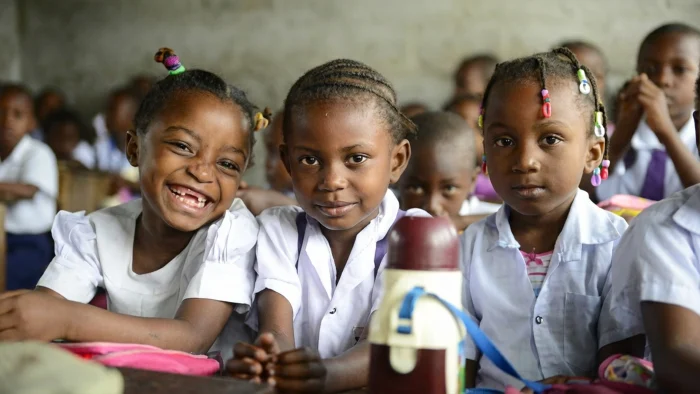
The Federal Government, parents and community leaders have been urged to intensify efforts to promote girls’ education, support skills acquisition and end child marriage in Nigeria.
The call was made during the International Day of the Girl Child celebration in Gwagwalada and organised by the 100 Women Lobby Group through the Renewed Women’s Voices and Leadership (RWVL) project, implemented in partnership with Global Affairs Canada and ActionAid Nigeria.
The National Coordinator of the 100 Women Lobby Group, Dr. Felicia Onibon, stressed the importance of community leaders in promoting positive change for women and girls.
Onibon said governments and community leaders had important roles to play in creating opportunities for girls to learn, develop their interests and participate meaningfully in society.
Also speaking, the Programme Director of the group, Mrs. Onome Oyedele, called for stronger protection of girls’ rights and improved access to education to enable them to reach their full potential.
She urged parents and guardians to end child marriage and allow girls below the age of 18 to complete their education and acquire the knowledge and skills needed to make informed decisions about their futures.
“Children must understand certain things and be adequately prepared before marriage,” she said.
Oyedele also urged parents and community leaders to ensure that school-age children attend classes during school hours, rather than engage in trading or other activities.
She called on community members to investigate cases of children roaming the streets during school hours and take steps to ensure that they remain in school.
The Communication Specialist of the organisation, Henrietta Ojeaga, urged parents to prioritise their children’s education despite societal attitudes that discourage girls from attending school.
She noted that public schools offered an affordable option for families with limited financial resources.
Participants at the programme raised concerns about children who refused to attend school, the financial difficulties faced by parents and the support available to orphaned and vulnerable children.
They also discussed how communities could respond when girls wanted to leave school to get married and how young people could be encouraged to acquire vocational skills.
On vocational training, participants noted that skills acquisition could help women and girls become economically independent. However, they observed that learning a skill did not automatically guarantee financial success, particularly when opportunities to generate income were limited.
They also stressed the need to consider children’s interests and aspirations before enrolling them in vocational training rather than forcing them to learn skills chosen by their parents.
To address financial barriers to education, women were encouraged to participate in Village Savings and Loan Associations (VSLAs), which allow members to pool savings and use the funds to meet household needs, including their children’s education and skills development.

Participants also suggested that community members visit orphanages to assess the needs of vulnerable children and explore opportunities to link them with ActionAid for possible assistance.
The discussions further highlighted the need to create safe spaces where girls could report abuse without fear. Parents, particularly fathers, were urged to support their daughters’ education and well-being while promoting respectful relationships and challenging harmful practices that undermine the rights of women and girls.
