

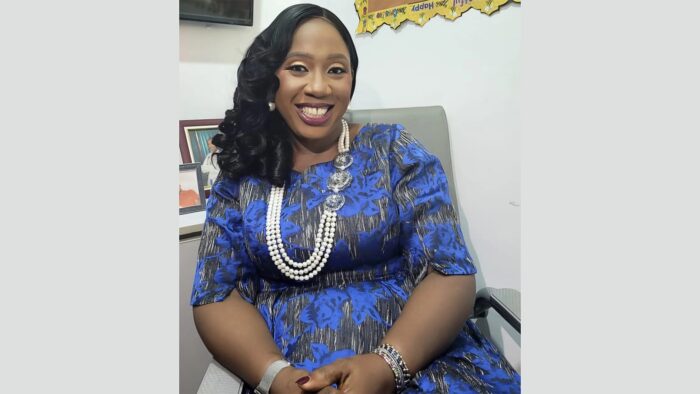
Yinka Bayo-Shodipo is a qualified legal practitioner and experienced educator. She earned her LL.B (Hons.) from Obafemi Awolowo University and was called to the Nigerian Bar in 2000 as a Barrister and Solicitor of the Supreme Court of Nigeria. Driven by a strong interest in leadership and administration, she obtained an MBA from Lagos State University. She later pursued her passion for education, earning a Diploma in the Montessori Method from the Centre for Educational Research & Development Studies, India. With a unique blend of legal, business, and educational expertise, she is deeply committed to child-centred learning and development. In this interview she talks about her work as an educationist and on the value of education.
By Geraldine Akutu
How has your experience been as an educationist?
My journey as an educator has been interesting. It has had good moments and challenging moments, like every other profession. But one thing that has kept me going is the joy of seeing children grow, learn new things, become more confident, and discover their potential. Honestly, that is one of the most rewarding parts of what I do.
What is the inspiration behind setting up a school, and what makes your school different from others?
The inspiration behind Krownley Preparatory School was my desire to create a preschool that would be a home away from home for children. I wanted a place where children would feel safe, loved, and cared for, while learning through play and practical experiences. When I started the school in 2011, there were very few preschools in my area. I saw an opportunity to provide something different — a nurturing environment where children could learn happily and develop in all areas of life. We started as a Montessori preschool, and as the school grew, we expanded into primary education. Looking back, I am grateful for how far we have come.

What was your initial challenge, and how were you able to surmount it?
One of my biggest challenges was finding teachers who understood my vision and shared my philosophy of education. I knew what I wanted for the children, but finding people who could translate that vision into practice was not easy. So, I decided to recruit fresh graduates from universities and teacher-training colleges and train them myself. I wanted to mentor them, help them understand our values, and show them the kind of learning environment I wanted us to create at Krownley.
What is your advice to women who want to set up a school?
It required patience, time, and a lot of commitment, but it was important to me that our teachers understood that education goes beyond teaching children to read and write. It is also about building character, confidence, independence, and good values. Of course, there have been other challenges along the way, but the children and the impact we are making in their lives continue to give me the motivation to keep going.
How do you motivate your staff?
I believe that people do better when they feel appreciated. At Krownley, we try to recognise and reward the efforts of our staff. We have a Staff of the Month award, which comes with a small gift, and we display the recipient’s photograph at the reception. We also have a Staff of the Year award, which comes with a monetary reward. These initiatives encourage healthy competition and give our staff something to work towards. More importantly, they help people feel that their efforts are being noticed. I believe motivation is not always about money. Sometimes, a simple word of appreciation or public recognition can make a difference. When staff members feel valued, they are more encouraged to give their best.
What advice would you give to someone who wants to invest in the education sector?
My advice is simple: be patient and understand that education is a long-term investment. Running a school is not like buying and selling, where you may expect quick returns. It takes time to build trust, establish a reputation, attract families, and grow a school into a sustainable business. I would also strongly advise anyone planning to establish a school to consider owning the property, if financially possible. When your school begins to grow and become successful, your landlord may increase the rent, and that can put serious pressure on your finances. Beyond the money, you must have a genuine passion for children and education. You need to understand that you are not just running a business; you are helping to shape lives.
In your own opinion, how can government support private school owners?
I would like the government to make things easier for private school owners by reviewing the various taxes, levies, regulatory charges, and renewal fees we are expected to pay. Running a school comes with many financial responsibilities, including staff salaries, PAYE, facility maintenance, learning materials, and other operational expenses. When you add the different charges, the burden can become quite substantial. I would also like the government to work with banks and other financial institutions to provide low-interest loans for private schools. Such support would enable school owners to improve their facilities, invest in better learning resources, train their teachers, and provide more conducive environments for children. Private schools play an important role in education, and supporting them ultimately benefits the children and the wider society.
What qualities does someone need to run a school successfully?
You need to be mentally, physically, emotionally, and financially strong. Running a school involves dealing with different people, managing expectations, making difficult decisions, and solving problems almost every day. You have to work with children, parents, teachers, government officials, and other stakeholders. There will be days when things go smoothly, and there will be days when you wonder how you are going to handle everything. You need patience, resilience, sound judgment, good leadership skills, and, above all, a genuine passion for what you do. You must also be prepared to invest more than money. You will invest your time, your energy, and sometimes your emotions. But when you see the children growing, learning, and doing well, you realise that the effort is worthwhile.
What do you hope to achieve with your school in coming years?
My vision is for Krownley Preparatory School to become a preferred school, a school that parents genuinely desire for their children because of the quality of education we offer, the values we instill, and the kind of children we raise. I want Krownley to be known not only for academic excellence but also for raising children who are confident, well-mannered, independent, compassionate, and conscious of their responsibilities. For me, education is about developing the whole child. We want our children to excel academically, but we also want them to have good character, strong values, and the confidence to face the future. Ultimately, I want to build an institution that will outlive me. I want Krownley to become a lasting legacy a school that will continue to make a positive difference in children’s lives for generations to come. When I look back on my journey, I want to be able to say that I did something meaningful with my life, that I helped shape young minds, and that the work we started at Krownley has continued to touch lives long after I am gone. That, for me, would be a truly fulfilling achievement.
