

by Mfon Ekpo
“Africa is not suffering from an absence of knowledge. We are suffering, in part, from a failure to consistently recognise, preserve, develop and institutionalise what we know.”
My father was a library. He would never have called himself one, but that is what he was.
There were things he knew about food, plants, people, family, seasons, community and survival that he had never encountered in a textbook. Some of that knowledge had travelled through generations before reaching him, while some came from the accumulated evidence of a life lived attentively. I recall watching him use herbs distilled in alcohol to treat my sister when she had chickenpox.
I was an athlete, and for years he insisted that a central part of my daily diet include a full glass of juice extracted from fluted pumpkin leaves, Nkong Ubong, as we call it in Ibibio. He had in-depth information and first-hand experience of the Nigerian Civil War, its causes and consequences and was knowledgeable about a vast range of topics from politics to the early banking system in Nigeria. He was also among the first to operate an industrialised farm and to partner with the Nigerian Institute for Oceanography and Marine Research. I grew up surrounded by all of this.
When people like him die, we often say that we have lost an elder. We rarely say that we have lost an archive. Yet, unless we have documented what that person knew, an archive is precisely what we have lost.

That distinction has occupied my mind for years and led me to ask one central question: What does Africa know? Not simply what has been written about Africa, nor what we have imported, studied, certified or been taught to recognise as knowledge, but what do we actually know, and how much of it has been recorded or documented? Perhaps more urgently, what are we losing because we have not built enough institutions capable of recognising what we know?
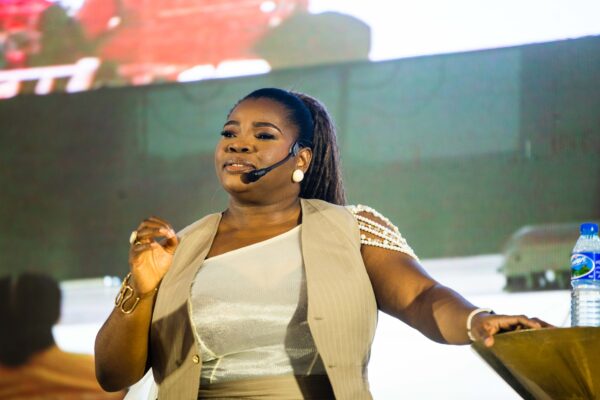
That question is one of the reasons I built Africa’s first purpose-built Global Knowledge Centre: to recognise, preserve, develop and institutionalise what we actually know. However, this in turn raises a more complex question: what is knowledge? Broadly defined, knowledge encompasses the understanding, awareness and insight individuals develop through learning, experience, observation and the acquisition of information. While information consists of facts and data, knowledge emerges when meaning, context and interpretation are applied to that information, enabling understanding and guiding action. Yet, through convention and repeated association, we have come to regard the acquisition, production and documentation of knowledge as largely the preserve of academia.
Knowledge, however, extends far beyond academia. While the professor possesses knowledge, so does the farmer. While the coder may possess formally acquired and documented technical knowledge, the market woman also possesses knowledge, even if much of hers remains undocumented. The same distinction can be drawn between the scientist and the craftsman. The point is not to suggest that all forms of knowledge are identical or equally evidenced, but rather to recognise the extraordinary possibilities that emerge when we create institutions where different forms of knowledge can encounter one another, be questioned, researched, tested, documented, challenged, improved and shared.
The aim of all of this is to cause Africa to remember, because remembering who we are and what we know is a defiant act of intellectual agency. And Africa has so much to remember.
We must remember the knowledge carried in our universities and laboratories, but also that which resides in our languages, communities and lived experiences. We must remember the vastness of our intellectual depth and ingenuity and recognise that Africa does not have to remain permanently at the receiving end of the world’s knowledge systems, but that we too, have something to teach.
But remembering is only the beginning, one that sets off a chain reaction. What we remember, we must interrogate, and what withstands that interrogation, we must preserve. We must then document and distil so that it can be developed, applied and, where appropriate, transformed into enterprise. And then what deserves to travel through global trade, collaboration and intellectual exchange, we must share. This is the raison d’être of the word Global in the Global Knowledge Centre: the conviction that knowledge should flow in both directions, from Africa to the world and from the world to Africa.
So a few days ago, the doors of the Global Knowledge Centre opened. People have seen the photographs and videos of the building, the commissioning and the celebration. But the success of the Centre will not be measured by its physical structure; it will be measured by what emerges from it: research, fellowships, ideas, collaborations, leadership development, archives, innovations, policy conversations, cultural exchange, businesses, discoveries and, ultimately, people whose lives and work are transformed by what they encounter there.
Building an institution of this ambition and scale, however, cannot be the work of one individual or organisation. It requires the collective investment of people and institutions who recognise that Africa’s intellectual future is a shared responsibility. I therefore invite universities, research institutions, governments, businesses, philanthropists, development organisations and knowledge partners across Africa and the world to become part of this endeavour. Whether through research collaborations, fellowships, institutional partnerships, knowledge exchange, financial investment or the development of programmes that advance human potential. There is an opportunity here to contribute to something whose value will extend far beyond any one individual or generation. The building, therefore, was the easy part, now we have to build the institution. Because while The Global Knowledge Centre was founded by one vision, its future must be built by many.
My hope is that generations from now, when someone asks where the world goes to think about some of its most difficult questions, Africa will not merely be one of the places being discussed. Africa will be one of the places where those discussions are taking place, and the Global Knowledge Centre will be an institution leading that charge.
