
 Get Guardian on Google
THE renewed demand by President Bola Tinubu, United Nations Secretary-General Antonio Guterres, and Kenyan President William Ruto for Africa to be permanently represented in the United Nations Security Council is a timely reminder that the world’s foremost multilateral institution is long overdue for fundamental reform, and that now is the time to end the continent’s marginalisation in global decision-making and align the UN with contemporary geopolitical realities. But legitimate as the demand is, Africa itself must live up to the expectations of the international community to earn the status and respect that will facilitate the achievement of this request.
More than eight decades after its establishment, the United Nations cannot credibly claim to represent the international community fairly while an entire continent of more than 1.4 billion people remains excluded from permanent membership of its most powerful decision-making organ.
Speaking through Vice President Kashim Shettima at the 81st United Nations General Assembly in New York, Tinubu argued that the world of 2026 could no longer be governed by the distribution of power that prevailed in 1945. His position is both reasonable and compelling. The international order has changed profoundly since the end of the Second World War, yet the structure of the Security Council continues to reflect the political and military realities of that era.
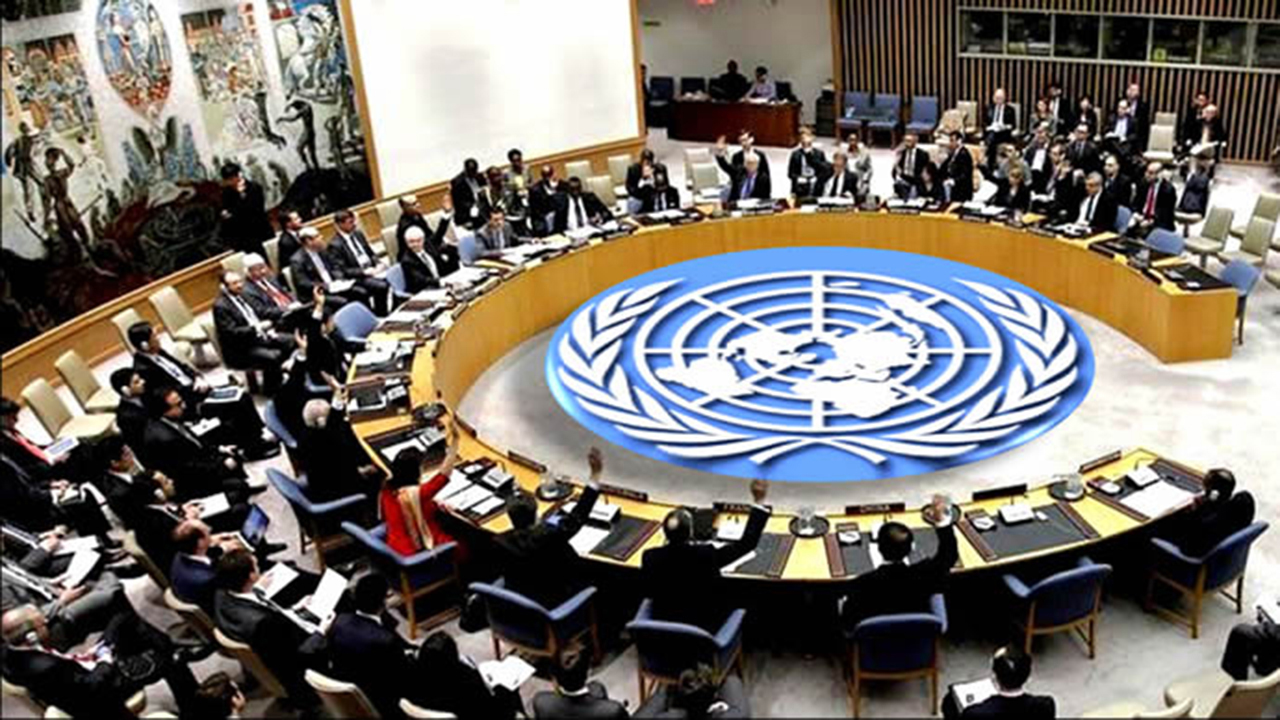
When the United Nations (UN) was founded in 1945, its principal objective was to prevent another global conflict and establish a framework for international cooperation. The five permanent members of the Security Council – the United States, Russia, China, Britain and France – were accorded privileged positions in recognition of the post-war balance of power. The veto granted to each of them was intended to secure the participation of the major powers in the new international system. However, what might have appeared politically expedient at the time has become increasingly difficult to defend in the modern world, where the consequences of decisions taken by these five countries now extend far beyond their own territories. Africa, Asia and Latin America have experienced enormous demographic, economic and political changes, but the composition of the Council has failed to reflect these transformations.
Africa’s exclusion is particularly indefensible. The continent accounts for 54 internationally recognised sovereign states, constitutes a substantial proportion of UN membership and remains central to discussions on peacekeeping, conflict resolution, climate change, migration, food security and international development. Yet its countries have no permanent seat at the table where some of the most consequential decisions on international peace and security are taken.
Guterres rightly described this absence as unjust and indefensible, while Ruto insisted that Africa cannot continue to be shut out. Their positions reinforce the argument that reform is no longer a favour that established powers may choose to grant. It is a question of institutional legitimacy, political fairness and the credibility of multilateralism itself.

The inadequacy of the present arrangement is evident in the operation of the veto. In June 2025, the United States blocked a Security Council resolution calling for an immediate and permanent ceasefire in Gaza, despite 14 votes in favour. The episode demonstrated how a single permanent member can frustrate the collective position of the other Council members. It also illustrated the limits of an arrangement that allows the national interests of one powerful state to prevail over an overwhelming majority.
Such instances have strengthened the case for a more representative and accountable Security Council. Although the veto was designed to prevent the major powers from being compelled into decisions they oppose, its continued unrestricted application has often undermined the Council’s capacity to respond decisively to international crises.
Tinubu’s demand for at least two permanent seats for Africa, with full rights and responsibilities, including veto power, alongside five non-permanent seats, therefore, deserves serious consideration. Anything less risks producing a cosmetic reform that changes the Council’s appearance without correcting its underlying imbalance.
Nevertheless, securing permanent African representation will require more than forceful speeches at the General Assembly. The reform process is politically difficult because any meaningful restructuring must overcome the resistance of countries that benefit from the existing arrangement. Changes to the UN Charter require approval by two-thirds of the General Assembly and ratification by two-thirds of the UN member-states, including all five permanent members of the Security Council. This gives the very countries whose privileges are being challenged considerable influence over the reform process.
Consequently, Nigeria and other African countries must combine diplomatic pressure with a coherent negotiating strategy. The African Union’s common position on Security Council reform provides an important foundation, but continental leaders must sustain their unity over the number of seats, the selection of representatives, regional rotation and the question of veto powers. Internal disagreements could weaken Africa’s bargaining position and give opponents of reform an excuse to delay actions indefinitely.
Nigeria, given its population, diplomatic history, economic potential and contributions to peacekeeping, has a legitimate interest in shaping this campaign. However, its leadership must be exercised through sustained engagement with other African states rather than an assumption that the country’s size alone entitles it to represent the continent. The objective should be effective African representation, not merely the elevation of one country.
Tinubu’s position on Nigeria’s prospective support for the next UN Secretary-General is also significant. His assurance that equity, justice, fairness, multilateralism and reform of global governance will inform the country’s decision establishes an appropriate framework for evaluating candidates. Shettima’s meeting with Costa Rica’s nominee, Rebeca Grynspan, and his willingness to consider her candidature, considering Nigeria’s relations with Latin America and other factors, demonstrate the importance of balancing diplomatic relationships with broader institutional interests.
Nigeria should, however, ensure that the African representation question remains a substantive consideration in its engagement with all candidates. The next Secretary-General will need to demonstrate not only an understanding of Africa’s concerns but also the political courage to advance meaningful reform, even when doing so challenges entrenched interests.
Ultimately, the campaign for permanent African representation is more than prestige or diplomatic status. It is about ensuring that decisions affecting Africans’ lives, economies and security are not taken through a system in which the continent has no permanent voice. Africa should not be expected to shoulder a disproportionate share of the consequences of international instability while remaining marginal to the institutions responsible for addressing it. The United Nations was established to serve succeeding generations, not to preserve indefinitely the privileges negotiated by the victors of a war that ended more than 80 years ago. Its continued relevance depends on its ability to adapt to contemporary realities.
Tinubu, Guterres and Ruto have articulated a demand whose time has come. The challenge now is to transform their declarations into a sustained, coordinated and ultimately successful campaign for reform. For success in this regard, Africa must be more politically united, economically developed and diplomatically focused. The occasional failure of the African Union to speak strongly in one voice and act in unity against common challenges facing the continent portrays a divided house and a serious lack of common vision by the organisation. African countries must get serious individually and collectively and display capacity to do many things successfully. In particular, they need to show capacity and interest to make meaningful contributions to global development on many fronts. This is how the continent can present itself as a force to reckon with.
The international community must recognise that a Security Council without permanent African representation is neither sufficiently representative nor fully equipped to command universal confidence. Africa cannot continue to be central to the UN’s responsibilities and peripheral to its highest decisions. The world has changed; the Security Council must change with it.