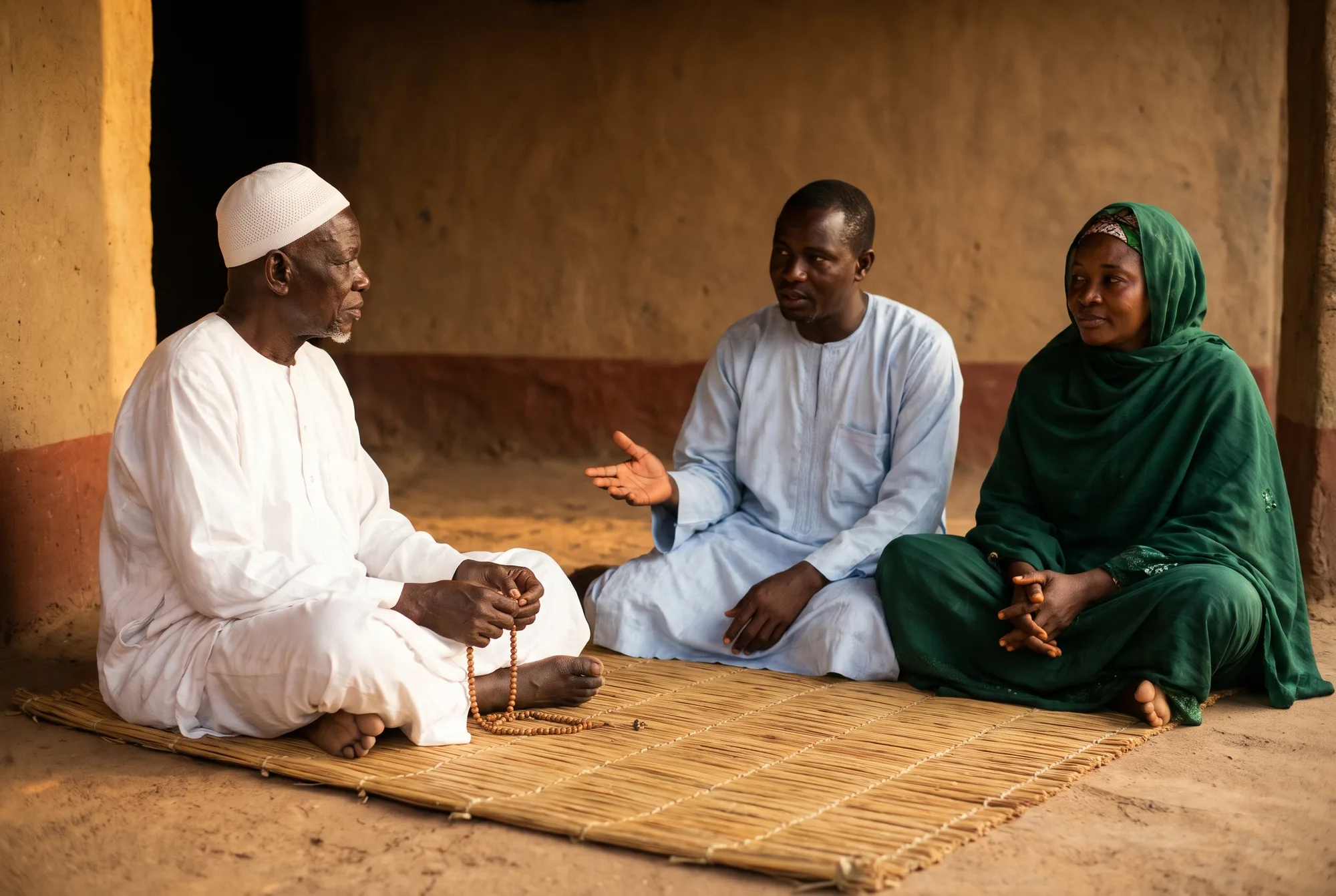

 Get Guardian on Google
Welcome, and thank you for joining me. Does Nigeria have sharia law? It is one of the questions I hear most often, from readers in the diaspora, from colleagues in Lagos, and once (memorably) from an Abuja taxi driver trying to settle a ₦5,000 bet with his cousin. The honest answer depends on where in the country you are standing, and this article is the conclusion of months of research into the Islamic legal codes adopted across the far north since 1999, layered on years of experience writing about how Nigerians actually live with their laws.
Who won the bet? Both of them, sort of. I will explain.
The subject has rarely been hotter than it is now. In February 2026 a group of United States congressmen recommended that Nigeria repeal its Sharia and blasphemy codes, the Supreme Council for Shari’ah in Nigeria told them, in effect, to mind their own business, and Nigerian social media did what Nigerian social media does best. At home, a coalition of civil rights and faith groups operating as End Sharia Now has asked the National Assembly to confine Islamic law strictly to the personal affairs of consenting Muslims, while Muslim organisations insist the Constitution already guarantees their right to it.
Strong opinions, then, and not always matched by strong facts.
So my aim here is modest and practical. I want to show you where Islamic law came from, how it fits into the wider Nigerian legal system, exactly which parts of the country apply it, whether anyone has ever banned it, and what it means for you if you live in, work in or visit one of the states concerned. Pour yourself a cup of tea (or a bottle of zobo, if you are in Kano and wisely avoiding the alternatives) and let us begin.
Who Brought Sharia Law to Nigeria, and When?
There is no single “who”, which is the first thing to understand. Islamic law arrived in what is now Nigeria in stages, rather like a river fed by several tributaries, and each stage left its own sediment in the courts we have today.

The oldest tributary runs through Kanem-Borno. Islam reached the kingdom along the trans-Saharan trade routes, and the conversion of Mai Humme Jilmi in the late eleventh century is usually treated as the point at which Islam became the faith of the ruling house. I covered that early history in detail when I asked which religion was first in Nigeria, so I will not repeat it all here, but the key point is this: wherever Muslim rulers governed, Islamic law came with them, at least for marriage, inheritance and commerce.
The Hausa city-states followed over the next few centuries. Scholars, traders and pilgrims carried legal texts of the Maliki school south across the desert, and by the late fifteenth century the North African jurist al-Maghili was advising Muhammad Rumfa of Kano on how a Muslim ruler ought to govern. Kano’s markets, judges and city walls all bore the mark of that advice.
Then came the decisive moment. In 1804 Usman dan Fodio launched the jihad that created the Sokoto Caliphate, and for roughly a century Sharia was not merely the law of Muslim households but the law of the state across a vast stretch of the north. Each emirate had its alkali (judge), its courts and its scholars, and criminal as well as civil cases were decided under Islamic jurisprudence. If you ever wonder why the north feels so attached to Sharia, start here. For many families it is not a foreign import but the law of their great-great-grandparents.
The British arrived in force after 1903.
Lord Lugard’s system of indirect rule kept the emirs and their alkali courts, largely because it was cheap, but it filed off the sharpest edges. Punishments judged “repugnant to natural justice”, such as amputation and stoning, were struck out, and colonial officers could review the courts’ decisions. At independence the Northern Region went further: the Penal Code of 1959, modelled partly on Sudan’s code, replaced Islamic criminal law with a secular criminal code that applied to everyone, while a Sharia Court of Appeal was created to hear appeals in Islamic personal law. That compromise held, more or less, for forty years.
It broke in Zamfara. On 27 October 1999, a few months into the new democracy, Governor Ahmad Sani Yerima announced at Gusau that his state would restore Sharia in full, criminal law included, and the new codes took effect on 27 January 2000. Within weeks a man in Zamfara named Buba Jangebe had his hand amputated for stealing a cow, and by the end of 2001 eleven more northern states had followed Zamfara’s lead in one form or another.
So, who brought Sharia law to Nigeria? Kanem-Borno’s rulers brought Islamic law in its earliest form, Usman dan Fodio made it the law of a state, the British boxed it into family matters, and Ahmad Sani Yerima let it out again. Four answers, all of them true, and anyone who gives you only one is probably arguing a case rather than describing history.
What Are the Four Laws in Nigeria, and Where Does Sharia Fit?
Law students in Nigeria learn early that the country draws its law from several sources at once, and the answer to this question explains most of the confusion about Sharia.
The four sources are usually listed as English law (the received common law, equity and the statutes of general application that were in force in England on 1 January 1900), Nigerian legislation (the Constitution, Acts of the National Assembly and Laws of the state Houses of Assembly), customary law, and Islamic law. Many textbooks add judicial precedent as a fifth source, since decided cases bind lower courts, but four is the figure most people mean when they ask.
Here is the twist that catches people out.
For decades Islamic law was treated as a species of customary law, the unwritten law of a particular community. The Supreme Court changed that in Alkamawa v Bello (1998), recognising Islamic law as a distinct and written system with its own sources in the Qur’an, the Sunnah and the classical jurists. That is why Islamic law now sits beside customary law in the list rather than inside it.
The 1999 Constitution then gives it a home. Sections 260 to 264 create a Sharia Court of Appeal for the Federal Capital Territory, and sections 275 to 279 allow any state “that requires it” to set up its own. Those courts may only hear appeals in Islamic personal law: marriage, divorce, family relationships, waqf (religious endowments), gifts, wills, succession, and the guardianship of children and vulnerable adults. Their decisions go up to the Court of Appeal and, finally, to the Supreme Court, which keeps the whole structure tied to the national system.
Below the appeal courts, the Sharia states run Sharia Courts and Upper Sharia Courts staffed by judges called kadis (or khadis, depending on who is spelling). They are ordinary state institutions, appointed through the same machinery as any other judge. In July 2026, for example, the Katsina State governor swore in two new kadis of the Upper Sharia Court after their names had been recommended by the National Judicial Council, the same body that vets High Court judges.
What surprises many readers is that you do not need a Sharia penal code to have a Sharia court. Kwara, which is not one of the twelve “Sharia states”, has run a Sharia Court of Appeal for years, and its House of Assembly confirmed a substantive Grand Khadi for that court after screening him in the usual way. Plateau and Nasarawa have similar courts. In those states Islamic law settles a Muslim couple’s divorce or a family’s inheritance, but nobody is prosecuted under it.
I find it helps to picture the system as a block of flats. The Constitution is the foundation and the roof, English law and Nigerian legislation are the shared walls and plumbing, and customary and Islamic law are flats that particular families furnish in their own way. You may decorate your flat as you like, but you cannot knock out a load-bearing wall.
The trouble, of course, is that people disagree about which walls are load-bearing. In 2016 a bill sponsored by a Sokoto lawmaker sought to amend sections 262 and 277 so that Sharia appeal courts could also hear criminal matters, and Catholic lawyers in Lagos argued the bill was unconstitutional, pointing to the guarantees in sections 10 and 38. The bill did not pass. The argument, as you will see, never really ended.
Does Nigeria Have Sharia Law? The Straight Answer
Yes, but only in part, and never at the federal level. Nigeria is a secular federation whose Constitution, in Section 10, forbids the federal government or any state from adopting a state religion, yet the same Constitution expressly provides for Sharia Courts of Appeal in the Federal Capital Territory and in any state that wants one. Since 1999, twelve northern states have gone further by passing Sharia penal codes that cover crimes as well as family matters, and they apply those codes to Muslims through Sharia Courts, Upper Sharia Courts and Sharia Courts of Appeal, backed by state religious enforcement boards known as Hisbah. Everywhere else, including Lagos, the South-East and the South-South, criminal law is entirely secular, and Islamic law appears only in voluntary, private arbitration or (in a handful of non-Sharia states) in family appeal courts. In short, Nigeria runs a plural legal system:
- The federal government and federal law are secular, and the federal police do not enforce Sharia codes.
- Twelve northern states apply Islamic criminal and civil law to Muslims.
- Several other states and the FCT apply Islamic personal law only, through Sharia Courts of Appeal.
- The rest of the country has no state Sharia courts at all.
That is why both the taxi driver and his cousin were right. One said “yes, Nigeria has Sharia”, the other said “no, Nigeria is secular”, and the Constitution manages to hold both statements at once (somewhat uncomfortably, rather like two brothers sharing a single bed in the village).
It is also why I am wary of anyone who answers the question in a single word. A Lagosian and a Gusau resident live under genuinely different rules on Monday morning, and pretending otherwise helps nobody. (If you want the wider constitutional picture, I unpacked Section 38 and its limits when I asked is there religious freedom in Nigeria.)
Which Parts of Nigeria Are Under Sharia Law?
The twelve states that adopted Sharia penal codes between 2000 and 2001 are Zamfara, Kano, Sokoto, Katsina, Kebbi, Jigawa, Bauchi, Borno, Yobe, Gombe, Kaduna and Niger. Every one of them sits in the North-West or North-East, apart from Niger, which belongs to the North-Central zone.
The twelve are not identical, and that matters more than most explainers admit.
Kaduna and Niger, both religiously mixed, apply Islamic law only in Muslim-majority areas rather than across the whole state, and Kaduna chose from the outset not to write Islamic punishments into its criminal code. Kano, at the other end of the scale, has one of the most visible Hisbah boards in the country, with officers who have enforced bans on public alcohol sales and policed dress, music and mixed gatherings. When people outside Nigeria picture “Sharia Nigeria”, they are usually picturing Kano.
Who does it bind? On paper, Muslims. The codes are written for Muslims, and non-Muslims cannot be forced to appear before a Sharia court, although some states allow a non-Muslim to consent to one for certain civil disputes. In practice, the social rules spill over. A Christian shopkeeper in Kano cannot legally sell beer from her kiosk, a mixed group of friends may find the Hisbah taking an interest in their evening, and transport and public spaces sometimes follow Islamic norms on gender separation. A colleague of mine from Plateau who spent a year working in Kano summed it up neatly: “The law was not for me, but the rules were.”
Outside the north, the picture changes completely. In the South-West, which is home to millions of Yoruba Muslims, there are no state Sharia courts, but there are private arbitration panels that sit in mosques. MURIC’s Professor Ishaq Akintola argued in January 2025 that such panels have operated in Ibadan since 2002, in Lagos since 2003, in Osogbo since 2005 and in Abeokuta since 2018, and that they hear only Muslims who come voluntarily because they have no power of enforcement. Think of them as a family meeting with a learned uncle presiding, rather than a court with policemen at the door.
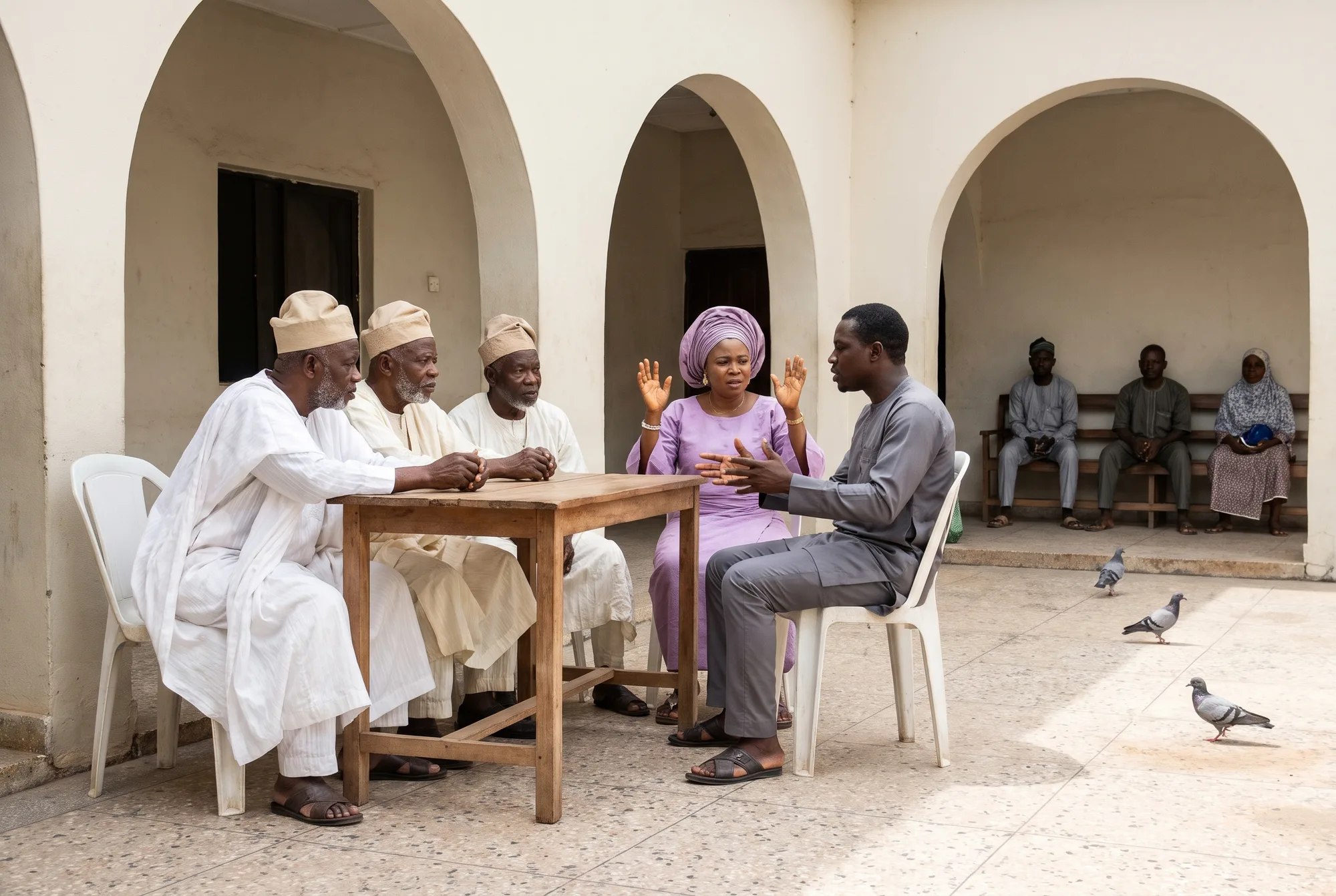
The South-East and South-South have no Sharia institutions at all.
How Sharia Applies Across Nigeria’s 36 States and the FCT
| Category | Examples | Number of states | Sharia courts | Islamic criminal law | Who it binds |
|---|---|---|---|---|---|
| States with Sharia penal codes | Zamfara, Kano, Sokoto, Katsina, Kebbi, Jigawa, Bauchi, Borno, Yobe, Gombe | 10 | Sharia Court, Upper Sharia Court, Sharia Court of Appeal | Yes, by state statute | Muslims; non-Muslims only by consent in some civil matters |
| Sharia states with area limits | Kaduna, Niger | 2 | Sharia courts in Muslim-majority areas | Limited, and absent from Kaduna’s code | Muslims in the designated areas |
| Sharia Court of Appeal only | Kwara, Plateau, Nasarawa | Several | Sharia Court of Appeal for family and inheritance | No | Muslims who bring personal law disputes |
| Federal Capital Territory | Abuja | 1 territory | Sharia Court of Appeal of the FCT (section 260) | No | Muslims in personal law appeals |
| South-West | Lagos, Oyo, Ogun, Osun | 0 state courts | Private mosque-based arbitration panels | No | Muslims who choose to attend |
| South-East and South-South | Enugu, Anambra, Rivers, Delta | 0 | None | No | Nobody |
The table shows that Islamic criminal law reaches only twelve of Nigeria’s 36 states, while Islamic family law reaches further through appeal courts and voluntary panels. If you are trying to work out what applies to you, the state and the type of case matter far more than the national headline.
Have Any Nigerian States Banned Sharia?
Short answer: no. No Nigerian state has passed a law banning Sharia, and none really needs to, because the Constitution makes Sharia Courts of Appeal optional. A state that does not “require” one simply never creates it, which is exactly what every southern state has done since independence.
What Nigeria has seen instead is resistance, retreat and repeated legal challenge.
The earliest retreat came in February 2000, when Kaduna’s attempt to introduce Sharia triggered riots that killed hundreds of people in the city. The federal Council of State met, and northern governors agreed for a time to revert to the old Penal Code arrangement, before the expansion resumed later that year. President Olusegun Obasanjo predicted that “political Sharia” would fizzle out, chose not to challenge the codes in court, and was proved half right: the harshest punishments faded from use, but the codes themselves stayed on the books.
Several famous cases were then reversed on appeal. Safiya Hussaini in Sokoto and Amina Lawal in Katsina were both sentenced to death by stoning for adultery, and both were acquitted by state Sharia Courts of Appeal in 2002 and 2003 after national and international outcry. Stoning sentences remain on the books in some codes, but I have not found a single case in which one was carried out.
In the South-West, the pushback has been about panels rather than courts. In December 2024 a flier announcing the “inauguration of a Sharia court” in Oyo town provoked such anger that the organisers postponed the event planned for 11 January 2025 and clarified that they meant an arbitration panel, not a court. Ekiti’s government publicly denied that any Sharia court or panel existed in the state. By March 2025 the Oyo panel had begun sitting anyway, and Governor Seyi Makinde said his government would support anything that aligned with the Constitution, which neatly sidestepped the question.
The constitutional battle is still live. Yahaya Sharif-Aminu, a Sufi musician from Kano sentenced to death for blasphemy in 2020, has been asking the Supreme Court since November 2022 to declare Kano’s blasphemy provisions unconstitutional. After a preliminary hearing in September 2025, a hearing set for 25 June 2026 was removed from the cause list, and his lawyers wrote to the Chief Justice in September 2026 asking for an early date. Whatever the court eventually decides, it will be the most important ruling on Sharia criminal law since 1999.
Meanwhile, the End Sharia Now campaign has gone further than any state government ever has, demanding the removal of Islamic references from the 1999 Constitution and claiming the word Sharia appears 73 times in the document. Muslim bodies, from the Supreme Council for Shari’ah in Nigeria to MURIC, reply that Islamic personal law is a constitutional right and that its critics misunderstand how narrowly it operates. Both sides cite sections 10 and 38. Both sides believe the Constitution is on their side.
Is either side simply wrong? I do not think so, and that is precisely why the question keeps returning. Any change to the Sharia Court of Appeal provisions would need a constitutional amendment passed by two-thirds of both chambers of the National Assembly and approved by at least 24 state Houses of Assembly, a bar that neither the abolitionists nor the expansionists have come close to clearing.
Living In or Visiting a Sharia State: Seven Practical Steps
Most visitors to Kano, Sokoto or Katsina have a perfectly pleasant time, and the hospitality of the north is legendary for good reason. A little preparation simply makes it easier, and these are the steps I give friends before they travel.
- Check the exact local government area, not just the state, because Kaduna and Niger apply Islamic law only in Muslim-majority areas, and a hotel in Zaria may follow different norms from one in southern Kaduna.
- Pack clothing that covers your shoulders and knees, with sleeves at least to the elbow and hems at least to mid-calf for women, and carry a light scarf of roughly 180 by 70 centimetres that you can drape over your head; a good cotton one costs ₦3,000 to ₦7,000 at Kurmi Market in Kano, and loose ankara or adire styles look smart without drawing attention.
- Leave alcohol out of your plans in Kano and the other strict states, where public sale is banned and Hisbah officers have seized and destroyed beer by the truckload, and ask your hotel discreetly what is permitted on its premises before you assume anything.
- Plan around Friday Jumu’ah prayers between roughly 1pm and 2:30pm, when many shops and offices close, and around Ramadan, when eating or drinking in public during daylight is unwise even for non-Muslims.
- If you are Muslim and facing a family matter such as divorce, custody or inheritance, ask which court has jurisdiction before you file, since filing fees at an Upper Sharia Court usually run to a few thousand naira while a High Court case with a lawyer can cost several hundred thousand.
- If you are not Muslim and someone tries to bring you before a Sharia court, state clearly that you do not consent and ask for the matter to be transferred to a magistrate’s or High Court, since the Sharia penal codes are written to apply to Muslims.
- Keep a lawyer’s number before you need one: an initial consultation with a private practitioner in Kano typically costs ₦30,000 to ₦75,000, and the Legal Aid Council of Nigeria offers free help to people earning below the national minimum wage.
None of these steps is dramatic. They are the same courtesies you would show in any place with strong local customs, rather like taking off your shoes at a friend’s door without being asked.
Final Thoughts: Does Nigeria Have Sharia Law?
So, does Nigeria have sharia law? It does, in the twelve northern states that wrote Islamic penal codes after 1999, in the Sharia appeal courts that the Constitution allows wherever a state wants one, and in the voluntary panels that Yoruba Muslims run in their mosques. It does not, in the federal government, in federal law, or anywhere in the South-East and South-South.
The deeper story is one of a country negotiating with itself. Islamic law has roots in the north that predate Nigeria by centuries, the British confined it to family life, the Fourth Republic released it again, and the courts, the National Assembly and now foreign governments are still arguing about where its limits should lie. My own view, after months with the constitutional texts and the case reports, is that most Nigerians are far more relaxed about Sharia in practice than the shouting online suggests. The Kano trader and the Enugu lawyer mostly want the same thing: a court that is fair, quick and affordable.
If you want to act on what you have read, here is where I would start:
- Read sections 10, 38, 260 to 264 and 275 to 279 of the 1999 Constitution yourself before sharing anyone’s claims about Sharia online.
- Follow the Sharif-Aminu appeal at the Supreme Court, because its outcome will shape Sharia criminal law for a generation.
- When the National Assembly next opens constitutional review hearings, submit a memorandum, whichever side of the argument you are on.
Related Articles
If this piece has left you curious about how faith shapes everyday life across Nigeria, you will find a natural companion in my look at whether Muslims and Christians get along in Nigeria, which moves beyond courtrooms to markets, marriages and neighbourhoods. And because so much of Sharia’s real work happens in family law, my guide to how many marriages are allowed in Nigeria explains how Islamic, statutory and customary marriage sit side by side, polygamy included.
Key Takeaways
- Treat “Nigeria has Sharia” as a state-by-state fact: check the state and the type of case before assuming which law applies to you.
- Respect local norms on dress, alcohol and prayer times when you travel north, and keep a lawyer’s number to hand.
- Remember that Islamic family law reaches further than Islamic criminal law, through appeal courts in the FCT and states such as Kwara, Plateau and Nasarawa.
Frequently Asked Questions: Does Nigeria Have Sharia Law?
Does Nigeria have sharia law?
Yes, but only in part, because twelve northern states run Sharia courts and Sharia penal codes alongside the national legal system. The federal government itself is secular, and Section 10 of the Constitution bars any state religion.
Which 12 states in Nigeria use Sharia law?
They are Zamfara, Kano, Sokoto, Katsina, Kebbi, Jigawa, Bauchi, Borno, Yobe, Gombe, Kaduna and Niger. Kaduna and Niger apply it only in Muslim-majority areas rather than across the whole state.
Does Sharia law apply to Christians in Nigeria?
The codes are written for Muslims, and non-Muslims cannot be compelled to appear before a Sharia court. Some states let non-Muslims consent to Sharia courts in certain civil disputes, and social rules such as alcohol bans affect everyone in practice.
Who brought Sharia law to Nigeria?
Islamic law arrived with Islam through Kanem-Borno and the Hausa states, and Usman dan Fodio made it the law of the Sokoto Caliphate after 1804. Its modern criminal form returned when Zamfara governor Ahmad Sani Yerima launched it in October 1999.
What are the four sources of law in Nigeria?
They are English law, Nigerian legislation, customary law and Islamic law, with judicial precedent often added as a fifth. Islamic law was once grouped under customary law but is now treated by the courts as a distinct system.
Is there a Sharia court in Abuja?
Yes, Section 260 of the Constitution creates a Sharia Court of Appeal for the Federal Capital Territory. It hears appeals on Islamic personal law such as marriage, inheritance and guardianship, not criminal cases.
Has any Nigerian state banned Sharia?
No state has passed a law banning it, because the Constitution makes Sharia Courts of Appeal optional for each state. What has happened instead is resistance, such as the postponement of a Sharia panel launch in Oyo town in January 2025 after public outcry.
Are there Sharia courts in South-West Nigeria?
There are no state Sharia courts in the South-West. There are private, mosque-based arbitration panels in Lagos, Oyo, Ogun and Osun, which Muslims attend voluntarily because the panels cannot enforce their decisions.
What is the Hisbah in Nigeria?
The Hisbah is a state-funded religious enforcement board set up in Sharia states, and Kano’s is the best known. It polices moral rules such as alcohol bans and dress codes but has no authority over the federal police or the Constitution.
Can Sharia courts give the death penalty in Nigeria?
Sharia penal codes do allow death sentences for offences such as adultery and blasphemy. Such sentences are rarely carried out, and high-profile cases like Amina Lawal’s were overturned on appeal.
Is Sharia law constitutional in Nigeria?
Sharia courts for Islamic personal law are expressly provided for in the Constitution. Whether the Sharia penal codes are constitutional remains contested, and the Supreme Court has yet to rule on the Sharif-Aminu blasphemy appeal.
Can I drink alcohol in a Sharia state?
Public sale of alcohol is banned in several Sharia states, notably Kano, where Hisbah officers have destroyed seized beer in large quantities. Some hotels and private homes are treated more leniently, but you should check local rules before you travel.