
 Get Guardian on Google
***As 3,000 youths acquire vocational skills at Abuja Technical College
More than 1,000 Nigerians are undergoing vocational and technical skills training at the Federal Technical College, Orozo, Abuja, under the Federal Government’s Innovation Development and Effectiveness in the Acquisition of Skills (IDEAS) and Technical and Vocational Education and Training (TVET) initiative aimed at tackling youth unemployment and promoting self-reliance.
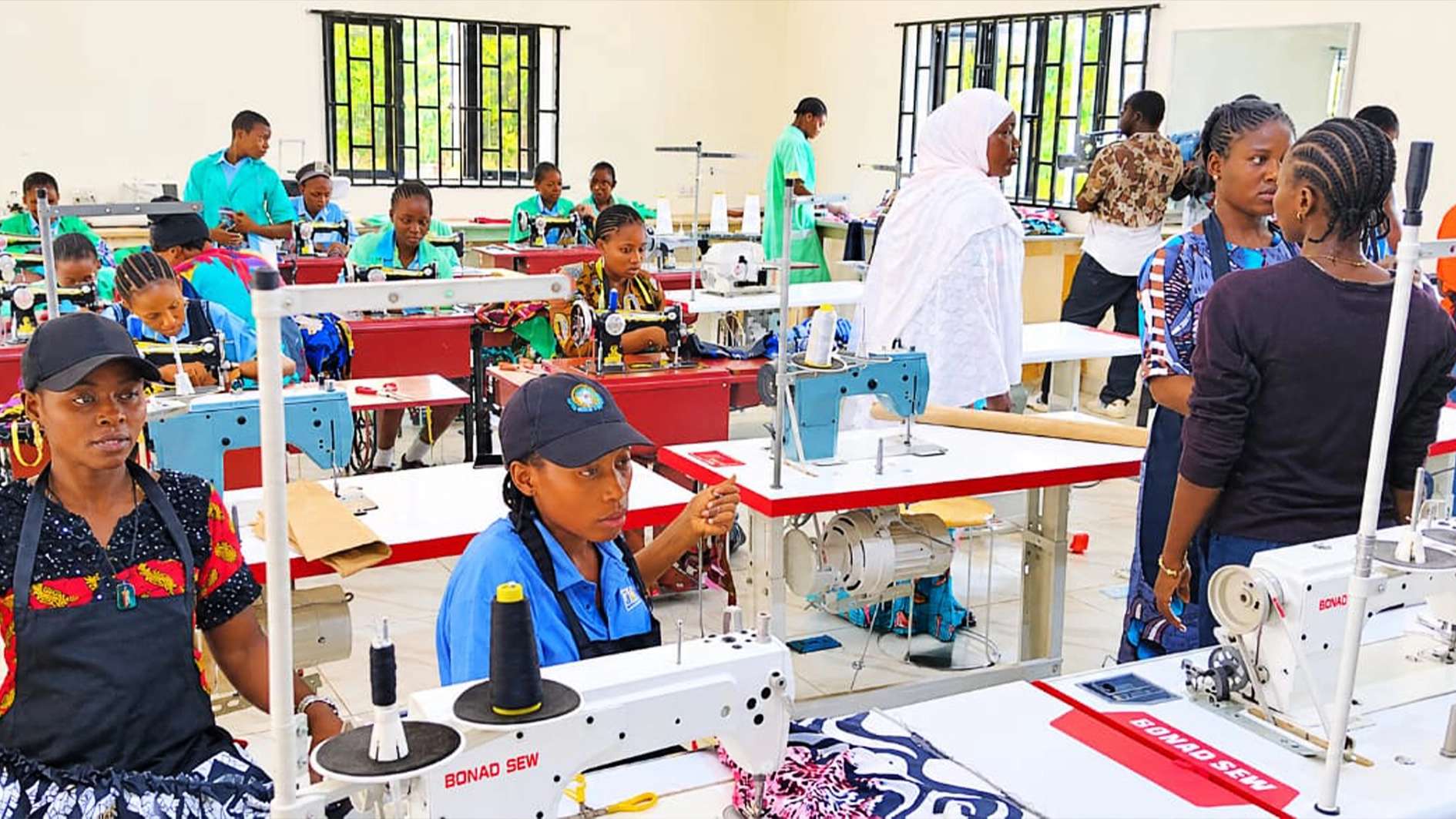
A visit to the college showed participants receiving hands-on training in various trades, including auto electrical and electronics, automobile mechanics, auto spray painting, garment making, leatherworks, GSM repairs, catering, information and communication technology (ICT) among others.
Some of the departments visited included the Auto Electrical and Electronics Workshop, Auto Mechanics and Building Workshop, Auto Spray Painting Workshop, Garment Workshop, Leatherworks Workshop, GSM Repairs Unit and Information and Communication Technology (ICT) Centre among others.
The Guardian reports that the training is part of the Federal Government’s broader effort to equip young Nigerians with practical competencies that would enable them to secure employment, establish businesses and contribute to the country’s economic development.
The Federal Government introduced the World Bank-supported IDEAS and TVET programme in November 2025 to combat youth unemployment by expanding access to technical and vocational skills training. The initiative targets 250,000 youths countrywide, including 3,000 beneficiaries in Abuja, over a six-month period.

Speaking with reporters at the school on Wednesday, the Principal, Federal Technical College, Orozo Abuja, Dr Stella Uhuegbu, said the institution had prioritised practical training to ensure participants acquired the competencies required to function independently after completing their programmes.
She explained that the college had adopted the Federal Government’s 70:30 training model, which allocates 70 per cent of learning time to practical sessions and 30 per cent to theoretical instruction.
According to her, the approach is designed to ensure that students do not merely acquire classroom knowledge but also develop the technical abilities required to operate equipment and deliver services in their chosen trades.
“To achieve the Federal Government’s mandate, we ensure that students are not only exposed to the theoretical aspects but also acquire practical skills. We have the materials and technical instructors to train them, while more time is allocated to practical sessions in line with the new curriculum,” she said.
Uhuegbu disclosed that the college had about 1,500 regular students, while the six-month short-term training programme had over 1,500 participants spread across five trades.
She explained that some of the trades had about 200 trainees each, while others accommodated as many as 300, depending on available facilities and training requirements.
The Principal maintained that the trainees had made progress, noting that some could already produce the clothes they wore after spending more than four months in the programme.
She described the IDEAS project as vital to the success of the TVET initiative, noting that the newly constructed and equipped workshops, delivered through a World Bank-supported Federal Ministry of Education project, had strengthened the college’s capacity to provide practical training.
Also speaking, the National Project Monitoring Officer of the TVET IDEAS Project, Olatunji Odewunmi, said the initiative was designed to equip participants with practical skills they could monetise rather than merely acquire certificates, noting that the government was shifting emphasis from certificate-based qualifications to skills acquisition and self-reliance.
He said the objective was to ensure that beneficiaries acquired skills that would enable them to establish businesses, earn incomes and become economically independent after completing the training.
Odewunmi said each participant across the country would receive a monthly training allowance of N30,000 for the next six months, alongside a starter pack to help them apply their newly acquired skills and establish their own businesses after the programme.
He explained that although the equipment would be kept at the training centres during the programme, beneficiaries would be allowed to take them home upon graduation. He added that some training centres had already started receiving their starter packs.
The project monitoring officer, however, said the starter packs would be reserved for participants who demonstrated commitment and seriousness throughout the training, stressing that the measure was part of efforts to encourage regular attendance and ensure that government resources were given to deserving beneficiaries.
Similarly, the National Project Coordinator, Blessing Ogwu, expressed satisfaction with the progress recorded so far, noting that the training was on course to achieve its objectives of equipping participants with practical, market-relevant skills to improve their employability and promote self-reliance.
Speaking with reporters, some of the trainees, including Kedre Amodu, Sunday Abraham and Peace Abraham, expressed excitement about the opportunity, saying the training had exposed them to practical skills and provided them with the knowledge and experience needed to become self-reliant and establish their own businesses after graduation.