

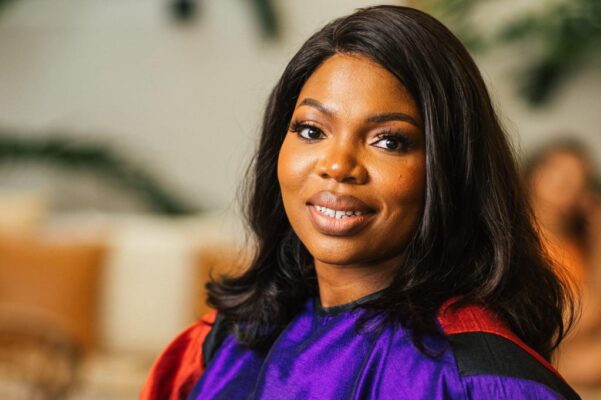
by Blessing Adesiyan
Every Nigerian home is a small government.
In mine, the generator is the power company. The borehole is the water board. The data plan is the internet provider. Our savings if there are any is our health insurance. School fees are the education ministry. The security man at the gate is the police. When the road outside floods, the residents’ association is the ministry of works.
I am not complaining about my own family. We are among the fortunate ones, although I am deeply unhappy with my diesel and electricity bill. But, what I am describing is a country where almost every household has had to become its own state, because the actual state has not shown up. This did not begin with this government, or the one before it. It has been true for as long as most of us can remember. But it has never been as heavy as it is now.
The numbers are not opinions. The World Bank estimates that 63% of Nigerians, about 140 million people, were living below the poverty line in 2025, the highest level on record. This year, 36 million Nigerians faced a food crisis during the lean season, the worst hunger ever recorded here. Four in ten children under five are stunted, their growth and brain development held back by not having enough of the right food. Nigeria accounts for more than a quarter of all women who die in childbirth anywhere in the world.
Behind each of those figures is a kitchen. A mother scraping the bottom of the pot so the children eat first. A teacher who cannot afford the fare to reach her pupils. A worker who loses three hours a day on a broken road and still has to pay for the diesel that lets his family sleep through the heat. A family that delays taking a feverish child to the clinic because the bill will come in cash, before treatment, with no insurance to share the cost.

One adult’s healthy diet now costs about two-thirds of the national minimum wage. That is before rent, transport, school, light, water or medicine. Families are not budgeting anymore. They are triaging.
Here is what makes it hard to bear: Nigerian families pay twice.
We pay the state through taxes, levies, tolls, tariffs and fees. Then we pay again, privately, for the services that money was supposed to provide. About three-quarters of all health spending in this country comes straight from families’ pockets, one of the highest shares in the world. Fewer than one in seven Nigerians have any form of health insurance. Families buy their own power, dig their own water, fund their own security and, in many communities, patch their own roads.
A government has every right to collect revenue. A country cannot be built without it. But taxation is a contract, not a toll gate. The citizen contributes, and the state returns that contribution as public goods that no family could build alone: reliable electricity, safe water, functioning clinics, schools that teach, roads that do not break axles. When the state collects and families still provide everything for themselves, the contract is broken. Every new levy, however well designed, then feels less like citizenship and more like a charge for staying in a house you are already paying to maintain.
The question for this election is not whether Nigeria should collect revenue. It is: what do families get back for what they pay?
Some support does exist, and it deserves acknowledgement. Cash transfers have allegedly reached about nine million households. The lowest earners no longer pay income tax. Student loans have helped more than a million young people stay in tertiary education. But most of this support is temporary, small, or reaches only part of the population. A family receiving ₦75,000 once over three months, in a country where a single pot of jollof rice for five now costs over ₦30,000, has been given a gesture, not a safety net.
What families need is not complicated, and it is not partisan:
- Regular, predictable support for the poorest households, funded from our own budget, not one-off transfers paid for with loans.
- Protection for the first 1,000 days of every child’s life: nutrition for mothers and babies, and safe, affordable childbirth.
- Free Healthcare that reaches the informal economy, where most Nigerian families earn their living.
- A national plan for care. That means childcare that lets mothers work, and recognition of the unpaid care women provide that holds this country together.
- Public accountability: a published, regularly updated record of what each programme spent and how many families it actually reached.
Before January 16, every candidate seeking our vote, the incumbent included, should answer one question in public, side by side: what is your plan for Nigerian families, and how will we know if it is working? If they will not debate it, we should ask why.
I am a mother of four, and I am worried about the country my children are growing up in. I suspect you are too. Nigerian families have shown, every single day, that they can carry almost anything. We have run our own little governments for decades. But resilience is not a policy, and endurance is not a plan.
We can keep carrying everything quietly, or we can make families the issue this election. I am choosing the second. I hope you will too.
Adesiyan is the Founder and Chief Care Officer of Caring Africa, an organization scaling care economies on the African continent and beyond. Her work spans caregiver-matching technology for Nigerian families and National Care Policy development with the Federal Ministry of Women Affairs, alongside partners including the Gates Foundation, Morgan Stanley, World Bank, IFC, and more.
