
 Get Guardian on Google
As the COP31 begins, African countries are leveraging talks to demand predictable, accessible and affordable climate finance from developed economies, while defending their right to industrialise and benefit from their natural resources. For Nigeria, priorities include financing renewable energy, electricity transmission, solar manufacturing, climate-resilient agriculture, coastal protection and responses to flooding and desertification, CHINEDUM UWAEGBULAM reports.
African countries are heading into the 31st United Nations Climate Change Conference (COP31), opening today in Antalya, Türkiye, with a demand from developed economies to move beyond political commitments and provide predictable, accessible and affordable financing for climate adaptation, energy transition and industrial development.
For the continent, the negotiations offer an opportunity to bridge the widening gap between climate pledges and actual financial support while protecting its right to industrialise, responsibly exploit its natural resources and create jobs without deepening economic dependency.
The African position, articulated by the African Group of Negotiators (AGN) and supported by civil society organisations under the Pan African Climate Justice Alliance (PACJA), centres on climate justice, financing Africa’s transformation and preserving its development space.
African countries argue that a continent responsible for a relatively small share of historical global greenhouse gas emissions should not bear a disproportionate share of the cost of addressing climate change. They want developed countries to meet their climate finance obligations through grants and highly concessional funding rather than loans that worsen the debt burden of vulnerable economies.
Africa needs between $1.3 trillion and $1.6 trillion cumulatively by 2030 to meet its adaptation and mitigation requirements. The funding would support renewable energy, climate-resilient infrastructure, agriculture, water security, coastal protection, early-warning systems and industrial transformation.

According to Greenpeace Africa, the continent receives less than 15 per cent of its yearly adaptation funding requirements, while nearly 70 per cent of climate finance delivered comes through debt-creating loans. This has heightened concerns that countries already struggling with debt servicing could be forced to borrow more to protect their populations against climate impacts.
The financing debate has gained urgency following the United Nations Environment Programme’s (UNEP) 2026 Adaptation Gap Report, which estimates that developing countries will require approximately $305 billion annually by 2035 to meet their adaptation needs. However, international public adaptation finance from developed to developing countries stood at between $28.2 billion and $31.7 billion in 2024, an increase of only about $1 billion over the previous year.
Even if the commitment made at COP30 to achieve at least triple adaptation finance by 2035 is realised, it would cover only 20 to 29 per cent of estimated requirements. The report also warns that private-sector adaptation financing needs could almost double the overall estimate.
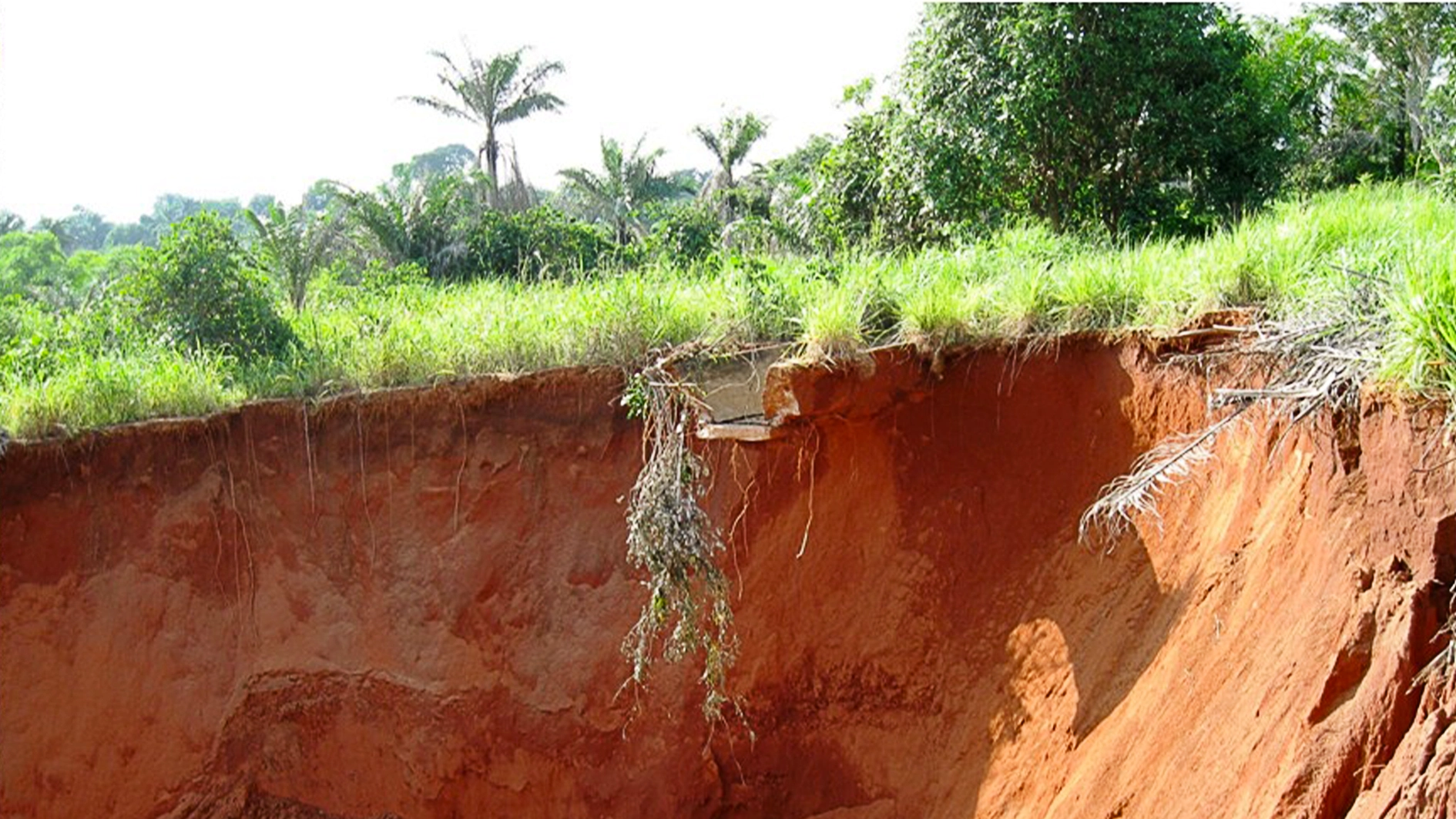
For Africa, recurrent flooding, prolonged droughts, desertification, coastal erosion and extreme heat threaten agricultural productivity, water supplies, housing, transport infrastructure and public health. Adaptation is therefore not merely an environmental concern but a development priority with direct implications for food security, employment, poverty reduction and infrastructure investment.
African negotiators are pushing for a dedicated agenda item under the United Nations Framework Convention on Climate Change (UNFCCC) to address implementation of the commitment to triple adaptation finance. The AGN wants clear baselines, funding trajectories, delivery arrangements and accountability mechanisms to establish how much additional financing will be provided, who will contribute and how resources will reach developing countries.
The demand follows the COP30 agreement in Belém, Brazil, which established the tripling aspiration by 2035 but left unresolved questions about the baseline year, actual financial target and delivery mechanisms.
The African Group is also seeking formal discussions on climate finance obligations under Article 9.1 of the Paris Agreement and the financing arrangements of the Green Climate Fund. It wants greater attention to climate-related trade measures, which could restrict developing countries’ market access and undermine their industrialisation ambitions.
Besides financing, Africa wants the global energy transition to create economic opportunities rather than reinforce inequalities in international trade and resource extraction. The continent holds significant deposits of critical minerals, including lithium, cobalt and manganese, required for batteries, electric vehicles, solar technologies and renewable energy infrastructure. However, much of the economic value generated from their extraction and processing remains outside Africa, with countries largely exporting raw materials for manufacturing elsewhere.
African negotiators and civil society groups are therefore advocating local processing, manufacturing, technology transfer and investment in domestic industrial capacity. They argue that the transition to a low-carbon economy must enable African countries to move up international value chains rather than remain exporters of unprocessed minerals and importers of expensive clean-energy technologies.
A just transition, they maintain, must expand electricity access, create decent jobs, develop skills and strengthen industrial competitiveness while reducing emissions.
For Nigeria, the negotiations have particular significance as the country requires investment in renewable energy, electricity transmission, solar manufacturing and battery value chains to address its energy deficit and diversify the economy.
Oil and gas remain important to public revenue, foreign exchange earnings and domestic energy supply. Managing the transition will therefore require financing that supports cleaner energy development without undermining energy security, employment and economic stability.
Water security and food production also feature prominently in Africa’s priorities. Climate variability is placing pressure on agricultural systems through irregular rainfall, prolonged dry spells, flooding, declining soil productivity and water shortages.
The African Union’s emphasis on water security, climate-resilient agriculture, early-warning systems and combating desertification reflects the need to link adaptation with food security, public health and economic resilience.
Governments are seeking investment in irrigation, resilient farming systems, water infrastructure, storage facilities and improved agricultural technology to strengthen food production.
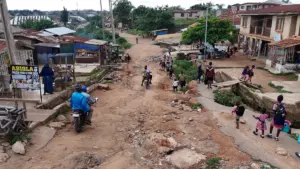
Nigeria faces similar challenges. Flooding in urban and rural communities, coastal erosion, desertification in northern states and rising temperatures are placing additional pressure on infrastructure and agricultural production.
The country must complement its international demand for climate finance with stronger domestic planning, investment and accountability. Its Nationally Determined Contribution, which outlines climate commitments towards 2035, will require substantial funding, institutional coordination and technology transfer to translate targets into action.
The terms of financing will be as important as the volume. African countries want grants and concessional resources that will not worsen their debt positions. They are also seeking simpler procedures for accessing international climate funds and stronger institutional capacity to manage them.
Climate finance, they argue, must reach state and local governments, farmers, coastal communities and vulnerable households rather than remain concentrated in national programmes with limited evidence of benefits at community level.
Chair of the AGN, Dr Antwi-Boasiako Amoah, urged delegates to move the climate summit from pledges to tangible action, saying COP31 in Antalya must be defined by delivery rather than another cycle of unfulfilled promises.
Speaking at the African Group of Negotiators Expert Support (AGNES) Pre-COP31 Strategy Meeting in Nairobi, he described the continent’s demands as fundamental conditions for sustainable development.
“When Africa speaks about adaptation, agriculture, finance, loss and damage, just transition and means of implementation, we are not presenting a list of negotiating preferences. We are rather talking about the conditions under which our countries can develop, protect their people and build resilient economies in a changing climate,” Amoah said.
He cautioned against uniform energy transition frameworks that ignore regional economic realities, insisting that Africa’s transition must prioritise energy access, clean cooking, poverty eradication and green industrialisation.
“Africa cannot simply export raw materials required for the global transition while importing finished technologies at significantly higher value. The transition must create value in Africa, build industries in Africa, strengthen skills in Africa, and create jobs for Africans. That is part of climate justice,” he said.
Amoah also urged negotiators to scrutinise emerging global trade policies, warning that climate measures must not become instruments of economic protectionism or reinforce unequal economic relationships.
He called on the international community to honour existing agreements on climate finance, adaptation and development to rebuild confidence in multilateral climate negotiations. Maintaining the 1.5°C temperature goal and accelerating climate action, he said, depend on providing developing countries with the resources needed to implement their commitments.
“Developing countries need the means to act, and the multilateral system has to deliver on what it has already agreed,” he said.
The African Group also called for a clear commitment to replenishing the Green Climate Fund, urging the conference to use existing mandates to assess developing countries’ financial needs and guide resource mobilisation.
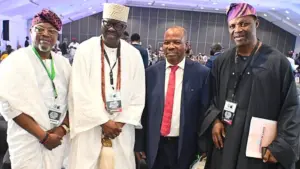
The Chairman, Board, West African Science Service Centre on Climate Change and Adapted Land Use (WASCAL), Prof. Chinedum Nwajiuba, said Nigeria should use COP31 to push for predictable, accessible and grant-based climate finance to address its pressing environmental challenges, including flooding, desertification, coastal erosion and energy insecurity.
Nwajiuba, who is also the Chairman, Board of Directors, Nigerian Environmental Study Action Team (NEST), said Nigeria should ensure that a substantial proportion of this financing is provided as grants rather than loans that deepen the debt burden of developing countries.
“As Africa’s most populous country and a major hydrocarbon producer, Nigeria explicitly rejects a rapid, forced abandonment of fossil fuels. Nigeria would be championing natural gas and clean cooking technologies as an indispensable, low-carbon stepping stone toward its 2060 net-zero target.
“There is the challenge of desert encroachment and land degradation. The Northern fringes of Nigeria, the matter of the Lake Chad, the insecurities in the Sahel and the arid/semi-arid parts of West Africa including Nigeria are some of what will be discussed at various side events and bilaterals. The increased importance of the blue economy to Nigeria, as well as challenges of rising sea levels and coastal communities will be of interests to a wide range of participants.”