 Get Guardian on Google
I have spent 15 years working in Nigeria’s payments industry. Over that time, I have watched the country move from cash to transfers, cards, and mobile apps. Contactless payment is the next step.
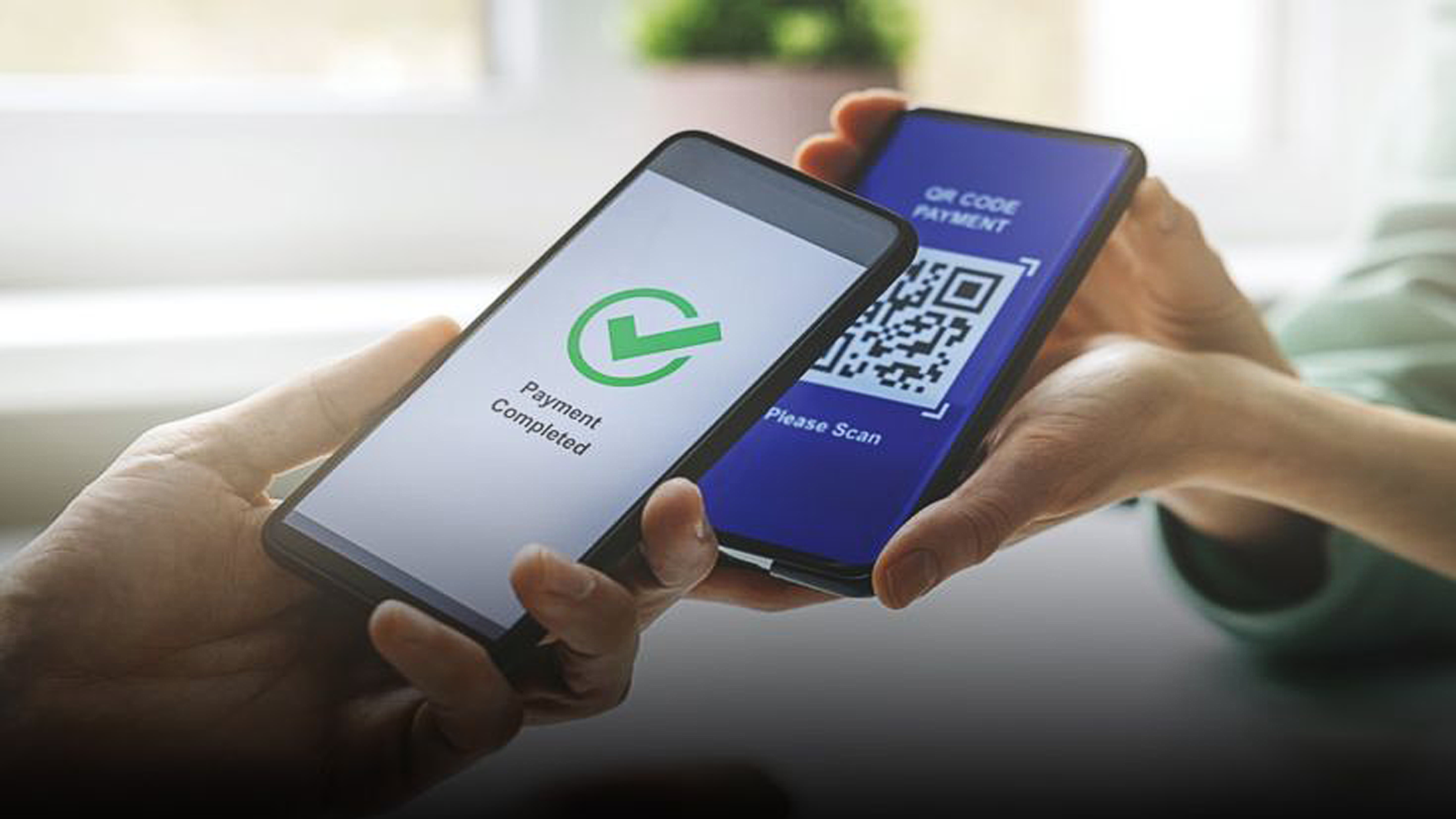
Picture yourself paying for coffee by holding your phone to the terminal. It beeps, and the payment is done. You don’t open a banking app, type an account number, or show the cashier a transfer alert. That is the excitement that the launch of Google Wallet and Google Pay brings to the fintech landscape in Nigeria. Customers with eligible bank cards can now use compatible Android devices to make contactless payments at participating terminals.
But Nigeria’s contactless story started well before Google. What matters is whether this launch gets people using it day to day.
Nigeria is already paying digitally
Digital money transactions have become part of the daily life of average Nigerians. We make transfers to pay for groceries, pay for meals, settle bills, and receive payments for business transactions. Cards, mobile banking and agent networks have equally expanded access across the country. The 2026 Access to Financial Services in Nigeria survey by Enhancing Financial Inclusion and Advancement (EFInA) puts overall financial inclusion at 79% of adults, approximately 94.2 million people.
Sixty-four percent of adults already use digital financial services, which shows that the public comfortable with digital money. However, financial inclusion is not the same as contactless access. Customers still need eligible cards, compatible NFC-enabled devices and merchants with terminals that accept contactless transactions.
Nigeria’s contactless journey did not start with Google
Nigeria’s early contactless experiments date back to 2015.
Unified Payments and its banking partners introduced PayAttitude, an NFC-based solution that allowed customers to pay using contactless tags linked to their accounts. Access Bank also introduced PayWithCapture, combining QR codes, NFC and other payment options in one application. Access Bank’s 2016 annual report recorded more than 40,000 merchants signed up to PayWithCapture and transaction growth of over 2,000% compared with 2015. The figures suggested early interest, although merchant registrations do not establish how many businesses remained active or how frequently customers used the service.
In 2022, ProvidusBank, Mastercard, Interswitch and Thales announced a mobile tap-to-pay initiative using NFC-enabled smartphones and wearables. The Central Bank of Nigeria followed in 2023 with guidelines establishing operating and risk-management requirements for contactless payments.
In February 2025, PalmPay and CashAfrica announced a pilot involving 1,000 contactless-enabled terminals, with the possibility of expanding across PalmPay’s wider network if the pilot proved successful.
Clearly, local institutions have been laying the groundwork for years. The hard part has been getting from launches and pilots to a network that people actually use.
Global payment platforms need local infrastructure
When a customer taps a phone, the payment feels instant.
Behind it, banks, payment networks, processors and merchants must work together. The customer’s bank must support the card, the processor must route the transaction, and the merchant needs a terminal equipped to accept the contactless signal. In a post, Chika Akaeze, a business development executive at Interswitch, described the 18–24 months of backend work involved in connecting card issuers and merchants for the Google Pay rollout. He identified SPAR, Medplus, Bokku and NNPC Retail as locations where customers could tap compatible Android phones on Interswitch terminals.
Google brings the wallet and customer-facing experience, but local banks, processors and merchant acquirers make the transaction possible. A global payment rail still needs a local gateway to reach the businesses where Nigerians actually shop.
Mobile wallets also rely on tokenisation, replacing sensitive card details with a digital substitute during payment. This protects the customer’s underlying card number, even if broader fraud controls are still needed.
Merchants decide whether this works
Nigeria already has a substantial electronic payment network.
The Central Bank of Nigeria reported approximately 2.94 million deployed PoS terminals and 6.4 billion PoS transactions in the first half of 2024, valued at about ₦85.9 trillion. However, these figures do not reveal how many terminals support NFC or how many transactions were contactless.
A terminal that accepts an inserted bank card is not necessarily equipped to accept a phone tap. So, the sheer size of Nigeria’s PoS network shouldn’t be mistaken for contactless readiness.
There is also a commercial question. A supermarket may benefit from faster checkout and shorter queues. A small business that already accepts transfers and conventional card payments may see little reason to spend more on new equipment.
For merchants to buy in, they need affordable terminals, prompt settlement, and quick resolution when transactions fail, alongside proof that enough customers actually want to tap and pay. The industry should publish how many NFC terminals are active, where they are and how often they’re used.
Who can actually use it?
Google’s published list of supported Nigerian payment cards includes selected Mastercard products from FirstBank, GTBank, Providus Bank, UBA and Zenith Bank, as well as UBA Visa prepaid cards. Customers also need a compatible Android phone with NFC, and the merchant must have a contactless-enabled terminal. Not every card issued by a participating bank is automatically eligible.
Verve, one of Nigeria’s major domestic card schemes, and AfriGO, the national domestic card scheme, are not listed among Google’s currently supported Nigerian payment methods for in-store contactless payments. Several fintech-issued cards are also absent.
For now, that leaves out a large share of cardholders.
Leaving out domestic schemes and neo-banks limits how far the service can go. Until Verve, AfriGO, and major fintech card issuers are brought into the fold, mobile tap-to-pay will remain a niche feature for a sliver of Nigerian cardholders.
Security must keep pace with convenience
Tapping without a PIN raises fair questions. What happens when a phone is lost? How fast can a customer block a card? Who absorbs the loss on an unauthorised payment?
Tokenisation reduces the exposure of card details, but it does not eliminate fraud. Stolen devices, compromised credentials and social engineering can still put customers at risk. To build trust, banks have to pair biometric device locks and real-time fraud monitoring with a dispute process that doesn’t leave customers stranded when something goes wrong.
The CBN’s contactless payment guidelines cap single transactions at ₦15,000 and set a daily cumulative limit of ₦50,000. Higher-value transactions require a PIN or biometric authorisation. Both shoppers and cashiers need clarity on how these limits work in practice. Merchants in particular need assurance that disputed or failed taps won’t leave them out of pocket.
Making the tap work for everyday Nigeria
Over the past decade I have seen firsthand how much heavy lifting it took to move Nigerians from cash to instant transfers and PoS cards. Contactless payments will not scale on the back of press releases and global partnerships alone. It will require the same grind of subsidising merchant hardware, onboarding domestic card schemes, tightening dispute resolution, and tracking real usage data rather than terminal headcounts.
Google has brought a familiar global wallet to Nigeria. The harder job now is making it work at the places where people actually live, shop and do business.
The real test will be when a customer can walk into an ordinary shop, tap a compatible phone or card and complete a payment securely and reliably, without having to ask whether the terminal accepts it.