 Follow Us on Google News


 Follow Us on Google Discover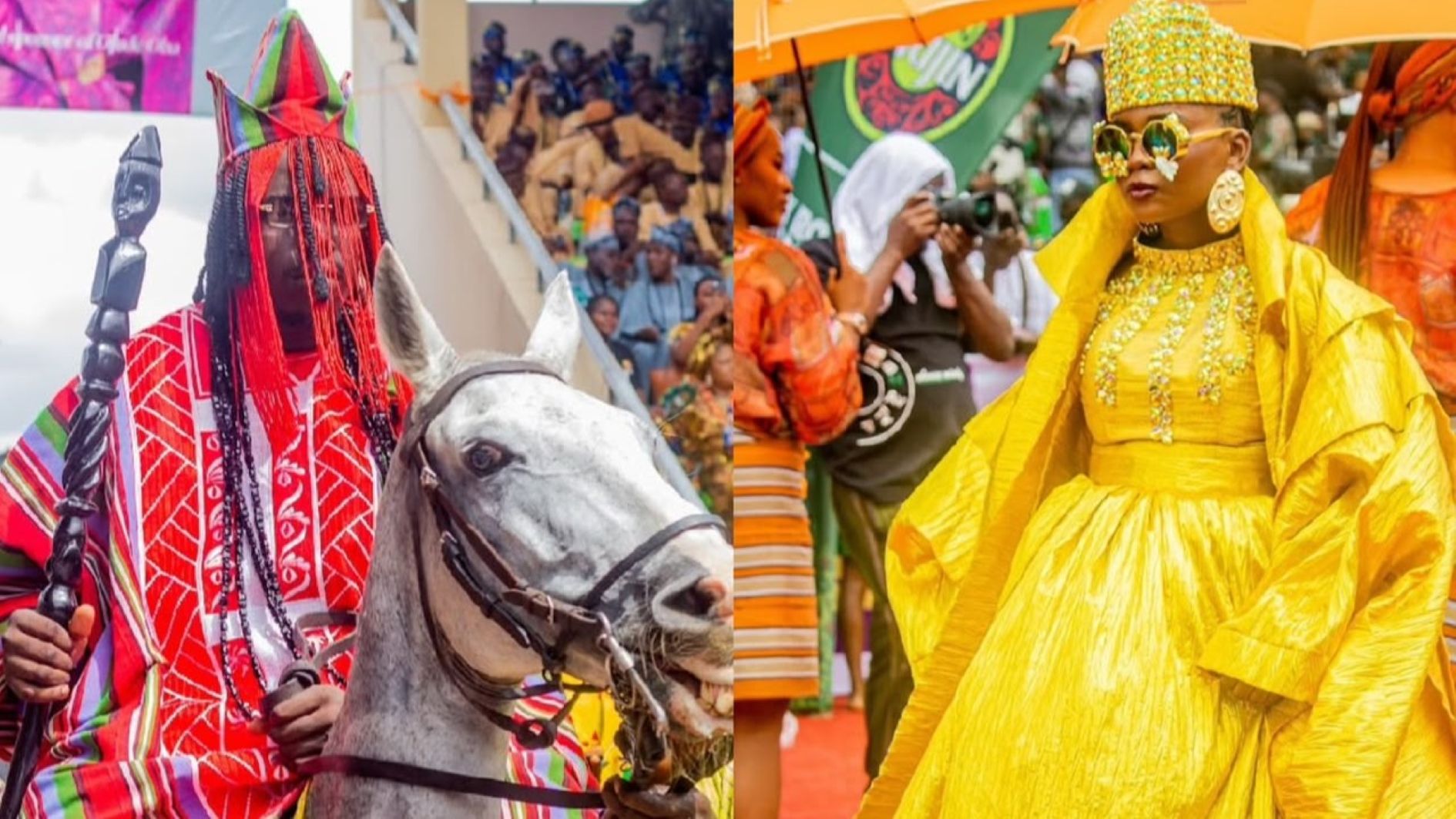
There is a particular kind of tiredness that comes from watching Nigerian culture photographed badly. You know the pictures. Bright cloth, a horse, a crowd, everything shot from a safe distance and captioned as though the viewer were a tourist who wandered in by accident.
I have sat through enough of it over the years to walk into most cultural exhibitions with my guard up.
I put my guard down about seven minutes into Ayodeji Tifase’s ”
‘Between Two Worlds: Ojude Oba 2026″, which opened on August 7, 2026 as part of the three-day gathering at Ile Agbasaga(The House of Agbasaga) in Osogbo, Osun State, under the theme ‘The World Keeps Evolving, While Culture Remains The Same.’
The work is a photographic series shown alongside a short documentary film, all of it made in a single day at the Ojude Oba festival in Ijebu Ode in May 2026. I want to sit on that fact for a moment, because it tells you something about how the photographer works. He did not gather this over three seasons and edit the best of it together. He went in once, stayed the whole day, and came out with a story that has a beginning, a middle and an interesting end.
What struck me first was where he chose to start. Not with the horses. Not with the gold. The first photograph in the sequence, printed in black and white, shows two chiefs standing at the edge of the palace forecourt before the crowds arrive and wait. Nothing is happening in it. That is the point. Tifase seems to understand something that escapes most people who point a camera at a festival, which is that the spectacle is the last thing to arrive, and the least interesting thing to record.
He follows that with a picture of a man fitting a ceremonial bridle onto a grey horse hours before the Balogun families ride. The animal is half dressed. The handler’s hands are doing careful work that nobody in the grandstand will ever see. In the wall text, the photographer makes the observation plainly that the splendour the crowd cheers is built by hands that never appear in it. I stood in front of that frame longer than any other in the room.
The middle of the series is where the festival finally opens its mouth. There is a wall of purple and gold where an entire regberegbe age grade moves as one body, so densely packed that individual faces surface and disappear again like something breathing. There is a rider from one of the old warrior families lifting his staff as he passes, sitting his horse with the ease of a man whose grandfather did the same thing on the same ground. And there is the photograph that anchors the whole exhibition, a lone figure crossing the red carpet in a gown of pure gold, crowned, the crowd behind her thrown soft so that she stands entirely alone in her own frame.

That picture will travel. It is the one that will end up on the poster and the front of the catalogue, and it deserves to. But I would gently argue it is not the best thing in the room.
The best thing in the room is photograph called ‘Through the Grille.’ A foreign visitor in a blue suit sits at a window holding a Yoruba hand fan, beside two women in full aso ebi. An iron window frame cuts straight across the middle of the picture and divides them. The man is watching the women with the careful attention of somebody trying to learn a language in real time. In one frame, without a word of explanation, Ayodeji has photographed the entire question his project is asking. What does it mean to carry a culture across the world, and what does it mean to come back to it. The grille is the distance. The fan in his hand is the reaching across.
This is the diaspora thread that runs quietly under everything here, and it is handled with more intelligence than I expected.
Ayodeji Tifase is not sentimental about return. One photograph shows a forest of raised phones and tablets under the festival banner, a crowd busy broadcasting the day to relatives who could not come. Another shows a group of chiefs almost walled in by cameras and microphones, the recording nearly swallowing the thing being recorded. He is asking, without saying so, whether the children of Ijebu abroad are inheriting a festival or only its footage. I do not think he answers it. I do not think he should.
The film carries the same discipline as the photographs, and the two are clearly the work of one mind rather than a photographer who also happened to shoot video. There is restraint in the edit. It lets scenes breathe.
If I have a reservation, it is a small one and it concerns the back half of the series. The festival at full cry is so visually loud that the quieter images in the closing section, strong as they are individually, have to fight for attention against everything that came before them. That may simply be the honest shape of the day. It may also be that two or three fewer photographs in the middle would let the ending land harder.
And land it does, eventually. The series closes on a woman sitting alone in dark cloth as the ground empties behind her, printed in black and white so that she could belong to this year or to any year since 1892. She is not celebrating. She is somewhere else entirely, sitting with whatever the day meant to her.
We are not short of photographers in this country. We are short of photographers who can build an argument. Tifase has built one here, and he has built it with respect, which is the rarer quality.
Nobody in these frames is made small, made quaint, or made into evidence of anything. The chiefs are permitted their authority. The women are permitted their glamour. The old man in velvet is permitted his silence.
Ile Agbasaga chose its theme well this year. On the evidence hanging on these walls, the world does keep evolving, and the culture does not so much remain the same as insist on evolving with it, on its own terms, wearing gold, on horseback, in front of a million phones.
Between Two Worlds: Ojude Oba 2026″ runs at Ile Agbasaga, Osogbo, through August.

