
 Get Guardian on Google
As journalism grapples with the growing threats of misinformation, disinformation, digital disruption and falsehoods, the Nigerian Guild of Editors is taking the conversation beyond newsrooms, placing a new publication in the hands of institutions preparing the next generation of journalists.
With journalism at a crossroads, the rapid transformation of the media landscape, driven by digital technology and artificial intelligence (AI), presents both unprecedented opportunities and significant challenges. While these innovations have revolutionised information gathering and dissemination, they have also created new threats that challenge the credibility of news, the integrity of the profession and public trust in the media.
From the proliferation of fake news to the sophisticated manipulation of information through AI-generated content, journalists face an increasingly complex environment in which distinguishing facts from falsehoods has become a critical professional responsibility.
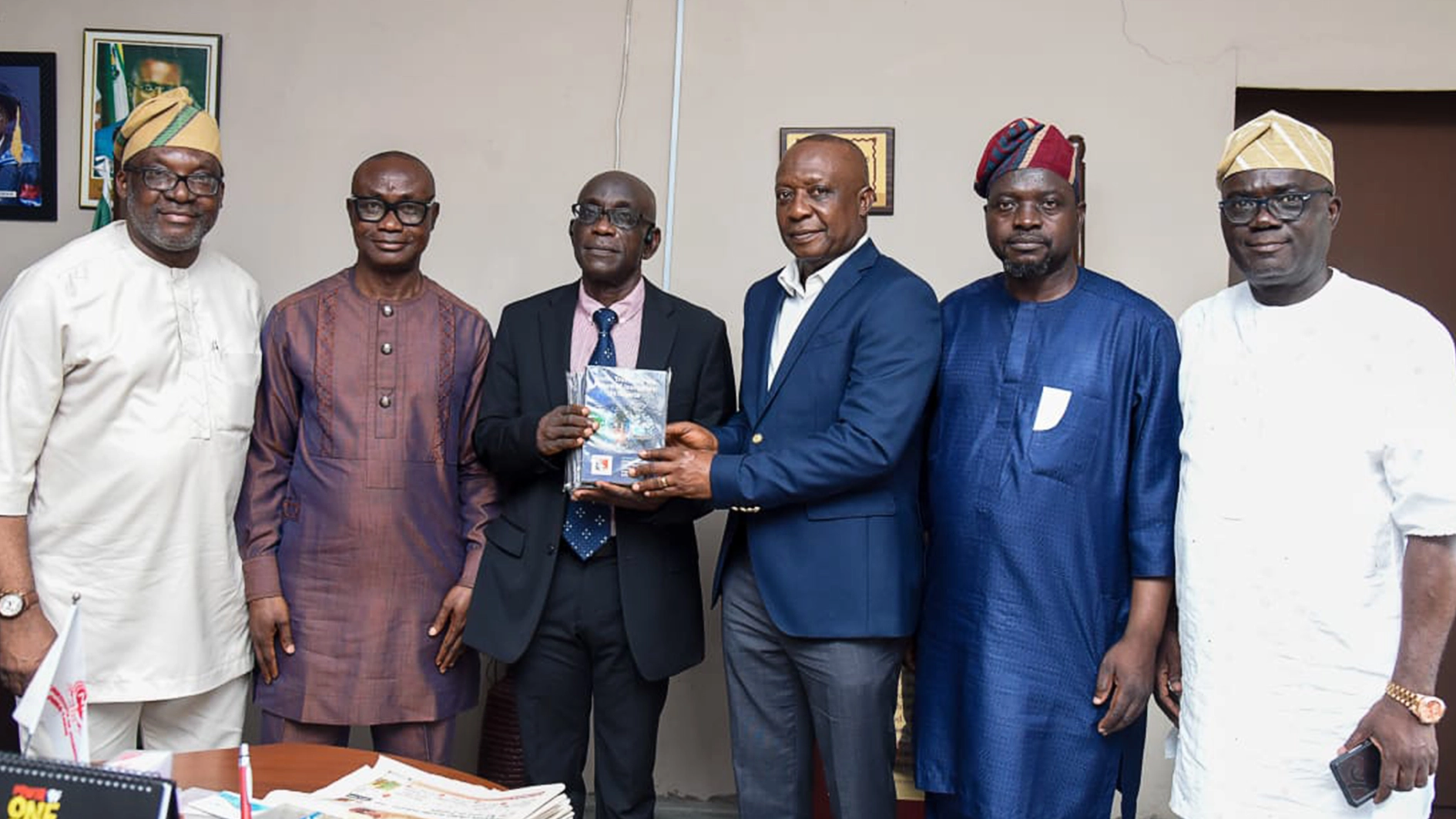
It is against this backdrop that the Nigerian Guild of Editors (NGE) has taken a significant step towards strengthening the future of journalism in the country. The Guild recently donated copies of its recently unveiled publication, Truth, Trust, and the Future of Journalism in Nigeria, to six universities and other institutions involved in training aspiring journalists namely: University of Lagos (UNILAG), University of Ilorin (UNILORIN), Lagos State University (LASU), Lagos State University of Science and Technology (LASUSTECH), Yaba College of Technology (YABATECH) and the Nigerian Institute of Journalism (NIJ).
The intervention, which is aimed at strengthening professional standards and safeguarding the future of the profession, comes at a time when journalism in Nigeria is facing mounting challenges including shrinking newsrooms, declining advertising revenues, political and commercial pressures and the growing influence of digital platforms on how information is produced and consumed.
These challenges, as examined in the publication go beyond the question of whether journalists are committed to professional ethics. They touch on the institutional, economic and technological conditions necessary for journalism to fulfil its responsibility as a credible source of information and a watchdog in a democratic society.
Edited by Prof. Chinyere Stella Okunna, Tony U. Onyima, Iyobosa Uwugiaren, Angela U. Agoawike and Kabir Alabi Garba, the publication brings together the perspectives of scholars, experienced journalists, editors and media practitioners to examine the challenges confronting the profession and the measures required to sustain its relevance in a rapidly changing information environment.
Its contributors include LanreIdowu, Akpandem James, Sule Yau Sule, Hamza Idris, Sylvester Odion Akhaine, Elueme Emeka Izeze, Marcel Mbamalu, Adaobi Olivia Okeke, Dapo Olorunyomi, Lanre Arogundade, Azu Ishiekwene and the five editors.
Structured into three sections and 14 chapters, the book examines issues ranging from professional ethics, investigative reporting and editorial independence to misinformation, journalists’ safety, digital transformation, artificial intelligence, journalism education and the economic sustainability of media organisations. It also considers the responsibilities of the press ahead of the 2027 general elections and the need to preserve its watchdog role in Nigeria’s democracy.
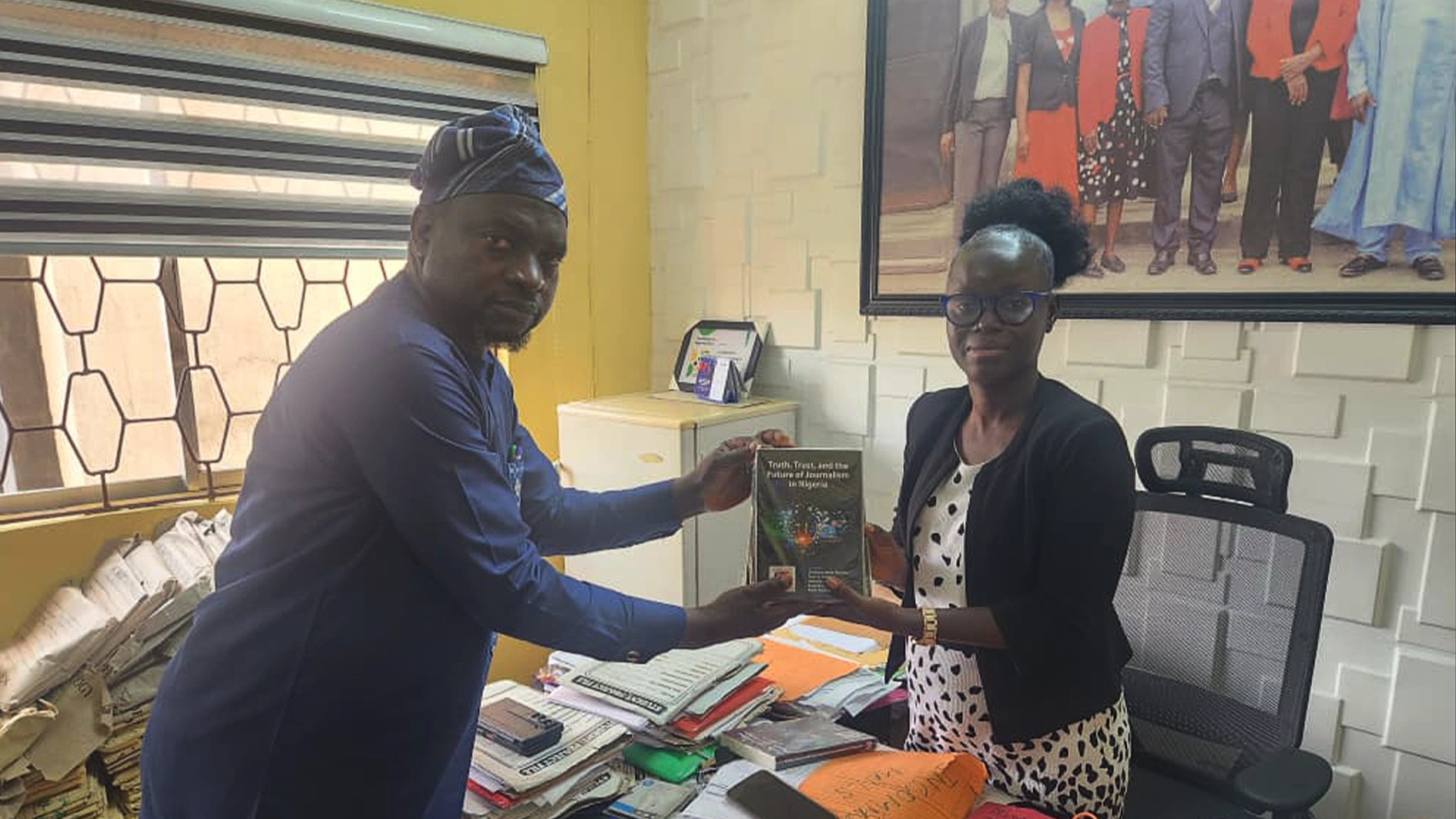
Garba.
She also underscored the importance of the Nigerian Guild of Editors in the conversation, given its position as an association of media leaders responsible for editorial gatekeeping and newsroom leadership across print, broadcast and digital platforms.
Speaking on the book, especially during the presentation of copies at the various institutions, the Vice President (West), Nigerian Guild of Editors, Kabir Alabi Garba, said the publication is part of a broader initiative aimed at bridging the gap between what is taught in journalism and Mass Communication classrooms and the realities of professional practice in newsrooms across the country.
Garba, who doubles as the Weekend Editor of The Guardian, explained that the publication was conceived to bridge the gap in industry -academia collaboration.
Describing the NGE as an umbrella body for media gatekeepers, editors and professionals across the print, broadcast and online media in Nigeria, he said the publication brings together contributions from scholars in academia and experienced professionals in the newsroom, offering perspectives on the evolving demands, responsibilities and challenges of journalism in the country.
He explained that one of the major priorities of the NGE President, Eze Anaba since assuming office three years ago had been to promote sustained conversations between the academic community and the media industry.
He noted that the need for such engagement became more pressing when the Guild identified a considerable disconnect between journalism education and the practical experiences of journalists working in media organisations.
“One of his priorities is to see how we can continue the conversation around the town and gown,” he stated.
Garba further disclosed that the observation of the gap between classroom instruction and professional journalism practice informed the decision to establish a committee to oversee research and publication which eventually led to the latest publication.
“When we noticed a very big gap between what is obtainable in the newsroom and what is being taught in the classroom, the Guild President empowered a committee headed by Professor Chinyere Stella Okunna, Nigeria’s first female Professor of Mass Communication and the Deputy Vice-Chancellor of the Paul University Awka, who coordinates the team that produced this book,” he said.
He described the book as a product of contributions from individuals with different experiences and expertise in journalism and communication studies, adding that its content reflects the importance of connecting theoretical knowledge with the realities of the profession.
He explained that the Guild intends to make the book available to as many Mass Communication departments in Nigerian tertiary institutions as possible to promote wider access to its ideas and contributions.
“Part of our aim is to make it available to at least many of the departments offering Mass Communication in Nigeria,” he stated.
At the University of Ilorin, the Head of Department, Prof. Rasaq Adisa, who received the publication, described the donation of the copies of the book as timely because the department was preparing for accreditation in which the book will play crucial role in the process of accreditation.
According to him, “One of the key requirements is the number of books we have, their relevance, and how recent they are. For the Nigerian Guild of Editors to have given us copies of a 2026 publication is a great asset — for our department, for the library, and for the university as a whole. The gift is highly appreciated.”
He advised the students of Mass Communication at the department to make good use of the book, noting that it is particularly valuable because it contains chapters contributed by people who have lived the profession.
“It captures practical experiences that cannot be found in pure theory,” he stated.
At the University of Lagos, the Dean of the Faculty of Communication and Media Studies, Prof. Oloruntola Sunday, said that the publication will play critical role in moulding the next generation of excellent journalists.
He described the publication as a form of collaboration between the town and gown, expressing hope that it will bridge the gap identified by the Guild while strengthening journalism education.
He said: “This publication will go a long way in helping our students, especially in the area of ethics, and I promise that we are going to make very good use of it.”
Speaking, while receiving copies of the book at the Lagos State University (LASU), the Dean of the Faculty of Communication and Media Studies, Prof. Jide Jimoh, said the publication, with its wealth of knowledge and the expertise of its contributors, would serve as a valuable resource for students and academics in their quest for knowledge.
He described the book, which brings together contributions from professionals and academics, as an important addition to knowledge advancement, noting that the faculty places great emphasis on strengthening town-and-gown relationships.
Jimoh further stated that lecturers in the faculty remained committed to continuous learning and professional development, particularly in acquiring practical industry skills to enrich their teaching. He explained that this would help equip students with the relevant knowledge and competencies needed to remain competitive in the rapidly evolving media job market.
In her remarks, the Head of the Department of Mass Communication at Yaba College of Technology (YABATECH), Dr. Olorunyomi Omolara, commended the leadership of the Nigerian Guild of Editors (NGE) for identifying the knowledge gap among students preparing to enter the media industry and initiating efforts to address it.
She noted that the initiative would help students gain a better understanding of industry expectations and the professional demands of journalism before venturing into the field.
She also praised the NGE for providing students with a platform to learn from industry professionals, adding that the initiative demonstrated the Guild’s commitment to nurturing a new generation of journalists equipped to uphold truth, build public trust and meet the demands of the profession.
“If you are hiding in the college, there is no way you can hide when you get into the industry. Our work is teamwork, and students must understand that they need to practise individually, even when they are involved in group assignments,” she stated.
Receiving copies of the publication in his office, the Dean of the College of Applied Social Sciences at LASUSTECH, Prof. Olumuyiwa Olamade, emphasised the need for sustained collaboration between academia and industry to produce graduates equipped with the requisite knowledge and skills to meet the demands of the workplace.
He expressed profound appreciation to the NGE for donating copies of the book to the institution, noting that it would contribute to knowledge advancement, enrich academic resources and support research endeavour.
Also speaking, the Senior Lecturer and Assistant Director of ICT, LASUSTECH, Dr. AdewaleAjayi, praised the NGE for preserving the legacy of the Guild’s pioneer president, the late Alhaji Lateef Jakande, through its annual lectures, which have continued to serve as a valuable platform for communication students to gain knowledge, interact and broaden their understanding of the profession.
“We will make the best use of this book, both for our students and for ourselves as lecturers. Thank you very much. We look forward to more engagements with the Guild,” he said.
He also commended The Guardian for providing internship opportunities for students of the institution, noting that those who undergo their industrial training at the newspaper return better equipped with practical knowledge and professional experience. He said this reflected the organisation’s commitment to strengthening town-and-gown relations and fostering meaningful collaboration between the media industry and academic institutions.