

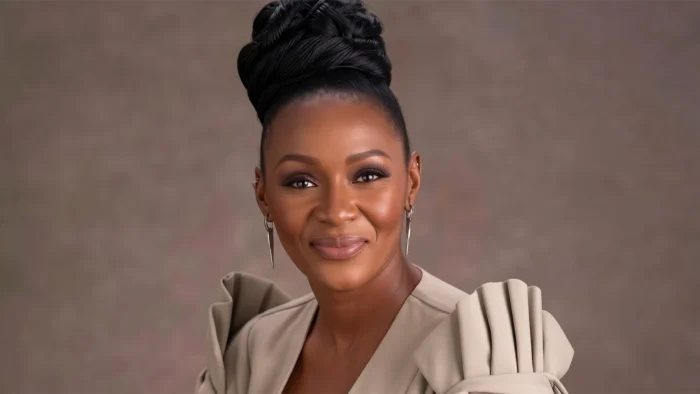
Adenike Oyetunde-Lawal is the General Manager of the Lagos State Office for Disability Affairs (LASODA), an agency that has championed disability inclusion in Lagos State for over 15 years. A lawyer, disability rights advocate and public servant, Oyetunde-Lawal has emerged as one of the leading voices shaping policies and practical solutions for persons with disabilities (PWDs) in the state.
Under her leadership, LASODA has adopted a firmer stance against abuse and discrimination, moving beyond informal reprimands to prosecution in serious cases, particularly those involving sexual and physical abuse of persons with disabilities. The agency works closely with national bodies, ministries, departments and agencies (MDAs), non-governmental organisations and private sector partners to promote inclusive budgeting, policy implementation and institutional accountability.
LASODA currently works through ten recognised disability clusters across the state, which serve as the primary channels for engagement, beneficiary identification and programme coordination. According to Oyetunde-Lawal, these clusters are critical to transparency and equitable access to opportunities.
“Lagos is a highly transient state. People relocate, some pass on, and records change constantly. Our manually generated data places registered PWDs between 10,000 and 15,000, but the numbers fluctuate. That is why we encourage persons with disabilities who are not yet registered to join any of the recognised clusters near them or visit our offices to be properly integrated into our database,” she said.
She disclosed that LASODA is currently developing its official website to improve access to information and digital inclusion for the disability community.
The agency collaborates with the Ministry of Finance and Budget, Ministry of Women Affairs, Education Trust Fund, Ministry of Youth and Social Development, among others, to address education, employment, healthcare, infrastructure and social protection.

Oyetunde-Lawal expressed concern over the widespread misrepresentation of persons with disabilities in society. She identified stigma, stereotypes and harmful narratives as some of the most persistent challenges.
“There are still wrong assumptions – that people with disabilities cannot have children, that all albinos are blind that PWDs cannot go to school or contribute meaningfully. These narratives must be corrected. We must tell our stories ourselves and stop allowing society to define us through ignorance,” she said.
She also highlighted the role of social media in shaping public perception, noting that while digital platforms provide opportunities for visibility, misinformation and harmful content remain major risks.
A trained lawyer and certified expert in alternative dispute resolution, human resource management and emotional intelligence coaching, Oyetunde-Lawal also holds a diploma in special needs education and certifications in autism, Asperger’s syndrome and ADHD from the University of Derby. Beyond government service, she is a multimedia professional, TEDx Gbagada speaker, author of the memoir Adénìké, and founder of the Amputees United Initiative, a support platform for amputees.
Her personal journey is deeply intertwined with her public work. Nearly two decades ago, Oyetunde-Lawal survived bone cancer, an experience that resulted in the amputation of her right leg above the knee. She describes her survival as a product of faith, community support and resilience – experiences that now shape her empathy and leadership.
Growing up as an only child in a community that challenged rigid gender roles also influenced her worldview. With strong parental support, especially from her father, she developed a mindset of independence, confidence and service.
Oyetunde-Lawal identifies perception, stigma and access as the biggest barriers facing persons with disabilities in Lagos. She emphasises acceptance by individuals, families and society -as foundational to progress, alongside access to education, employment, infrastructure and assistive technologies. She also advocates for local production of assistive devices and fiscal incentives to reduce their cost.
Her leadership style blends legal reasoning, emotional intelligence and practical problem-solving. Managing complex teams and emotionally demanding cases, she prioritises fairness, listening and balance, anchored by faith, family and community.
Looking ahead, Oyetunde-Lawal envisions a Lagos where no person with disability is left behind -a state with inclusive education, accessible spaces, meaningful employment, locally produced assistive technologies and policies that move beyond tokenism to real equity. Aligned with the THEMES+ agenda of the Sanwo-Olu administration, she believes disability inclusion must remain a front-burner issue. Disability can happen to anyone, and inclusion is a collective responsibility. Society must see people before labels and back policies with genuine action.
Oyetunde-Lawal also commended Nollywood actress and filmmaker Funke Akindele for her advocacy on lupus awareness through her film Behind The Scenes. She praised Akindele for using her platform to promote empathy, reduce stigma and give visibility to people living with lupus. “When influential voices speak responsibly, they help change narratives. Funke’s work shows that storytelling can be a powerful tool for advocacy, healing and social reorientation,” she said.
According to her, the film has helped members of the lupus community feel seen, heard and supported, while deepening public understanding of lupus as a medical condition rather than a social label. She added that such creative interventions complement government efforts in addressing invisible and autoimmune conditions often ignored in disability conversations.
Although her NGO, Amputees United Initiative, has taken a back seat due to her official responsibilities, Oyetunde-Lawal continues to mentor and support individuals within the disability community whenever possible.
She concludes with a message of resilience: “In the world of disability, life changes constantly. Nobody has it all. But we must keep pushing, keep learning and keep creating space for others to thrive.”
