

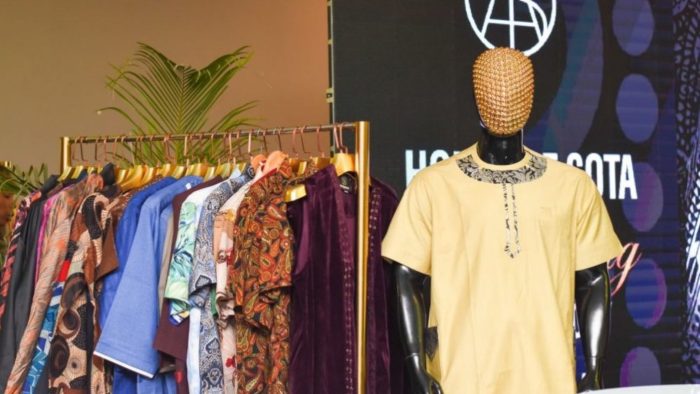
House of SOTA has marked its 10th anniversary with a renewed commitment to promoting Nigerian culture and indigenous fashion globally through strategic collaborations and storytelling initiatives.
Founder of House of SOTA and Chief Executive Officer of the Black History and Lifestyle Awards, Sade Balogun, disclosed this during a press conference held ahead of the anniversary celebration and the unveiling of a partnership with Rolling Stone Africa.
Balogun described the milestone as exciting and fulfilling, noting that the journey over the past decade had been driven by her passion for promoting Made-in-Nigeria products, particularly adire fashion.
According to her, the anniversary celebration coincides with a strategic collaboration among BHLA, House of SOTA and Rolling Stone Africa aimed at amplifying African stories, culture and creativity on the global stage.
She explained that the partnership would leverage Rolling Stone Africa’s “Culture on Culture” series, which explores nightlife, creative expression and local connections across African cities through the experiences of public personalities reconnecting with Africa’s arts, history and cultural identity.
As part of activities marking the anniversary, American model and influencer Olandria Carthen was selected for the latest edition of the “Culture on Culture” series to experience Nigeria’s culture, food and lifestyle.

Carthen is also expected to participate in a community outreach initiative involving the distribution of school bags, educational materials and menstrual hygiene products to students through a collaborative effort involving BHLA, House of SOTA, Rolling Stone Africa and fashion label Kazamance.
BHLA will further honour Carthen with a special recognition award for her participation in the initiative and contribution to cultural engagement.
Speaking on the importance of cultural storytelling, Balogun said Nigeria’s culture deserved greater global visibility.
“We are projecting our culture outside the country. I want our stories to leave the shores of Africa. I believe so much in Nigeria, and I believe adire can be worn to corporate places, offices and even parties. This is me contributing my own quota to my country,” she said.
She added that Africans were now taking ownership of their narratives rather than relying on outsiders to tell their stories.
“We’re telling our stories ourselves. We’re not waiting for people to tell our stories. I can say authoritatively that Rolling Stone has been doing that for a long time, so there’s no better platform to partner with,” she stated.
Balogun, however, noted that the industry continued to face challenges, particularly in importation and customs procedures, despite growing opportunities for Nigerian brands among Africans in the diaspora.
She further revealed that the anniversary theme, “Culture as an Economic Currency,” would focus on the economic value of African culture across sectors including fashion, cuisine, technology, artificial intelligence and the broader creative industry.
Editor-in-Chief of Rolling Stone Africa, Gwen Madiba, described the collaboration as an opportunity to amplify African experiences and empower creative voices across the continent.
“The reason why we chose each other is because of the same values and love that we share for the continent and for Nigeria’s cultures. The work of BHLA doesn’t stop here in Nigeria; it continues to evolve in the United States and Europe. What we and House of SOTA do is empower young creatives,” Madiba said.
She disclosed that more than 100 school bags alongside educational materials would be distributed to students as part of the outreach programme.
According to her, menstrual hygiene products would also be shared in commemoration of Menstrual Hygiene Day.
Chief Executive Officer of Rolling Stone Africa, David Bellegarde-Smeralda, said the platform’s expansion into Nigeria marked a major step in its mission to spotlight African talent across music, sports, fashion and film.
Bellegarde-Smeralda described Nigeria as one of Africa’s most influential creative hubs, citing the country’s impact on entertainment, fashion and culture as major reasons behind Rolling Stone Africa’s decision to establish a presence in the country.
