

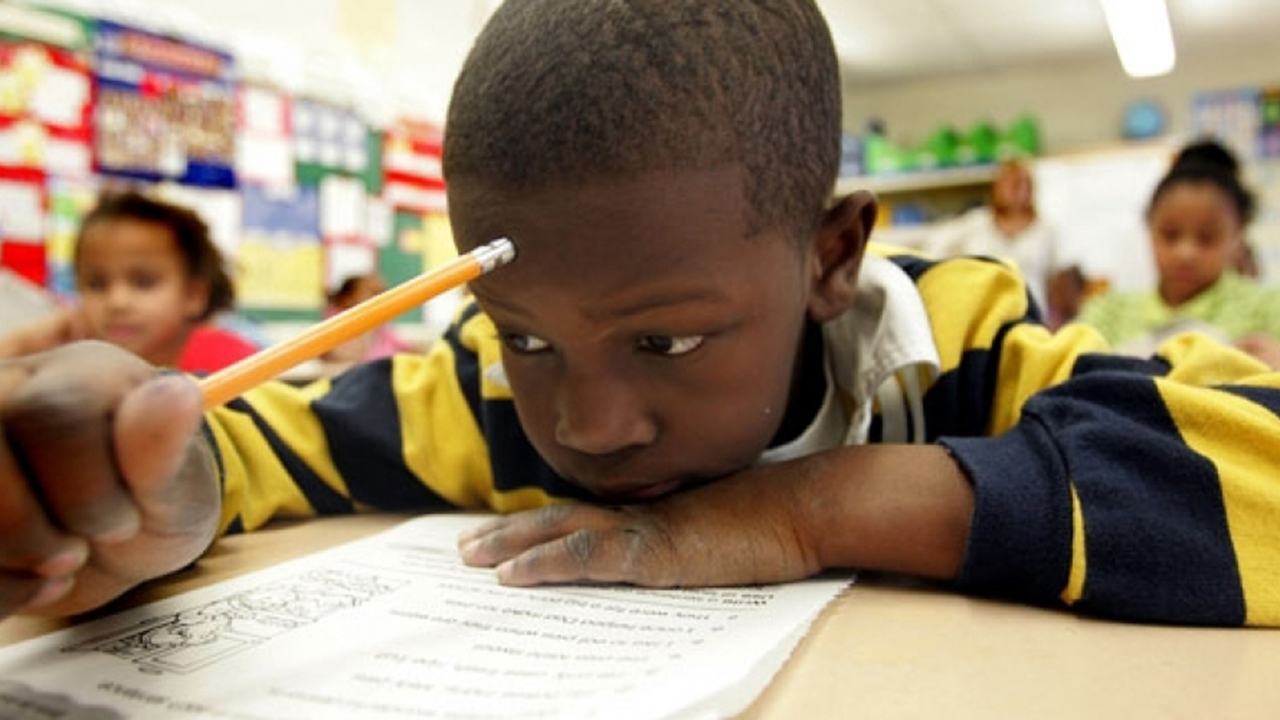
As schools vacate and award ceremonies are held to mark the end of the academic year, some children may not have impressed their parents well enough.It is very normal for parents to wonder why other children got awards for being the best in certain subjects while theirs got nothing. While this can be a source of concern, it is important not to let the feeling overwhelm you hence you have to focus on making your child a better version of him or herself as he or she prepares to move into another academic year.
[ad]
While it is great to get the awards, do not let it be a determinant to the overall success of your child. There should be an avenue to grow and be better and as parents that is what you should champion.
For educational consultant and parenting coach, Diasy Umenyiora, the education is more triangular than circular in the sense that it has the child at the top, the parent to the left of the bottom, then the teacher to the right of the bottom of the triangle; which invariably means that every party has a role to play in the academic performance of the child.
“Often, when a child doesn’t perform well especially after an exam, we as parents would come at him or her with all sorts of advice and statements depicting how disappointed we are, forgetting that there was a role we may have not played that would have resulted in such a performance,” Umenyiora said.
While analysing the roles teachers and parents have to play, Umenyiora noted: “From the angle of the teacher, each slot on the daily timetable is allotted 35 minutes. In a classroom, there are all kinds of learners – from fast paced ones to those who need more time. Everyone is expected to be carried along within this timeframe. And it is often impossible. The teacher always needs to creatively restructure to be able to accommodate these more time learners. Where such learners aren’t taken into consideration, after a class, they don’t understand what was taught but are still given tasks to take home.”
[ad]
Umenyiora stressed that studies have shown that the learning environment must consider the physical, cognitive and emotional elements in that environment to optimise outcomes.
“This means that where the physical and cognitive are considered and the emotional left to its fate, the child will not provide the outcomes we expect. All elements ought to be balanced. This is often what we do as parents – dump the emotional element of the child.
“Research shows that for every achievement made, a hormone, dopamine, is released. This hormone creates a sense of pleasure when an achievement is made, causing the achiever to be motivated to do more. A child who is termed a ‘dullard’ (there’s no dull child) will show low levels of dopamine resulting in little or no motivation to achieve more while a child who is encouraged to perform better or is praised for performing better, will show high levels of the dopamine level resulting in a higher motivation to out-perform his or her previous performance.
“So your attitude to your child’s performance should be to praise efforts first, then later seek ways together on how to produce better outcomes. Allow the child to participate in the remedial discussion because as important as the grades are to you, they are even more important to the child,” Umenyiora noted.
[ad]
