

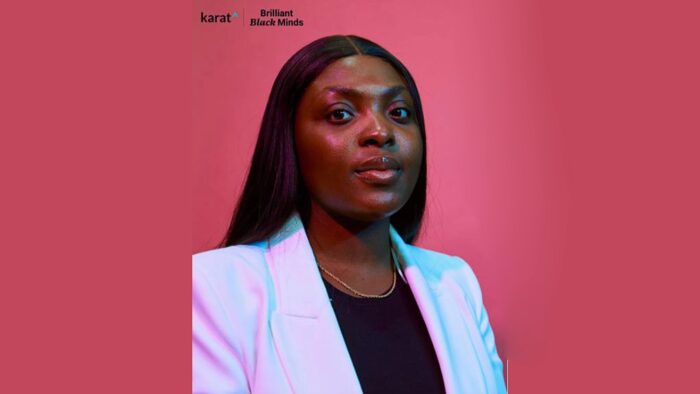
From teaching software testing to more than 300 young Nigerians in Lagos to writing requirements for warranty systems at engine maker Cummins Inc., Aisha Ife Abdulwahab has built a career in the United States on one conviction: quality software begins with clear requirements. Her research, editorial work, and advice to Nigerian tech professionals abroad all follow the same line.
In March 2019, months before she collected her computer science degree from Babcock University, Ilishan-Remo, Ogun State, Aisha Ife Abdulwahab designed an introductory software-testing course for aspiring testers in Lagos. More than 300 of them completed it. “Teaching the basics to that many people forced me to understand them properly myself,” she recalls.
Seven years later, the student-teacher is a Warranty Quality System Business Analyst in Cummins Inc.’s Global Warranty organization, the American engine and power-systems manufacturer. She is a co-author of ten peer-reviewed papers on software testing and requirements engineering, Section Editor at three international computing and engineering journals, and, since March 2026, the Gulf Journal of Computer Sciences’ Editor of the Year 2025. One idea runs through all of it, whether the subject is engines, research, or artificial intelligence: get the requirements right before anything is built.
Built under pressure in Lagos
The foundation was laid quickly. The same month she started teaching, Abdulwahab passed the ISTQB Certified Tester Foundation Level examination and went straight into a quality assurance internship at QaceTech Solutions. She then tested more than ten proprietary applications across seven projects at Summitech Computing Limited, before joining DataSixth Consulting as a contract test engineer on the Atos and MTN Nigeria API integration programme. There she automated API tests in Postman, wrote load and performance tests in k6, and validated every service again in production after it went live.
The stakes were high. The services she tested sat behind one of the largest mobile subscriber bases in Africa, and releases could not wait. Asked what that period gave her, she answers in three words: “Scale and pressure.” It also gave her three habits she still practises: “Test what matters most first, document every defect so a developer can reproduce it in minutes, and check the service again after it goes live. Those habits travelled with me to the United States, and they are exactly what American enterprise teams value.”

The chain behind every claim
Graduate school took her abroad. She enrolled in the Master of Science in Software Engineering at DePaul University in Chicago in January 2022, worked as a graduate assistant supporting more than 50 undergraduates with their programming coursework, and graduated in November 2023 with Distinction and a 3.95 GPA. A summer 2023 internship with the warranty systems team at Cummins in Columbus, Indiana, became a full-time role in January 2024.
Her work now lives inside a process most customers never see. “When an engine or a generator set covered by warranty needs a repair, the claim passes through software: the dealer files it, parts are shipped back, labels are printed, data moves between our platforms and external partners,” she explains. “My job is to make sure that chain works.”
In practice, that means turning what warranty users need into written requirements, aligning them with the engineers who build the solution, and leading user acceptance testing before anything ships. The discipline shows in the numbers. Agreeing requirements before development has halved requirements mismatches on her team’s releases, and the acceptance-testing work has contributed to a 98 percent reduction in post-launch issues.
A release, by her account, “starts weeks before anyone tests anything.” Stakeholders arrive with a business requirement or a problem statement. She investigates it and writes it up as formal requirements, “including the non-functional ones people forget, such as performance and security,” then walks the developers through them before a line of code is written. Once the build is done, she decides which scenarios matter most, what test data is needed and who signs off, then works defects with the developers until each is “fixed or consciously accepted.” Where external clients integrate with Cummins warranty systems, she aligns their claim-filing processes and data requirements as well. After go-live, she pulls data from Databricks with SQL, watches automated Power BI reports for early discrepancies, and issues release notes for every change “so the technical and business teams know exactly what moved.”
Of all of it, she is proudest of retiring a legacy warranty system and migrating its data to a new platform. “A migration looks simple on a slide,” she says, “but every claim history and every record has to arrive intact, because people make warranty decisions on that data years later.” She has also tested a new claims-filing system for the Power Generation business, and her end-to-end testing of the DHL shipping-label process in the Power Generation Warranty System earned a One Quality Kudos from the Global Warranty-Quality team. The recognition came for a modest-sounding task, which is precisely her point: “Small processes like printing a return label are where customers feel quality most directly.”
The same question, from the research side
Her published research comes at the problem from the other end. “Why do expensive software failures happen, and how early can you catch them?” is how she frames it. Her lead-authored paper on user acceptance testing effectiveness argues that the most defensible measure of acceptance testing is the share of defects that escape it, but only if the observation window and severity weights are fixed before testing starts, not after. Her second lead-authored paper compares Selenium, Cypress and Tricentis Tosca for enterprise test automation and finds that the right choice is clear for some organizations and genuinely uncertain for others, such as a regulated bank running several programming languages; it offers a method for making that trade-off visible. With co-authors, she has also published on risk-based testing, requirements volatility, regression testing and explainable machine learning for defect prediction.
Editorial work sharpened the same instincts. She sits on four editorial boards, serves as Section Editor for the Computer Science & IT Research Journal, the Engineering Science & Technology Journal and the Gulf Journal of Computer Sciences, and completed 92 certified manuscript reviews across six journals between 2022 and 2025. “Reviewing is where you learn what weak evidence looks like,” she observes. This year’s Editor of the Year and Reviewer of the Year recognitions, from the Gulf Journal of Computer Sciences, the Engineering Science & Technology Journal and the Gulf Journal of Technology & Environmental Sciences, matter to her for a particular reason: “They come from editors who see the work nobody else sees.”
Why AI raises the bar
Artificial intelligence, in her view, makes her central argument more urgent, not less. In March 2026 she ran a Lunch and Learn for the Cummins Global Warranty team on prompting AI tools properly, built around seven structured prompt patterns. Her verdict is blunt: “AI does not remove the need for clear requirements; it raises it. A vague prompt is a vague requirement, and you get exactly the defects you would expect.”
The people who set the standard
She is quick to credit “mentors who held me to a high standard.” Oluwatobi Fagbohungbe, who founded QaceTech, gave her that first internship in 2019 and later led her team at Summitech, watching her grow from intern to analyst. “He taught me to approach quality with structure and precision,” she says. At DePaul, Associate Professor Vahid Alizadeh taught her object-oriented modelling and AI-driven software development and recommended her for the graduate assistantship, an experience she values as highly as her coursework. Helping more than 50 undergraduates through their programming assignments, in her words, “taught me as much as any course did.”
A message for home
On how Nigeria can produce more world-class testers, she does not hedge. “Treat testing as an engineering discipline, not a steppingstone,” she urges. Nigerian graduates are capable and Nigerian companies already run systems at serious scale, “but testing is often learned on the job without structure.” Her remedy is practical: universities teaching requirements and test design alongside programming, companies giving junior testers real exposure to production systems with proper mentoring, and internationally recognized certification such as ISTQB, which “gives everyone a shared vocabulary.”
For young Nigerians hoping to follow her abroad, she offers three pieces of advice. The first, which anchored her webinar for QUALES alumni on 29 June, is to see analysis as part of a tester’s job already: “Every test case you write checks whether a requirement is complete, so learn to do that work earlier and you open doors into business analysis and product roles.” The second is to “pair certificates with proof,” keeping a record of the defects caught, the requirements clarified and the releases supported. The third is to write and publish. “Writing makes you understand your own work well enough to explain it to strangers,” she says, “and that is exactly what a stakeholder meeting abroad asks of you.”
Her ambition now is to take the same problem to a larger scale, helping complex enterprise systems release with fewer surprises, and to feed what she learns in industry back into research and mentoring, including for the next generation of testers coming out of Nigeria. She has not forgotten where the work started. “The people I trained in 2019 did not need talent,” she says. “They needed a structure and someone to show them what good looks like.”
