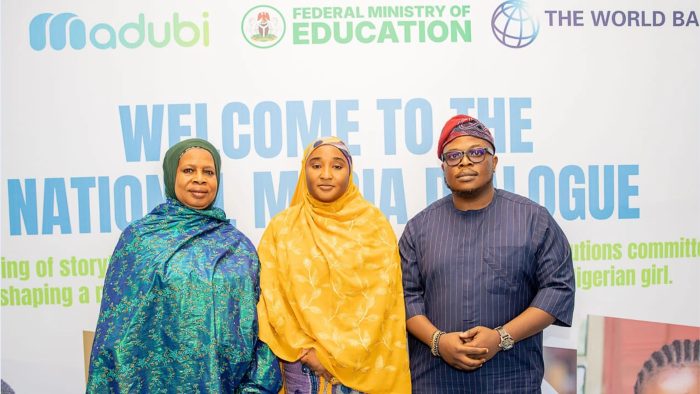
The Federal Government has urged the media to promote narratives that project the strength, resilience and achievements of girls and women, saying the stories society tells about them often shape public perception and opportunities available to them.
This was the focus of a media dialogue organised by the Federal Ministry of Education and the Adolescent Girls Initiative for Learning and Empowerment (AGILE) project themed, “The Girls in the Mirror: Media as Catalysts for Change in Girls’ Education,” held in Lagos.
Minister of State for Education, Suwaiba Said Ahmad, said while reports frequently focus on the vulnerabilities and challenges facing girls, there is also a need to deliberately highlight their achievements, determination and capacity to succeed.
According to her, girls are often stronger and more resilient than they are given credit for, noting that many take on responsibilities within homes and communities while still striving to pursue education and personal development.
She stressed the importance of balanced opportunities between boys and girls, arguing that no society can make meaningful progress when half of its population is left behind.
Ahmad also said representation matters in inspiring younger generations, noting that girls are more likely to believe in their potential when they see women succeeding in leadership positions and other areas of national life.
She therefore called on journalists and content creators to amplify stories that build confidence and open doors for girls rather than narratives that discourage or diminish them.
“Report not only the crises and challenges but also the successes, hard work and determination of girls and women across the country. The media can shape ambitions and influence how society sees the girl child,” she said.
The dialogue also highlighted efforts to tackle barriers limiting girls’ access to education through the AGILE project, a $1.2 billion intervention supported by the World Bank and currently being implemented in 21 states across the country.
National Project Coordinator of AGILE, Amina Buba Haruna, said the initiative was designed to improve secondary education opportunities for girls, particularly in states facing low participation rates and infrastructural challenges.
Haruna said the project had recorded milestones since its commencement in 2022, including renovation of schools, construction of classrooms, provision of water, sanitation and hygiene facilities in federal unity colleges, as well as deployment of solar-powered mobile toilets to support effective learning environments.
She added that over 1.8 million girls had benefited from conditional cash transfers aimed at reducing poverty-related obstacles to education, while more than two million girls had been equipped with digital literacy and other life skills.
According to her, the project also provides opportunities for married and unmarried out-of-school girls through alternative education programmes.
Group CEO, RED | For Africa, Ayodeji Razaq, urged journalists to tell stories from the perspective of those directly affected in order to promote understanding and social change.
He said people should be painted as heroes of their narrative, adding that storytellers should avoid poverty tourism and focus on positive, impactful narratives.
Coach, Enifome Ogbimi, said responsible storytelling should not dehumanise people, warning that although negative news may attract attention, a troubled society ultimately affects everyone.
Media practitioner, Sheriff Quadri, said changing the narrative must begin from the home, urging parents to provide equal opportunities for boys and girls.
Head of Presentation at Channels Television, Adejoke Rogers urged journalists to adopt more constructive approaches when reporting stories involving girls, while ensuring protection of the identities of minors affected by abuse or rights violations.
General Manager, Universal Television Africa, Chinemenma Umeseaka called for empathy and tolerance in efforts to change cultural attitudes, adding that women should be encouraged to succeed through hard work and determination.
‘Media narratives key to changing perceptions about girls’
‘Media narratives key to changing perceptions about girls’