

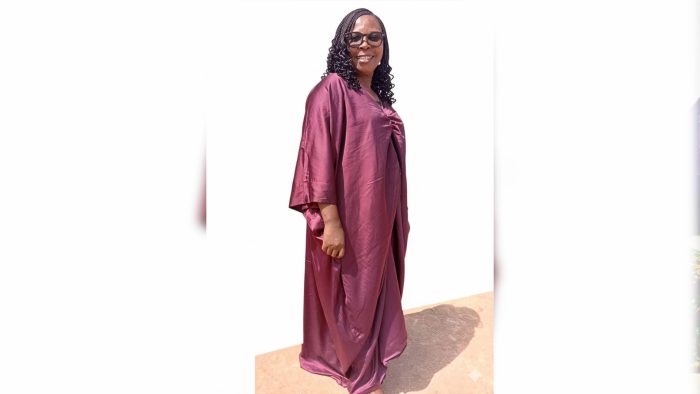
Patience Dauda Iyakwo is an advocate, mentor, and the founder of the Empowered Girls For Christ Foundation (EGCF), established in May 2020 during the global pandemic to support vulnerable girls and young women. Drawing from her experience as a teenage mother at age 17, Patience leads with empathy and conviction, working to ensure girls aged 11 to 25 have access to dignity, skills, and opportunity. Through EGCF, she leads initiatives such as “No Skills, No Job,” which equips girls with vocational skills, and “Monthly Flow,” a program focused on menstrual health education and access. She has reached over 6,000 girls across 13 secondary schools and 7 communities in Abuja, Plateau, Kogi, and Ondo States, and has established four community sanitary pad banks to combat period poverty. Patience is currently on a five-year mission to reach 10,000 girls, building a future where every girl can learn, lead, and thrive regardless of her background. She shares her story in this interview.
The Burden That Became a Calling
Whenever I see a teenage girl pregnant and dropped out of school, I recall my travails as a young mother and wish I could do something to stop it. That was where the burden started. Although I had already begun sitting with the girls before then, I always felt a sense of guilt for not being qualified enough to start. However, during the pandemic, the many reports of girls and young women being abused, molested, and raped because they were always indoors pushed me to act. I decided to start gathering the girls again so we could talk, learn skills, and educate them on gender-based violence, menstrual health, and other critical issues.
Leading From Lived Experience
Having gone through the experience of being a teenage mother, I believe my story has become a survival guide for many girls. My experience has helped me understand that not all stories we hear about teenage pregnancies are true. The culture of silence has destroyed more lives than we can imagine. Most times, there is a hidden story behind the one everyone knows. Because I feel the same pain, I have the audacity to stand on the frontline without fear. My belief is that if I had no one to stand for me, then I should be that one to stand for others like me.
What It Means to Be a Woman of Rubies
Being a Woman of Rubies means not denying my past but also not allowing it to define my present or future. It means believing in myself enough to become a voice and to champion causes that will remain even when I am long gone. I help young girls by repositioning their thought patterns, giving them the support they need, and creating a non-judgmental space where they can try again after failure. Most importantly, I introduce them to the God factor and allow them to see through my life that it is possible to be a Woman of Rubies, please God, and still make global impact.
Choosing Skills, Dignity, and Sustainability
Skills matter because an empowered woman who makes her own money is one who can stand up for herself. Having a skill makes her bold, builds self-confidence, and strengthens her self-esteem, knowing she does not have to beg or engage in activities that may put her in trouble. Many teenage relationships begin because the opposite sex gives money for little things like chewing gum. It may sound funny, but it is true. Dignity and sustainability are crucial needs in society. When there is a gap, humans will fill it. If people truly knew what lies behind the faces of many beautiful teenagers they see every day, they would not believe it. I can say this because I have been there.
Navigating Period Poverty and Cultural Resistance
There have been many challenges. One of them is helping communities understand that we are not giving out sanitary pads in exchange for blood. Some girls have refused to take pads from us because of these myths. Another major challenge is sustainability. Disposable sanitary pads are expensive, and because we focus on underserved communities, reusable pads are not always practical. Many of these girls do not even have water to drink, so washing reusable pads becomes impossible. We also lack a separate and private building for the sanitary pads bank. At the moment, we use a space in the chief’s palace. Although this has helped, many girls feel shy and avoid coming for free pads. There are also long procedures involved in getting permission to visit public schools, which are our main focus. While we are considering private schools that can afford sanitary products, we cannot abandon the cause because every girl must be reached. Another challenge is reaching only the girls while leaving out the boys, who also need education.

Impact Beyond the Numbers
One story stands out to me. I met a young girl in an indigent community who did not even have rags or underwear to use during menstruation and believed that suffering through menstruation was her inheritance. Today, she has access to what she needs because we visited her community. Girls who once missed school due to lack of sanitary products now collect pads from the bank and attend school freely. Working with community gatekeepers who once believed menstruation was unclean, and seeing them offer space in the palace for our pad bank, is another impact I am deeply proud of.
Women Who Inspire My Work
My mother, Mrs. Esther Dauda, was my first mentor. I watched her move from working as a staff member at Jos Metropolitan Development Board to becoming a full-time market woman after having twins. Her strength and determination to survive tough seasons without being broken shaped me deeply. Oprah Winfrey inspires me for turning rejection and pain into purpose. Despite receiving the worst treatment from those who should have loved her, she transformed her mess into a message through resilience and audacity. Esther Ijewere inspired me during my lowest moments of pain, hurt, and betrayal when I was on the verge of giving up. Her story of perseverance and her work with children in Makoko slum gave me the strength to continue. Her faith, love for prayer, and commitment to impact reassured me that God is central to her work, which resonates deeply with me.
Defining True Success
To me, true success goes beyond numbers or recognition. It means bringing real succour, hope, and love to humanity, especially to young women and girls who often feel forgotten or invisible. Success is seeing a girl regain her confidence, return to school, believe in her worth, and begin to dream again because someone showed up for her at the right time.
Guarding My Well-being
I protect my well-being by taking life one step at a time and remaining spiritually grounded. Worship, prayer, listening to uplifting messages, and choosing forgiveness before offense help me stay emotionally healthy. This work can be heavy, but staying connected to God and releasing emotional burdens allows me to continue serving without losing myself in the process.
The Mindset I Hope to Instill
My hope is that every girl we serve grows into adulthood fully aware of who she is and confident in her identity. I want them to develop the audacity to dream boldly, pursue their goals globally, and believe deeply that their circumstances do not limit their potential. Most importantly, I want them to know that it is possible to succeed in God and through God.
A Message to Young Women
Let your past pass. It does not define your present or your future. Your past is not a prison; it is the ladder you can climb toward clarity, precision, and determination as you discover your purpose. Learn the lessons it offers, but never allow it to weigh you down. You are allowed to grow, to heal, and to become more than your story.
