 Follow Us on Google News



 Follow Us on Google Discover
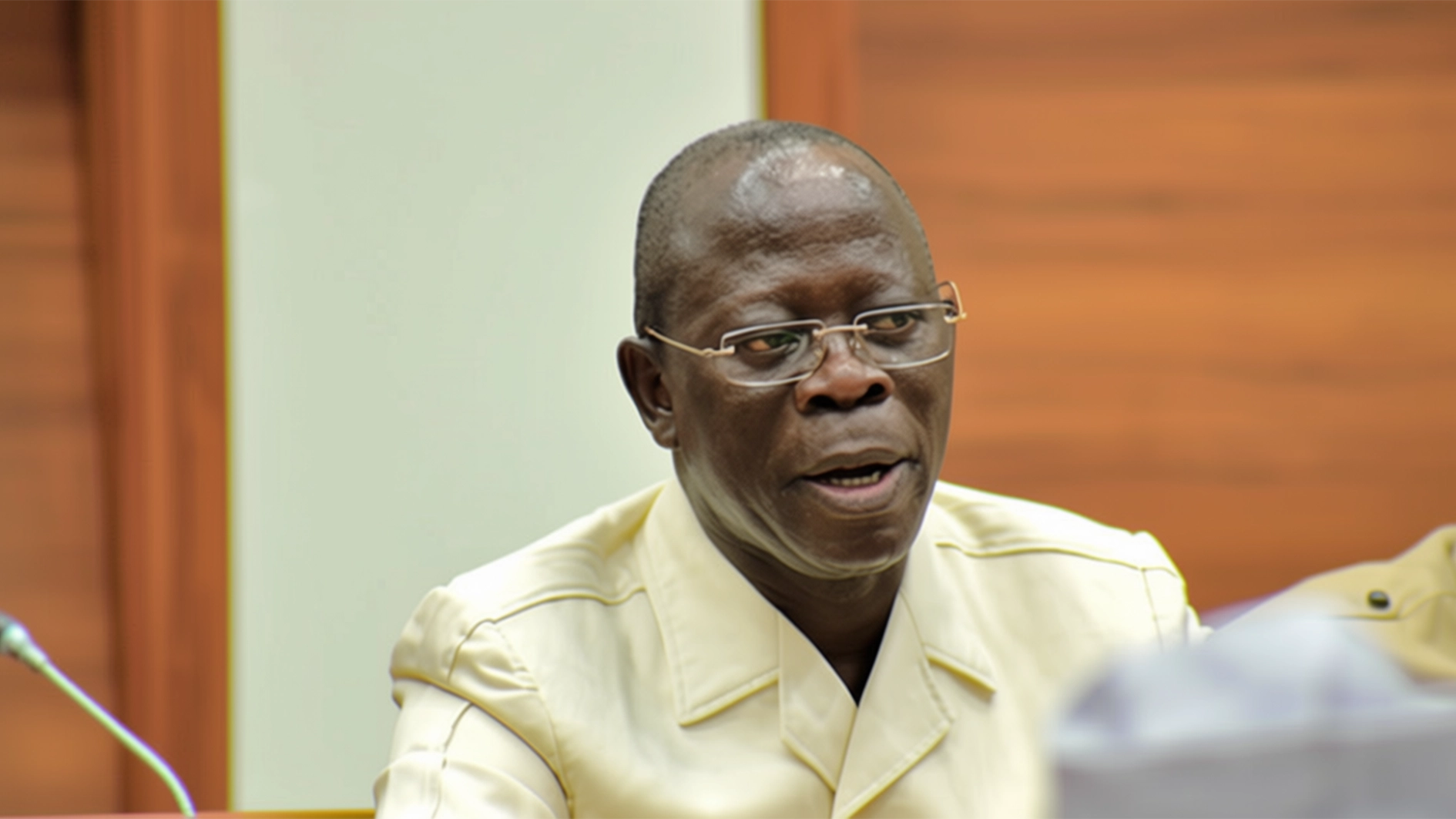
Senator Adams Oshiomhole is a former governor of Edo State and a former national chairman of the All Progressives Congress (APC). Now representing Edo North Senatorial District in the Senate, Oshiomhole has continued in his trajectory of blending activism with politics. In a recent interview with Symphony TV, which was monitored by The Guardian’s OLUDARE RICHRADS, the former president of the Nigeria Labour Congress (NLC) spoke about what informed his choices as a labour leader and also shared his thoughts on issues in the polity, especially the forthcoming 2027 general election. Excerpts:
You were a labour leader and activist, then you became Governor of Edo State. How did you handle the transition from these two extremely divergent worlds?
I think we have to properly define the concept of activism. It’s not just being restless or mobilising protest. We have a set of policies and tendencies that we represent, and we have sets of socio-economic policies that we believe government should pursue such that we deliver the greatest good to the greatest number.
So, it is not just waking up and abusing somebody in power. We do have specific demands that are informed by certain values that prepare us to do what we do in organised labour. We are committed to a just society. We talk about pursuing policies that deliver the greatest good to the greatest number—policies that will be favourable to industry, because without industry there will be no employees; without employees there can be no labour, and so on.
Because all of these have to do with policy choices, when I became a governor I was very clear what I should do differently. Government is not value-neutral. Government is value-laden; it is management of biases. Your own choice of sets of biases is what defines who gets what when you wield and exercise power. Although it is more so at the national level, it is the same at the state level.
For example, I consciously decided I was going to invest more in infrastructure to reconnect the forgotten rural majorities to the urban city. I came up with a slogan: “To be rural is not to be inferior.” Therefore any road that we do, I do not believe in so-called rural roads which are generally inferior. All the rural roads I did were as good as urban roads, and as I talk, there is no pothole in those roads.

If you hear where we got to, the place called Okpekpe, it was impossible to go there. For me, those were the forgotten majority. When their sons or daughters escape to the city and begin to become prosperous, they are not able to go back home. In the city you have those areas—the Lupeng area—where the poor live, where in one building you can have 20 people in one house, four in a room, as I once did.
I convinced myself that it is the road to those areas that would be my first priority, and I did. I think if you ask people from Benin they will tell you that the first area I addressed was the area they call Kostesinoro Road, a community that was turned to dumpsite and we turned the dumpsite to a garden in Benin City. I renamed it Gani Fawehinmi Layout, because I said if Gani was to be a governor, the way he provided legal services to the poor is how we would review the instrument of state to address those localities where the poor live.
So, all of this is just to say that there’s nothing that is objective. My own objectivity is your own subjectivity. And so I didn’t have a problem translating. When I headed the sub-national government, I made sure that my priorities reflected those core values. So, I didn’t go into government without clear-cut ideas of what I wanted to get done.
Many Nigerians are totally baffled at what the Nigeria Labour Congress (NLC) as well as critical civil society organisations have become. It seems they have been either cowered into submission or compromised, or both. How do you respond to this?
No, no, let’s move on, because as I said, I was not just president of NLC. Before then I was a local union, factory union chairman. From 1982 I have not worked for any employer. So, all my life has been in the trade union. So, I would not be able to join you in such a sweeping generalisation in condemning everything, because the danger is that even those islands of success are all grouped together. So, I’m not able to share those thoughts with you.
But look at NANS; look at ASUU. Democracy is not complete without pressure groups. They make democracy virile; they give it life. Every critical voice of dissent has been cowered into submission…
(Cuts in) No, don’t use that word cowardice. Because what are the tools? Who was detained? Who is in detention? I have told you, and don’t take it from me, go and review Guardian headlines. When I was picked up in a guest house in Lagos in the night by DSS, I said DSS have arrested me. The people who want you is the Directorate of Military Intelligence, but I’m not a soldier. That was before I became NLC president. Why I say I’m afraid of generalization is you know this young man, Omoyele Sowore. He’s still very much focused on those views that he has had as student union leader to date. I respect him for that consistency. When we dismiss everything and everyone, are you the angel? Am I the angel? I’ve done my part. I cannot join you here. We created what we call Labour Civil Society Coalition (LASCO). I had the honour of sharing a banner marching with Wole Soyinka and Beko Ransome-Kuti. Some people are still, by the way, fighting. Femi Falana is one. His voice is clear as before. I haven’t seen any dilution.
As NLC president, you protested against subsidy removal, but you now support it. What changed? Why are you supporting high price of fuel in this country?
Ask Aliko Dangote. Ask Nduka Obaigbena. Ask the former Governor of the CBN, Sanusi Lamido Sanusi, and even the then Minister of Finance, Okonjo-Iweala. When we were fighting against subsidy, we fought holistically. Kerosene, diesel, PMS and even LPFO. By the time we were discussing this item, after I have left the NLC, without any policy announcement, kerosene was deregulated. There was no protest by my successors. Diesel found its market level. The only thing under control was PMS. And when I look at the numbers, what government proposed to be spending in subsidising PMS, I couldn’t reconcile them. It was now running to trillions for one item, PMS.
My real problem is not whether subsidy is desirable or not; it’s no longer feasible, because those who manage the system have perfected different ways and means of stealing in the name of subsidy. What you cannot do away with you will learn to live with it is part of basic wisdom. There is no rational animal that will go for higher prices if you have alternatives. So how can you open your mouth and say to me that I support high price? You go and show me where I have said so – that I support high prices. The duty of government, primarily all over the world, is to keep down prices, to fight inflation.
There have been several counter-accusations against you over your recent criticisms of Mr. Peter Obi. In 2012, during your Edo State governorship re-election campaign, you invited Peter Obi to commission the Akpakpava Road and you publicly described him as the best governor in Nigeria then, on record. How do you square your past public acclaim of Peter Obi to you how you now criticise him?
I never said Peter Obi was a failure. If I say so, the burden of proof is on you. You are the one making the allegation. I didn’t say Peter Obi was a failure. There are specific things he has said which are not correct. Yes, Peter Obi is not my enemy. We both suffered as opposition governors. I was ACN; he was APGA. We were both being oppressed by PDP federal might.
It is true I invited him to Edo to commission a project. But he’s not the only one I invited. And even today I do not dislike Obi.
Don’t misunderstand me, but when Obi says things that are not correct… For example, Obi flew a private jet to Executive Jet Wing in Lagos where private jets land. I also flew private jet from Benin. We happened to land at the same time. This happened at least twice. So when you now say you will never fly private jet, that’s not true.
Number two, I see this debate about Obi saying he saved $156 million. We were both members of the National Economic Council. At a point we all said our allocation should be given to us in dollars. But they insisted that the official currency in Nigeria is naira. And government flatly refused. So, all the allocations we received were in naira. So, I ask Obi: where did you get dollars to save? Did you receive naira from Abuja and went to bid for dollars to save for Anambra State?
I got approval of World Bank for 225 million U.S. dollars – what they call budget support – over a period of three years. By the time I left, about seventy-something million dollars had not been drawn. And so if I want to talk like Obi, I will say I saved 78 million dollars, which my successor inherited and spent.
Go and look at the first six months of Obiano, who took over from Obi. We all watched Obiano demolishing the houses of kidnappers. If Obi could not fix the security challenge in Anambra, he cannot speak to being a Commander-in-Chief that can fix Nigeria’s security challenges.
All Obi was doing, in a sense, was privatising education. I also faced that temptation. I never said that Obi was a failure. I wouldn’t say so. The fact that I don’t agree with one thing that you have said or did does not mean I’m writing you off. Obi is my friend, but politically I think he should not pretend to be an angel.
As a sitting senator, critics suggest your energy is heavily displaced onto partisan attacks rather than legislative intervention. For instance, what concrete steps have you taken through the National Assembly to address the several dilapidated roads?
When you say critics, what about admirers? This is the issue I have with my very good friend, the Minister of Works, David Umahi. I said during the budget hearing, these roads connecting Edo to Delta, Warri, Asaba, and others, I saw that he put N14 million at the budget and yet you are awarding contract for new roads when you have not maintained the old ones. I said so at the budget hearing.
You do not keep on building new houses where you can’t maintain your existing house. It’s common sense. He then replied that when he was governor he built federal roads and that the contracts for those roads were awarded in 2018 when I was governor of Edo State. He lied when he said I was the governor, because I left office in 2016. The issue is: does it make sense to say you should maintain existing roads? The minister should not drop his (President Bola Tinubu’s) name to cover up their own mess.
The 2027 presidential elections is fast approaching. How do you see it playing out? Is the President sleeping very well given the formidable opposition against his re-election bid?
The president is sleeping very well. The only reason he’s not snoring is that it’s not in his habit to snore. What President Tinubu tolerates, no other politician in Nigeria will tolerate it. President Bola Ahmed Tinubu is the only one that I know that I go to his house and the living room is full. He will order for food and we will eat in his bedroom. How many people can give their all to society like that?
He was running what I call a national political clinic. Anybody with all sort of political diseases goes to Bourdillon for prescription and sometimes cure. For me, Asiwaju has given too much. I am Tinubu’s man. I believe in his courage.
Without mincing words, do you think President Tinubu will win next year’s poll?
He will win. You know why he will win? Those who were fiercely opposed to him, with time they found that first there’s no vengeance. This President has used his skill that he had developed over time to win them over, not to coerce over, as was done by President Olusegun Obasanjo.
My friend, you guys have a duty to educate Nigerians and you don’t do it most of the time. You are bogged down with day-to-day half-truth.