 Follow Us on Google News


 Follow Us on Google Discover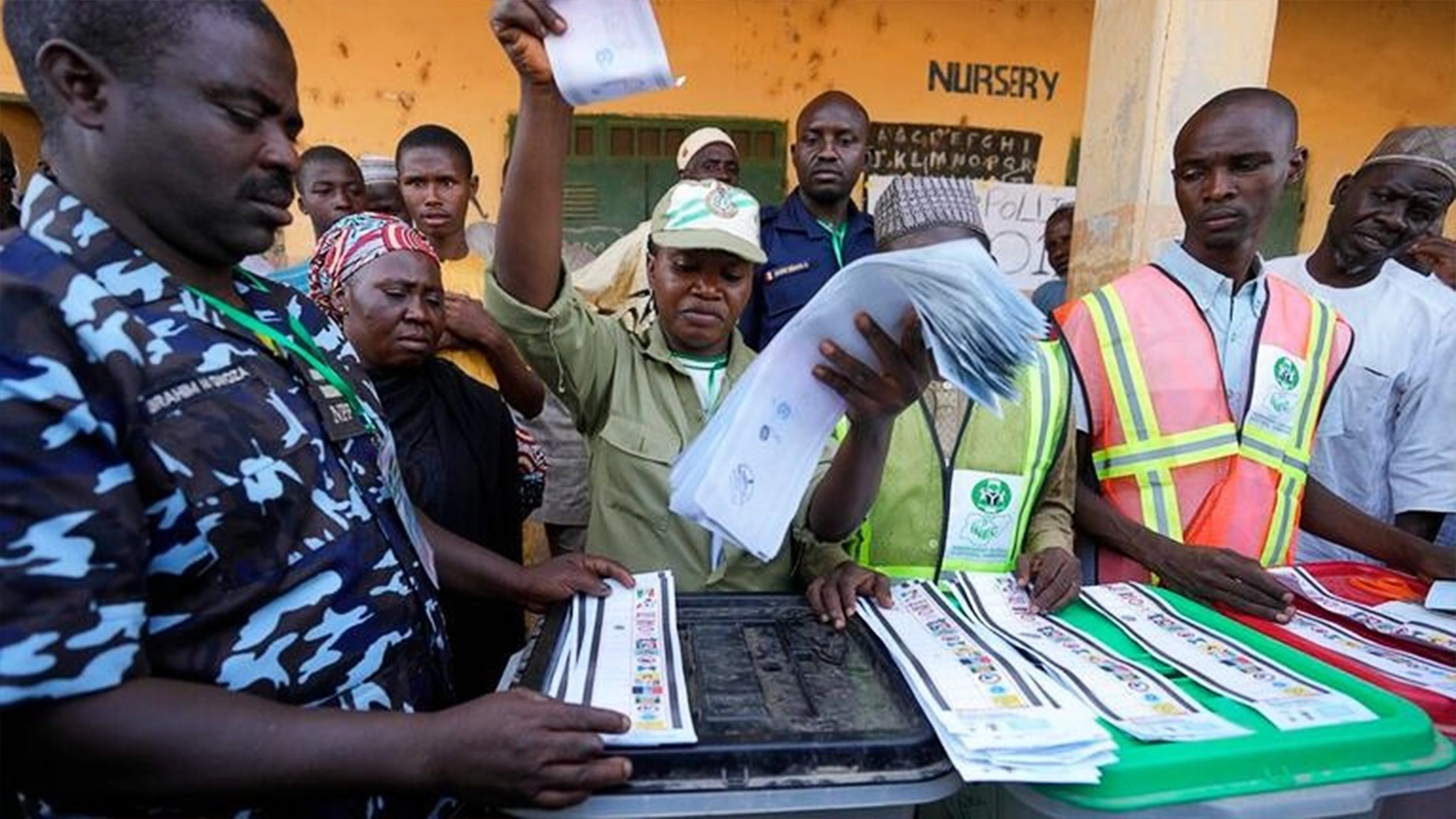
By Sylvester Odion Akhaine
The Jakande years, that is the second republic, has always been of comparative value to me in analysing the prevailing contradictions of the fourth republic. Its hindsight benefit is that those years affirmed the slogans of the social action movement: “Another Nigeria is Possible”. Coming up in the buildup to the 2027 general elections. It is hardly surprising that the lecture’s theme has three independent variables and one dependent variable.
For credible elections to take place in our country, the media, INEC, and voters have a role to play.
Two, the lie of the state. The Nigerian state is emasculated, a pathology that scholars (Bayart, 1993, Onuoha, 2008) have theorised as ‘state capture’. It manifests when the components elements of the state lose their relative autonomy in ways that the state could be considered as an impartial umpire in the social relations of production. The executive arm of government rides roughshod over the other arms of government blurring the imagined borders, in other words, checkpoints, contemplated by de Montesquieu.
Side-by-side with state-capture is the point that the state suffers negative sovereignty for the reason that a swathe of the country is being controlled by non-state actors. The gravity is such that it has engendered a security dilemma in the country to the extent that the constitutionally created securities agencies are now being complemented by local vigilantes. Three, our political culture is highly impoverished. The beliefs, values, sentiments and practices that permeate our political system are concerning.
The elite recruitment process shuns merits, enthrones mediocrity and is simultaneously monetised in ways that lead to elite closure. Also, there is huge trust deficit and a prevailing sense of being subject, one of Almond and Powell’s (1978) three-fold typology where citizens see themselves not only as non-participants in the political process but rather as subjects of the government. O’Donnell (1993) has qualified citizens in that scenario as one of low intensity. These backdrops would shape our conversation. And the context of this conversation is liberal democracy which the Nigerian ruling elite chose in 1999 and had previously practiced in the previous republics.

Liberal democracy is a Lockean contrivance embodying a cluster of freedoms including political freedoms, right to property and enjoyment of security (Locke, 1988[1690]). According to Potter (1997, p. 4), liberal democracy is: a type of political regime in which binding rules and policy decisions are made not by the entire community but by representatives accountable to the community. This accountability is secured primarily through free, fair and competitive elections in which virtually all adult men and women have the right to vote and stand for elective office.
I now turn the variables in our conversation.
Defining the variables: Media, INEC, voters and credible elections
Defining what media is in the midst of practitioners would appear unnecessary. For reason of reiteration and the existence of pluralism of meaning in scholarship, I will offer a working definition. Thus, media is a Latin derivative from the word “medius”, which means “middle” or “intermediate”. It can be defined as the conduits for disseminating information to the public for various purposes, namely, information, education, entertainment and shaping of public opinion (Amirize, 2004).They include newspapers, magazines, books, radio, television, cinema, internet, social media, mobile phones, etc (O.P. Jindal Global University, 2024).The conduits and the corresponding practice and the embedded dynamics, make media an institution.
I shall employ both media and press interchangeably in this lecture fully aware of the nuances between the two but in a constricted sense of their convergence at the intersection of journalism-focused institutions such as print, broadcast, and digital newsrooms. Historically, the development of the printing press in the 15th century revolutionised the media. To date, the media has continued to shape our daily conversation. In ways, relevant to this paper, Downing (1980, p. 145) provides a political origin of the media, rooted in societal class conflict:
The changing structure of public debate was of course a parallel to the growing demand by the well-to-do for freedom from government interference in their economic activity. Just as market forces should be allowed tom work themselves out freely, ran the arguments, so should ideas about politics and government. It was a tenacious ideology, which took the ideas of the well-to-do and the politically dominant as expressing the interest of the majority.
This emerging structure of public debate was the matrix for the development of the newspaper. It was not the advances in printing technology that causes the newspaper, but changes in certain economic and political relations which stimulated the need for news-sheet and newspaper to convey information quickly about politics and other matters to a large number of people.
Curran (2002, p. 4)reinforces Downing’s perspective in his historicisation of the British Media. He observes that:
The liberal narrative is the oldest and best established of the competing interpretations of British media history. It comes out of an historical tradition which celebrates the evolution of ‘constitutional government’ by recording the rise of parliament, the establishment of the rule of law, the erosion of monarchical power, the development of modern political parties and—in the final culmination of this teleological history—the introduction of mass democracy.
Historically, the media had evolved into the fourth estate of the realm. The Nigerian media, predating the Nigerian state, has had a libertarian bent. The principle of freedom drove much of its engagement with the colonial order.
The Independent National Electoral Commission (INEC)
The INEC is Nigeria’s electoral management body (EMB). Electoral management bodies (EMBs) are generally responsible for the management of elections, either entirely or partly. Elections management embraces the organisation of elections, its monitoring, and the official recognition of election results (Mozaffar, & Shedler, 2002, cited in Langford et al, 2012). Mozzafar and Shedler (2002, cited in Langford et al 2022) go further to describe their roles employing Almond and Powell (1966)) three-fold typology of rulemaking, rule application, and rule adjudication.
EMBs are constitutionalised in the organic laws of countries. The end of bipolarity and the celebrated triumph of liberal internationalism birthed the third wave of democratisation (Akhaine, 2010) and the subsequent proliferation of EMBs. In democratising social formations, legitimate elections are central to stabilising the polity and norms institutionalisation.
As Langford et al (2022) has noted:
Following the third wave of democratisation, the number of EMBs has expanded dramatically, especially in the democratising regions of Latin America and the Caribbean, Sub-Saharan Africa, and South Asia – although with mixed patterns in both South-East Asia and East Asia.
As of 2013, about 54 per cent of states had consequential provisions for electoral oversight provided for in their organic laws. There has been an upsurge since the beginning of the third wave (Zachary et al 2024, cited in Langford et al, 2022).
It can be observed today that in Africa, the third wave is suffering from democratic backsliding and most EMBs do not have the autonomy required for conducting legitimate elections.
Electoral management in Nigeria has had a checkered history. The Electoral Commission of Nigeria (ECN) was established to conduct the 1959 elections. This was succeeded by the post-independence Federal Electoral Commission (FEC) in 1960 which conducted the federal and western regional elections of 1964 and 1965 respectively.
Following military rule, existing democratic structures were proscribed by the military. Military’s transition politics meant the resuscitation of democratic institutions, and hence the establishment of the Federal Electoral Commission (FEDECO) in 1978 that organised the 1979 and 1983 general elections.
After the termination of civil rule on December 31, 1983, extant democratic institutions went into limbo only to be resuscitated and rebranded as National Electoral Commission (NEC) again in 1986 under Babangida regime. General Abacha who seized power in November 1993, proscribed and re-established NEC as National Electoral Commission of Nigeria (NECON).
Subsequent to Abacha’s demise, his successor, General Abdulsalam Abubakar’s dissolved NECON and established the INEC in 1998 (Independent National Electoral Commission, n.d.). All the EMBs in Nigeria’s checkered history were saddled with the task of organising elections for smooth transition from military to civil rule. The level of their success has been scrutinised by various scholars (Obiyan & Amuwo, 2013) and need not delay us.
Professor Akhaine of the Department of Political Science, lagos State University (LASU) delivered this as Keynote Address at the Fourth Annual Lateef Jakande Lecture organised by the Nigerian Guild of Editors in Lagos, recently. Excerpts only.

