 Follow Us on Google News


 Follow Us on Google Discover
Given the flooding in Lagos State, a visible consequence of the rainy season, the Lagos State Government’s warning about the dangers posed by indiscriminate dredging should not be dismissed as another routine bureaucratic alarm. It is, in reality, a belated acknowledgement of a crisis that has been building for years across the state’s fragile coastal and aquatic ecosystems.
Lagos is increasingly paying the price for the relentless exploitation of its waterways, wetlands, lagoons, and coastal resources in pursuit of urban expansion, luxury real estate development, and infrastructure growth.
The disclosure by the Commissioner for Waterfront Infrastructure Development, Dayo Alebiosu, that developers now source sand from communities as far as Ikorodu for reclamation projects in the Lekki-Ajah corridor is both revealing and troubling.
It demonstrates the scale of environmental pressure that unchecked urbanisation has imposed on Lagos’ natural systems. When sand must be transported across distances of 10 to 12 kilometres because closer deposits have been depleted, it is obvious that the state’s coastal resources are under severe stress.
For decades, Lagos has expanded aggressively into wetlands, swamps and coastal zones. From Victoria Island to Lekki, from Ajah to Epe, the city has pursued a development model heavily dependent on land reclamation. Sand filling has become a defining feature of urban growth, especially in high-end residential and commercial projects. Yet, little attention has been paid to the ecological cost of this transformation.
Sand may appear abundant, but it is not an infinite resource. Around the world, experts have warned that excessive sand mining and dredging are triggering coastal erosion, habitat destruction, flooding and biodiversity loss. Lagos is now witnessing these consequences in real time. The state’s waterways are increasingly vulnerable, fishing communities are under pressure, and coastal settlements face greater environmental risks.
The commissioner’s admission that aggressive dredging disrupts aquatic microorganisms and marine habitats confirms what environmentalists and local communities have long complained about. Dredging alters riverbeds, destabilises shorelines and destroys breeding grounds for fish and other aquatic species.
Fishermen are forced to travel farther into deeper waters before making catches, increasing operational costs and reducing incomes. In many riverine communities, fishing livelihoods are gradually collapsing under the combined weight of environmental degradation and urban encroachment.
This development has implications beyond the environment. Food security is also at stake. Lagos already depends heavily on supplies from other states to feed its growing population. If local fishing activities continue to decline because of habitat destruction, the pressure on food prices will worsen. The poor and vulnerable, who already spend a large portion of their income on food, will bear the heaviest burden.
The economic consequences are equally significant. The rising scarcity and cost of sand could inflate construction costs across the state, particularly at a time when inflation and housing affordability remain major concerns.
Developers will pass the higher costs to homebuyers and tenants, further deepening the housing crisis in Lagos. The irony is that a city struggling with housing shortages may ultimately undermine its own sustainability through environmentally destructive development practices.
Unfortunately, the warning signs have existed for years. Coastal erosion continues to threaten several communities in Lagos. Flooding has become more frequent and severe, partly because wetlands that once absorbed excess water have been reclaimed for construction. The state’s drainage infrastructure remains overstretched, while rising sea levels linked to climate change pose additional threats to low-lying coastal settlements.
The situation exposes a broader failure in urban planning and environmental governance. Lagos has often prioritised short-term economic gains over long-term ecological sustainability. Environmental Impact Assessments are either poorly enforced or treated as mere formalities. Illegal dredging operations flourish in several parts of the state, while regulatory oversight remains weak. The rapid pace of luxury waterfront development has frequently outpaced environmental safeguards.
It is therefore encouraging that the state government now claims to be more cautious in issuing dredging permits and licences. However, regulation must go beyond rhetoric. Lagos urgently needs a comprehensive coastal resource management strategy backed by credible scientific data, strong enforcement mechanisms and transparent monitoring systems.
First, the state must conduct a detailed audit of available sand deposits and dredging activities. Authorities cannot sustainably manage what they do not accurately measure. Data on extraction volumes, dredging locations, ecological impact and replenishment rates should guide policy decisions. Without such information, regulation will remain ineffective.
Second, illegal dredging must be tackled decisively. Many operators exploit regulatory loopholes and weak enforcement to engage in environmentally destructive practices. Government agencies responsible for waterfront management, environmental protection and physical planning must coordinate more effectively to ensure compliance with environmental standards.
Third, Lagos must rethink its dependence on land reclamation as the dominant model of urban expansion. The state cannot continue consuming wetlands and coastal ecosystems at the current pace without severe environmental consequences. Sustainable urban planning requires balancing development with ecological preservation. Green infrastructure, wetland conservation and climate-resilient planning should become central to future development policies.
The state should also invest in alternative building technologies and materials that reduce dependence on massive sand extraction. Globally, innovations in recycled construction materials and sustainable housing designs are gaining momentum. Lagos cannot afford to ignore such alternatives if it hopes to build sustainably amid mounting environmental pressures.
Equally important is the need to protect vulnerable coastal and fishing communities. These populations often suffer the direct consequences of dredging and reclamation projects while receiving little benefit from the economic activities driving the destruction. Compensation frameworks, livelihood support programmes and community participation in environmental decision-making are essential.
In addition to government action, developers and private investors must embrace environmental responsibility. The obsession with luxury waterfront estates and endless reclamation projects cannot continue without accountability. Corporate interests must not supersede environmental sustainability and public welfare.
The challenge confronting Lagos reflects a wider national problem. Across Nigeria, environmental resources are routinely exploited without adequate regard for sustainability. From deforestation to oil pollution, illegal mining and coastal degradation, the country has consistently sacrificed ecological health for immediate economic returns.
The consequences are becoming increasingly visible through climate-related disasters, biodiversity loss and declining livelihoods. Lagos, as Nigeria’s commercial nerve centre and one of Africa’s fastest-growing coastal cities, cannot afford to ignore these lessons. The state stands at a critical crossroads. It can either continue along the path of unguarded exploitation or adopt a more sustainable and environmentally responsible development model.
The warning from the state government should therefore serve as a wake-up call not merely for policymakers but for developers, investors and residents alike. Protecting Lagos’ waterways and coastal ecosystems is no longer optional. It is essential for the city’s environmental survival, economic stability and future resilience.
A city that destroys its natural buffers in the name of development ultimately undermines its own future. Lagos must act before the environmental costs become irreversible.
That Lagos wake-up call on dredging, coastal depletion
Date: 31 July 2026 4:44am WAT
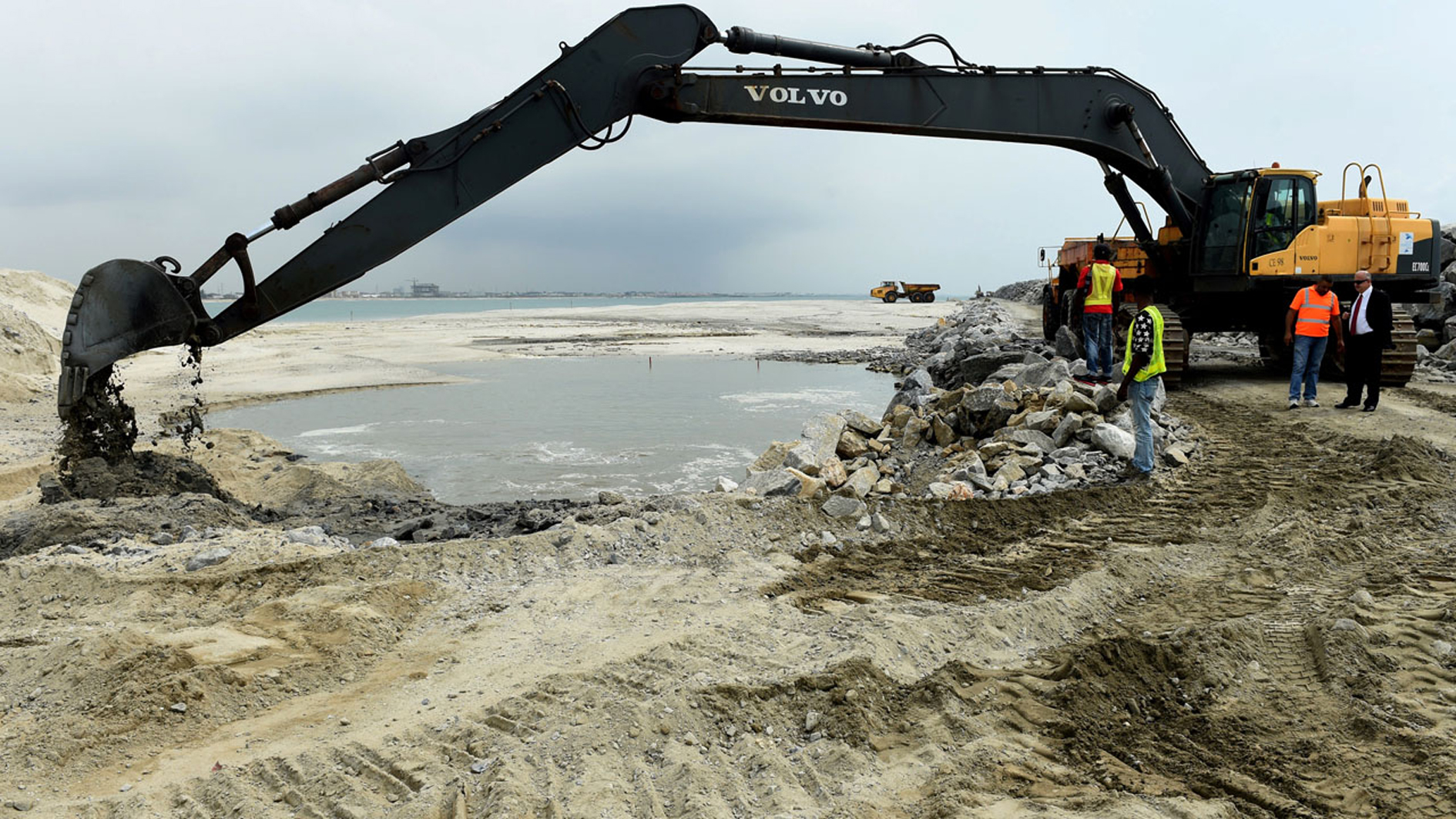
A dredging site / AFP PHOTO / PIUS UTOMI EKPEI
A dredging site / AFP PHOTO / PIUS UTOMI EKPEI

