 Follow Us on Google News


 Follow Us on Google Discover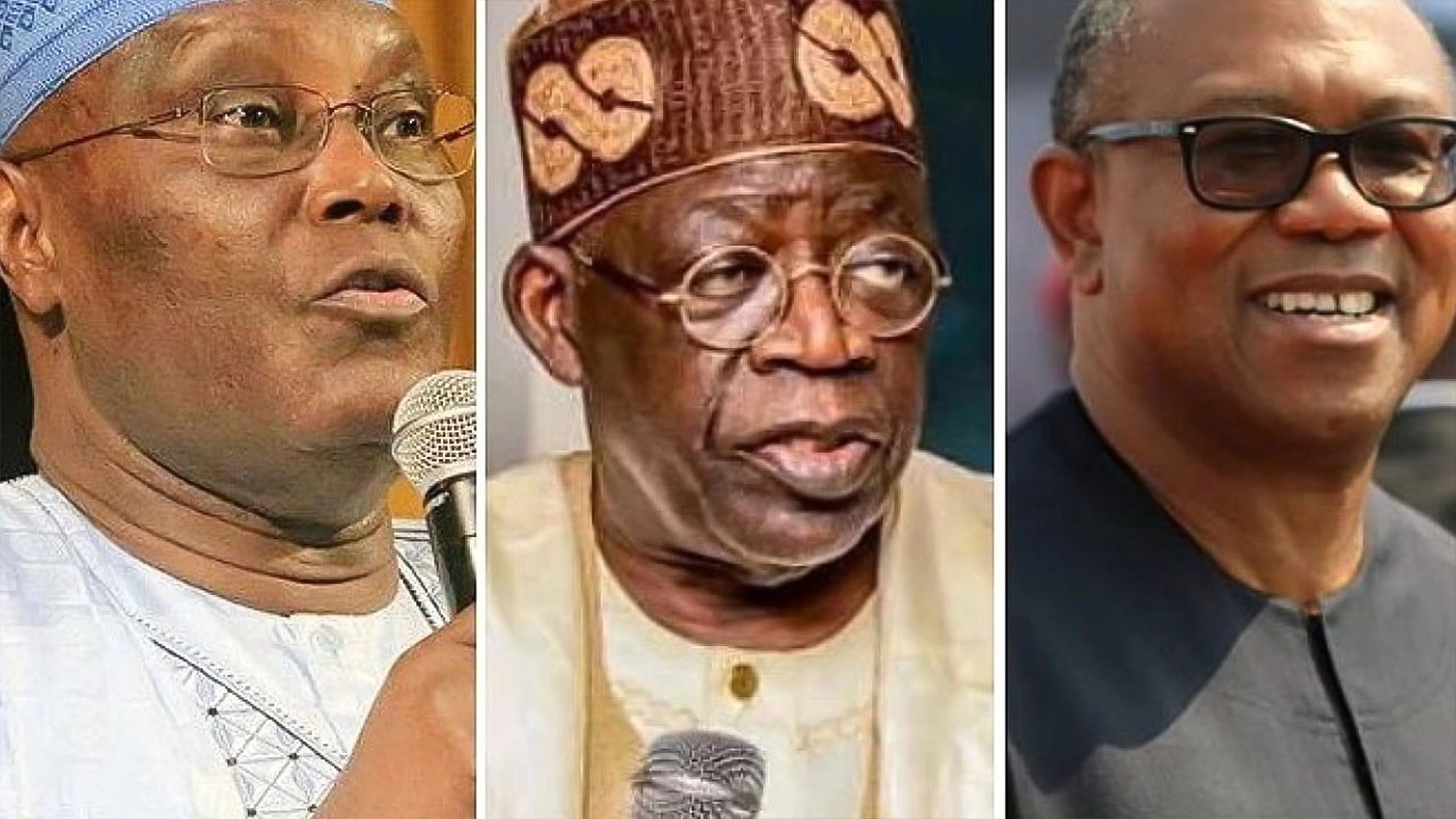
For Nigerians struggling with the rising cost of food, transportation and accommodation, the 2027 presidential contest is beginning to take shape around a question more immediate than campaign slogans: which candidate can make life better for ordinary citizens? KEHINDE OLATUNJI and TUNDE BODUNRIN report.
President Bola Ahmed Tinubu of the All Progressives Congress (APC), former Vice President Atiku Abubakar of the African Democratic Congress (ADC), and former Anambra State governor Peter Obi of the Nigerian Democratic Congress (NDC) are offering different prescriptions for an economy still battling inflation, unemployment, insecurity, weak purchasing power and inadequate public services.
Tinubu is asking Nigerians to stay the course with his economic reforms. Atiku is promising a production-driven economy, living wages, institutional reforms and stronger social protection, while Obi is placing production, investment, enterprise and human capital at the centre of his programme.
But among Nigerians interviewed, the manifestos appear to matter only insofar as they can address the everyday problems confronting households and businesses.
There is also a growing scepticism about politicians who make attractive promises during campaigns but fail to deliver once in office.
Tinubu: Continuity under pressure
FOR Tinubu, the 2027 election is likely to be closely tied to his administration’s economic reforms, particularly the removal of petrol subsidy and foreign exchange reforms.

The administration’s Renewed Hope Agenda focuses on economic growth, job creation, infrastructure, security, food security, education, healthcare and social protection. Its 2026–2030 plan seeks to consolidate the reforms while expanding investment in human capital and infrastructure.
The President and his supporters argue that the painful adjustments were necessary to correct long-standing distortions and put the economy on a more sustainable footing.
For some Nigerians, that argument is persuasive.
Aisha Ibrahim, a 34-year-old small-business owner in Lagos, said changing economic policies with every administration could create another cycle of instability.
“I don’t think Nigeria can continue changing economic policies every four years. If a government has started something that is supposed to take time before the result becomes visible, there should be some consistency,” she said.
But she said continuity must eventually produce tangible benefits.
“My concern is that the government must also understand that ordinary people cannot continue to suffer indefinitely. If Tinubu wants continuity, Nigerians should be able to see the benefits of that continuity in food prices, electricity, transportation and employment.”
Emeka Nwosu, a Lagos trader, said patience was becoming difficult for families struggling with the cost of basic necessities.
“The argument that we should wait for the reforms to work is becoming difficult for many people to accept. You cannot tell a family that cannot afford food today that the economy will be better in another two or three years,” he said.
The challenge for Tinubu, therefore, is to convince voters that the sacrifices associated with his reforms are translating into improvements they can see and feel.
Atiku: a different route
ATIKU’S ADC campaign offers a different economic direction, centred on production, institutional reform and social protection.
Its manifesto proposes a production-driven economy, living wages, agricultural development, industrialisation, improved healthcare and education, infrastructure development and security reforms. The party also promises to reduce the cost of governance and end opaque practices such as security votes, with the aim of redirecting public resources to development.
For Musa Abdullahi, a commercial driver, the attraction of any economic programme will depend on whether it reduces pressure on household incomes.
“What matters to me is the cost of living. We are buying fuel, food and spare parts at prices that ordinary people cannot cope with,” he said.
“If Atiku is saying he has a different approach that will reduce the pressure on Nigerians while still growing the economy, then I want to hear exactly how he will do it. I am not interested in whether the policy sounds good. I want to know what it means for the money in my pocket.”
But Chinwe Okafor, an entrepreneur, said the promises must be matched by a credible financing plan.
“Atiku’s manifesto has many things that sound attractive — living wage, jobs, better healthcare, infrastructure and social protection. But the government cannot promise everything at once without telling Nigerians where the money will come from,” she said.
“We have seen governments make beautiful promises and then borrow to fund them. I want to know the financial structure behind this programme before I can say it is better than what we have now.”
That leaves Atiku with the task of convincing voters that his proposed expansion of social services and infrastructure can be financed while reducing the cost of governance and containing the country’s debt burden.
Obi: Production over consumption
OBI’S programme is anchored on changing the structure of the economy through production, investment and human capital.
At the formal commencement of his 2027 campaign, he placed production, investment, enterprise and human capital at the centre of his programme.
His proposals include increasing agricultural productivity through better security for farming communities, irrigation, rural roads, storage, financing and access to markets. He also advocates greater investment in manufacturing and agro-processing to help Nigeria move beyond exporting raw materials.
On security, his proposals include improved intelligence gathering, stronger coordination among security agencies, better border management and greater decentralisation of security management.
For Daniel Eze, a Lagos-based technology professional, the production argument offers a more sustainable route out of economic hardship.
“Nigeria’s fundamental problem is that we consume more than we produce. We import too much, borrow too much and then complain that there are no jobs,” he said.
“If the government can genuinely invest in agriculture, manufacturing, electricity and technology, you create an economy where people can actually work and earn money.”
Yusuf Bello, a trader at Agree Market, however, said production could not be separated from the conditions in which Nigerians are expected to produce.
“Production requires security, electricity, roads, finance and markets. If those things are not available, telling farmers and manufacturers to produce more will not solve the problem,” he said.
Voters: promises are no longer enough
Beyond the manifestos, voters’ views reveal a more complex picture. Some are drawn to particular candidates, others remain undecided, while some have lost confidence in the political class altogether.
A petty trader at Idumota Lagos, Lami Daniel-Abe, said she had no preferred candidate because politicians had repeatedly disappointed Nigerians.
“I do not have any preferred candidate because there is this fear that all the politicians have a way of cajoling people when they need their votes and end up doing the same thing, they criticise their predecessor for once they assume office,” she said.
Despite that reservation, she said she would vote for Obi.
“Not because he is coming to do something better, but let the opportunity be given to him as well and let’s see what he can really do,” she said.
She also rejected the idea of giving Tinubu another term, saying re-electing the incumbent was “like willingly agreeing to go through the same torment again.”
For Salako Abiodun Olanrewaju, a commercial bus driver in Lagos who supported Obi in 2023 but did not have a Permanent Voter’s Card (PVC), distrust extends to the political class as a whole.
“They have failed us already. If Tinubu sits down here, if all the past presidents sit down here, I will tell them, sir, you have failed us. So, you don’t have our trust anymore,” he said.
Yet, if compelled to choose, Olanrewaju said he would vote for Tinubu.
“I will vote for Tinubu. God can still change him,” he said.
The contradiction captures the uncertainty among some voters: dissatisfaction with the incumbent does not automatically translate into confidence in the alternatives.
For 83-year-old retired federal civil servant, Oyenuga Odutola, there is no such uncertainty.
“My number one candidate for president in 2027 is Peter Obi, number two candidate is Peter Obi and number three is still Peter Obi,” he said.
Odutola’s support is partly rooted in his belief that the South-East should have an opportunity to produce the president.
“Let Peter Obi be there, let him fail or pass,” he said.
He also dismissed criticism of Obi’s frugality, arguing that the former Anambra governor should be given an opportunity to apply his management style at the federal level.
‘The city boy already messed up’
Ridwan Olanrewaju, from Lagos Island, said he did not have a voter card but would vote for Obi if given the opportunity.
“During the last election, I was shouting ‘city boy, emilokan’ all around. But I didn’t like the settings of everything. I didn’t expect the outcome to be like this,” he said.
“Right now, I will give Obi a chance for another four years. Let’s see what he can do. The city boy already messed up.”
He said Obi’s record in Anambra State and his emphasis on production were part of what attracted him.
At an informal gathering in Ebute Metta, however, the mood was less enthusiastic about any of the contenders.
Adebayo, one of three men initially reluctant to discuss their choices, said economic hardship was likely to be a major factor in the 2027 election.
“The low-income earners are not finding things easy at all. Besides the price of fuel, basic needs are not affordable. The rate of house rent is high. Some people struggle to eat a meal in a day,” he said.
He said national economic statistics meant little to citizens whose immediate concern was putting food on the table.
“A common man wants to have food to eat easily and a place to lay his or her head comfortably. A common man wants affordable transportation fare,” he said.
‘We need a fresh set of candidates’
Some Nigerians are not persuaded by any of the three contenders.
A man from Badagry, who said he had never voted, said he would rather see a new generation of politicians contesting the presidency.
“I would have loved to have a fresh set of candidates contesting, not the same set of people. All the major candidates have been in government for long,” he said.
His position reflects a wider frustration with a political class that many Nigerians believe has repeatedly failed to meet expectations.
Also expressing support for the NDC candidate, a dealer in electronic appliances in Ikeja, Chisom Umeorizu, however, Obi stands out because of what she considers his ideas and empathy.
“Obi has ideas to push forward on what to do. Secondly, Obi shows more empathy. When things happen, he speaks out, he goes to visit them,” she said.
She also cited his frugality as part of his appeal.
Another respondent, Sola O., said she preferred former Cross River State governor Donald Duke, citing her admiration for him and his record in office.
The test of 2027
The competing programmes of Tinubu, Atiku and Obi ultimately confront the same test: whether their promises can convince Nigerians who have become increasingly impatient with economic hardship and distrustful of political rhetoric.
For Tinubu, the question is whether the benefits of his reforms will become sufficiently visible to justify continuity.
For Atiku, voters will want to know whether his promises of living wages, social protection and expanded development can be financed and delivered.
For Obi, the challenge will be to translate the language of production, enterprise, and human capital into practical solutions in an economy constrained by insecurity, infrastructure deficits, and limited access to finance.
But the responses from Nigerians suggest that the election will not be decided by manifestos alone.
For the trader counting his daily takings, the driver paying for fuel and spare parts, the entrepreneur struggling with costs and the family worrying about its next meal, the ultimate measure is much simpler: whether the government makes life more affordable, secure and hopeful.
That, more than any campaign slogan, may determine how Nigerians weigh the competing promises of 2027.

