 Follow Us on Google News
 Follow Us on Google Discover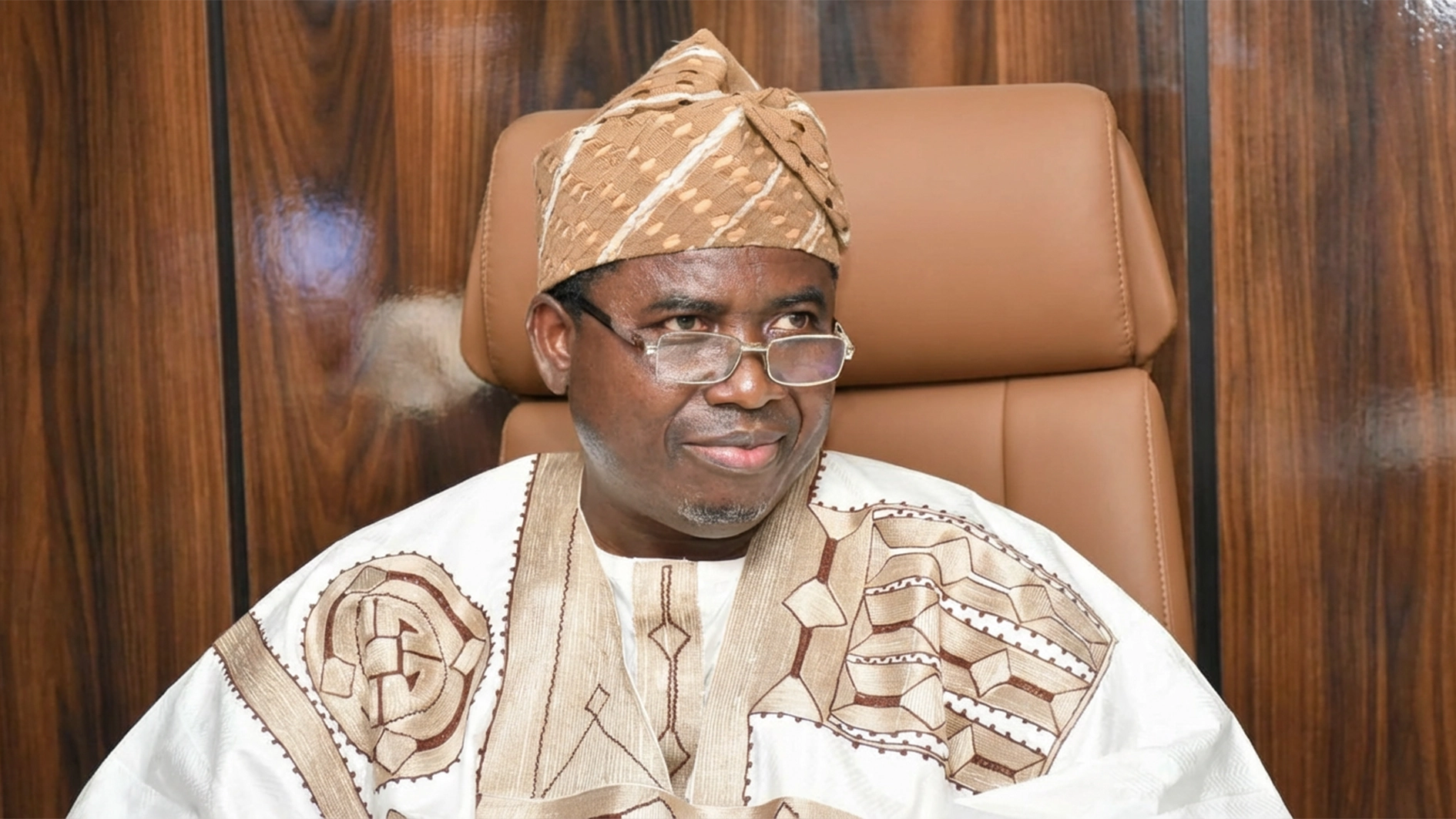
Since Nigeria returned to democratic government in 1999, every general election circle had come with criticisms over various electoral malpractices and allegations of interference, especially by the ruling party. This culminated in loss of zeal and active participation by many people. Their argument being that it is an effort in futility to participate in the election that lacks credibility and fairness.
To rebuild public trust, the Independence National Electoral Commission (INEC) billed the country over N300 billion to conduct a credible 2023 election through deployment of technological devices.
The assurance ignited greater political interest and gained wider participation, especially by the youth. Unfortunately, the inability of the Commission to deliver a flawless poll returned the country to the state of apathy while some others expressed fears that any attempt to manipulate the system further may trigger violence across the country.
However, less than 100 days to the 2027 elections, the new INEC Chairman, Prof. Joash O. Amupitan (SAN), said every necessary arrangement has been put in place to avoid technological glitch. He reassured the country and the international community of total commitment to neutrality, operational excellence and the sacred integrity of the ballot box.
Speaking on Monday at the World Press Conference and national stakeholders’ meeting, Amupitan said the Commission has moved from planning into active contract execution, production, delivery and construction.
The Chairman, who took time to reel out stages of preparedness, said that production has advanced for 57,000 new Bimodal Voter Accreditation System (BVAS) devices as well as additional voting cubicles and ballot boxes.

Meanwhile, some of the newly acquired BVAS have been delivered while delivery of new operational vehicles is ongoing nationwide.
“Construction of dedicated BVAS storage facilities and Local Government Area offices is progressing alongside nationwide office renovations and the contract for solar power installation across all the Commission’s offices has been awarded.”
INEC boss also assured that critical ICT applications are being upgraded, core infrastructure implemented and some states currently receiving non-sensitive materials. According to him, printing of ballot papers and result sheets is nearly completed.
Amupitan, who assumed leadership of INEC in October last year, was elated over successful conduct of off-cycle elections, including those of Anambra, Ekiti and Osun states governorship elections. Citing local and international observers’ reports, he held that the polls passed the benchmark of electoral integrity and underscored unwavering adherence to operational efficiency and credibility.
However, beyond passing the integrity benchmark, the chairman underscored the need for early deployment of ad-hoc staff and sensitive materials, agile logistics infrastructure and precision-driven and non-negotiable intelligence-led security arrangements.
The INEC boss admitted the arduous task of delivering non-sensitive and sensitive materials to 176,846 polling units across 8,838 registration areas and spanning urban centres, remote riverine communities and other difficult terrains. But with lessons from recent off-cycle elections, Amupitan said the Commission has finalised an integrated, multi-modal deployment strategy.
“The Commission has renewed and strengthened its Memorandum of Understanding (MoU) with key transport unions, including the National Union of Road Transport Workers (NURTW), Road Transport Employers Association of Nigeria (RTEAN) and Maritime Workers Union of Nigeria (MWUN).
“This framework guarantees the early pooling, vetting and mobilisation of over 100,000 vehicles and 4,000 boats to move personnel and materials,” he said.
For difficult-to-access terrains, especially in the Niger Delta Region, Lake Chad Basin and high-altitude areas in the North-East and North-West, the Commission said it has secured dedicated speedboats, 4×4 off-road vehicles and local pack transport.
Other strategies include early movement of sensitive and non-sensitive materials ahead of the poll.
“A structured reverse logistics protocol has been established to govern the secure retrieval, auditing and central archiving of BVAS devices, election result sheets (Forms EC8A), and unused ballot materials immediately following final collation,” he added.
Yet, technology remains the bedrock of transparent results in an election. To this end, the Commission said BVAS devices have undergone extensive software hardening, battery optimisation and biometric calibration to prevent accreditation bypass and eliminate manual manipulation.
“Building on successful deployments in recent off-cycle elections, our enhanced EC8A system ensures that polling unit result sheets are verified, cryptographically authenticated and uploaded directly from polling units to the public view portal, IReV.
“A nationwide audit of BVAS inventory, with activation testing and GPS tracking verification has just been concluded,” Amupitan assured, adding that the Commission has established a dedicated Artificial Intelligence (AI) Division with automated AI auditing tools integrated into results verification process under a five-pillar AI Governance Framework, operating under mandatory human oversight.
To ensure electoral integrity, Amupitan identified physical security and ethical discipline. Using its Risk Management Tool (ERM) and the Election Violence Mitigation and Advocacy Tool (EVMAT), he said the Commission will monitor political activities, track risk incidents and undertake field risk assessments to further fine-tune its security strategy for the 2027 general election.
And for the security of lives and materials, he said a joint security training for Electoral Security Personnel (ESPs) across the country has been organised while anti-graft agencies and undercover surveillance teams would be deployed to track illicit campaign spending and poll-site financial inducements.
While commending the government for timely release of statutory funding to the Commission, the INEC boss called for prompt release of the remaining budget to fund remaining activities.
Although many Nigerians are indecisive about participating in the 2027 polls, about 10.8 million new voters registered during the Continuous Voter Registration (CVR) exercise, taking the number of registered voters nationwide to 103 million.
Breaking down the figures, the commission listed the top 10 states by number of registered voters to include Lagos with 7,488,633; Kano, 6,570,276; Kaduna, 4,662,640; Katsina, 3,876,051and Rivers State with 3,736,434.
Others are Oyo State, 3,588,111; Delta, 3,525,988; Benue, 3,057,225; Ogun, 3,037,981 and Bauchi State, 3,012,547. The data showed Ekiti State with the lowest number of registered voters put at 1,055,708.
In compliance with Section 19(1) of the Electoral Act 2026, the commission pledged to display the Register of Voters for public scrutiny between October 9 and 15, while the distribution of Phase 1 PVCs to all local council centres began last Friday.
The commission had also introduced an online registration portal technology to eliminate distance barriers and Printable PVC technology in line with Section 18(1) of the Electoral Act 2026 to address the problem of long wait times for cards.
“To protect the integrity of party nominations and prevent unlawful exclusion or arbitrary candidate substitution, the Commission implemented an administrative safeguard, which was the pre-uploading of candidate names onto the INEC Candidates Nomination Portal, strictly verified against INEC’s primary election monitoring reports and internal party appeal outcomes.”
To counter disinformation, the commission said it engaged citizens on public enlightenment to raise awareness on fake and misleading information.
“Generative AI, voice cloning and deepfake videos now make it cheap to fabricate the voices of election officials, doctored result sheets and fake letterheads and to spread them faster than they can be verified.
“The greater danger is not any single falsehood. When deepfakes render lies believable, truth is greeted with scepticism, and cynicism replaces civic engagement.
We are responding on three fronts,” Amupitan assured.
Assessing INEC’s journey to 2027 elections so far, former National Commissioner of INEC, Prof. Lai Olurode, did not agree any less with Amupitan. Having monitored developments in INEC, he assured that the commission is more than 75 per cent ready for the elections.
“Let me also do an assessment of the state of readiness of the electorate. Following the off-cycle elections and the by-elections that are taking place in different parts of the country, I will say that the electorate are in a state of just blow the whistle and they are there.
“They have a lot of hopes that the elections will go on as planned, and that people’s expectations in terms of the integrity and the aftermath of the elections would be met,” he said.
On the expectations from the international community, Olurode said they have invested tremendously towards a hitch-free poll and as such, are justified to be positive.
He, however, expressed concerns over financial inducement in elections as well as the audacity with which some stakeholders influence voters.
“When you talk of the integrity of the elections, I think INEC is bothered and it is doing everything to make sure that the record of the 2023 elections is surpassed, and I have no cause to doubt, especially with media engagement.
“It is most likely that we checkmate some media fraudsters, who sit in their rooms and cook up stories to those who want to set the country ablaze. But with the increasing stakeholders’ engagement, I am very positive that 2027 elections will come and go peacefully,” he added.
He, therefore, implored Nigerians to ensure that elections end at the polling unit and the coalition centres rather than in the court.
In his reaction, a Port Harcourt-based lawyer, Dr. Festus Ogwuche, commended INEC’s plan to move to full execution with production of materials, technology checks and training, describing the development as credible.
He, however, expressed fear that Amupitan’s public appeal for prompt release of the remaining budget shows fiscal vulnerability.
He said that from all indications, funding delays may affect printing and logistics. Other landmines feared by citizens, Ogwuche said, are failure or distrust in BVAS and IReV, especially with the introduction of AI for verification. Others are breakdown at collation centres which the chairman himself identified as the major gap in previous elections, insecurity in parts of North-West, North-East and South-East that threatens deployment, and massive misinformation and deepfakes. There is also legislative uncertainty around early voting for essential workers.
To guard against these, Ogwuche urged INEC to secure a published ring-fenced disbursement schedule from the Federal Government, conduct and publish LGA by LGA live stress tests of its technology, enforce mandatory real time upload and video coverage at ward collation with exclusive declaration authority retained by INEC.
“INEC should also be ready to sanction any Resident Electoral Commissioner or staff showing partisanship and move to LGA specific security threat mapping with the police and other stakeholders.
“Visible areas for improvement are thorough cleaning of the register, quality of ad hoc staff training, daily proactive communication in the final 100 days, and clear arrangements for persons with disabilities, internally displaced persons and essential workers,” he said.

