
 Get Guardian on Google
…Lifestyle, genetics, environmental factors contribute to condition
Diabetes may begin as a medical diagnosis, living with it is a daily reality for millions of people. In Nigeria, diabetes is an increasingly important public health concern, with millions of people living with the condition, many of whom may not even know they have it.
The Diabetes Association of Nigeria (DAN) has cited estimates ranging from 8.2 million to 11.04 million people living with diabetes, including both diagnosed and undiagnosed cases.
For an average Nigerian diabetes means “sugar,” and maybe there is some level of accuracy there, but we need to establish that, attributing it to just taking too much sugar will be under presenting the entirety of what this chronic disease that occurs either when the pancreas does not produce enough insulin or when the body cannot effectively use the insulin it produces. This causes sugar and nutrients to build up in the blood and that build up is what we can safely say characterise as diabetes.
Think of insulin as a key that unlocks the body’s cells, allowing sugar from the food we eat to enter the various body cells and provide energy. Diabetes occurs when the body does not produce enough insulin (the key) or cannot use it effectively.
Diabetes has two major types, Type 1 diabetes’ and ‘Type 2 diabetes. Now, they may share a name, but they develop differently and affect the body in different ways.
Type 1 Diabetes Reflects Genetic Predisposition
Type 1 diabetes is characterised by deficient insulin production and requires daily administration of insulin. Experts say it is an autoimmune condition where the body’s immune system mistakenly attacks and destroys the insulin-producing beta cells in the pancreas.
Although the exact reason this autoimmune reaction occurs is not fully understood, genetic predisposition (basically, family history) and certain environmental factors are believed to contribute to its development. The destruction of these insulin-producing cells means the body produces little or no insulin, and daily insulin administration is necessary for survival.
Type 1 diabetes can develop at any age, although it is commonly diagnosed in children and young adults and accounts for 5 to 10% of all diabetes cases. Importantly, it cannot be prevented, and is not caused by eating too much sugar, poor lifestyle choices or a lack of physical activity. People living with Type 1 diabetes require lifelong insulin therapy, regular blood glucose monitoring and ongoing medical care to manage the condition.
Type 2 Diabetes Reflects Lifestyle Choices
On the flip side of the coin is Type 2 diabetes and unlike its counterpart, it is very common and accounts for about 90 to 95% of diabetes cases and it’s usually caused by lifestyle choices. It is a metabolic condition primarily driven by insulin resistance, where the body’s cells stop responding properly to insulin.
Here, the body might produce insulin, in abundance even, but because the body’s cells develop a resistance, they gradually become less responsive to insulin, making it harder for nutrients, like glucose (sugar) to move from the bloodstream into the cells. If you remember the lock and key analogy stated earlier, then remember it like this, the locks gradually become less responsive to the key (insulin), because it’s either blocked and the key cannot pass through or it’s rusty.
According to Kingsley Aguoru, a pharmaceutical expert in local manufacturing of diagnostic solutions and the Managing Director, Colexa Biosensor, a Nigerian medical diagnostics manufacturer with a focus on blood glucose monitoring solutions, for type-2 diabetes, factors such as excess body weight (obesity), physical inactivity, genetic susceptibility, certain dietary patterns, age and some others can contribute to its development and increase risks.
A systematic review and meta-analysis published in Cardiovascular Diabetology estimated a pooled Type 2 diabetes prevalence of 7.0% in Nigeria, translating to approximately 8.02 million adults.
The International Diabetes Federation (IDF), in its 2025 Diabetes Atlas, estimated that approximately 2.99 million Nigerian adults aged 20–79 were living with diabetes in 2024. However, it is also estimated that 78.7% of these cases were undiagnosed. There are considerable variations and clear contradictions in the estimated figures of people dealing with diabetes in Nigeria.
At the continental level, the IDF estimates that 24.6 million adults in Africa were living with diabetes in 2024, with approximately 73% unaware of their condition. Nigeria accounts for a significant share of this burden and is among the countries with the highest estimated number of people living with diabetes in sub-Saharan Africa, in fact, the country ranks #1 in Africa for the absolute number of adults living with diabetes placing it ahead of countries like the Democratic Republic of Congo and Tanzania.
Factors Influencing Diabetes:
It is also important to understand as we’ve established that the likelihood of developing diabetes is influenced by several factors, including genetics, family history, body weight, physical activity, lifestyle, dietary patterns and underlying health conditions. These factors do not operate independently, and their effects can vary from one individual to another.
. URBAN LIFESTYLE
One particularly important factor to consider in Nigeria is urbanisation. Consider the difference in everyday routines. Many urban residents spend extended hours sitting at desks, working in offices or commuting through traffic. Convenience also increasingly influences food choices, with greater dependence on processed foods, fast food and sugar-sweetened beverages.
Combined with reduced physical activity, these lifestyle patterns can contribute to weight gain, insulin resistance and an increased risk of developing Type 2 diabetes.
Access To Healthcare
Aguoru stated that beyond the lifestyle factors, however, there is another dimension to consider: access to healthcare. A person’s risk of developing diabetes is one thing, but their ability to identify, diagnose and manage the condition is another.
“This becomes particularly important in communities where routine health screening may be limited or where the cost of healthcare makes regular check-ups difficult.
“For some people, diabetes is only discovered when symptoms become severe or complications have already developed. This is partly because early symptoms, such as frequent urination, excessive thirst, unexplained weight changes and persistent fatigue, may be overlooked or mistaken for other health conditions.”
For someone living with diabetes, the cost of care is not a one-time expense. It is a continuous financial commitment. Beyond consultations and medication, blood glucose monitoring requires a compatible meter, test strips and other consumables.
In a study conducted by Development Governance International Consult (DGI Consult) with support from Gatefield, to assess the implications of inflation on access to antidiabetic drugs across the country, it compared the average household income with the annual cost of diabetes management, and the study revealed that only people earning above N2.5 million per year can afford consistent treatment without falling into debt.
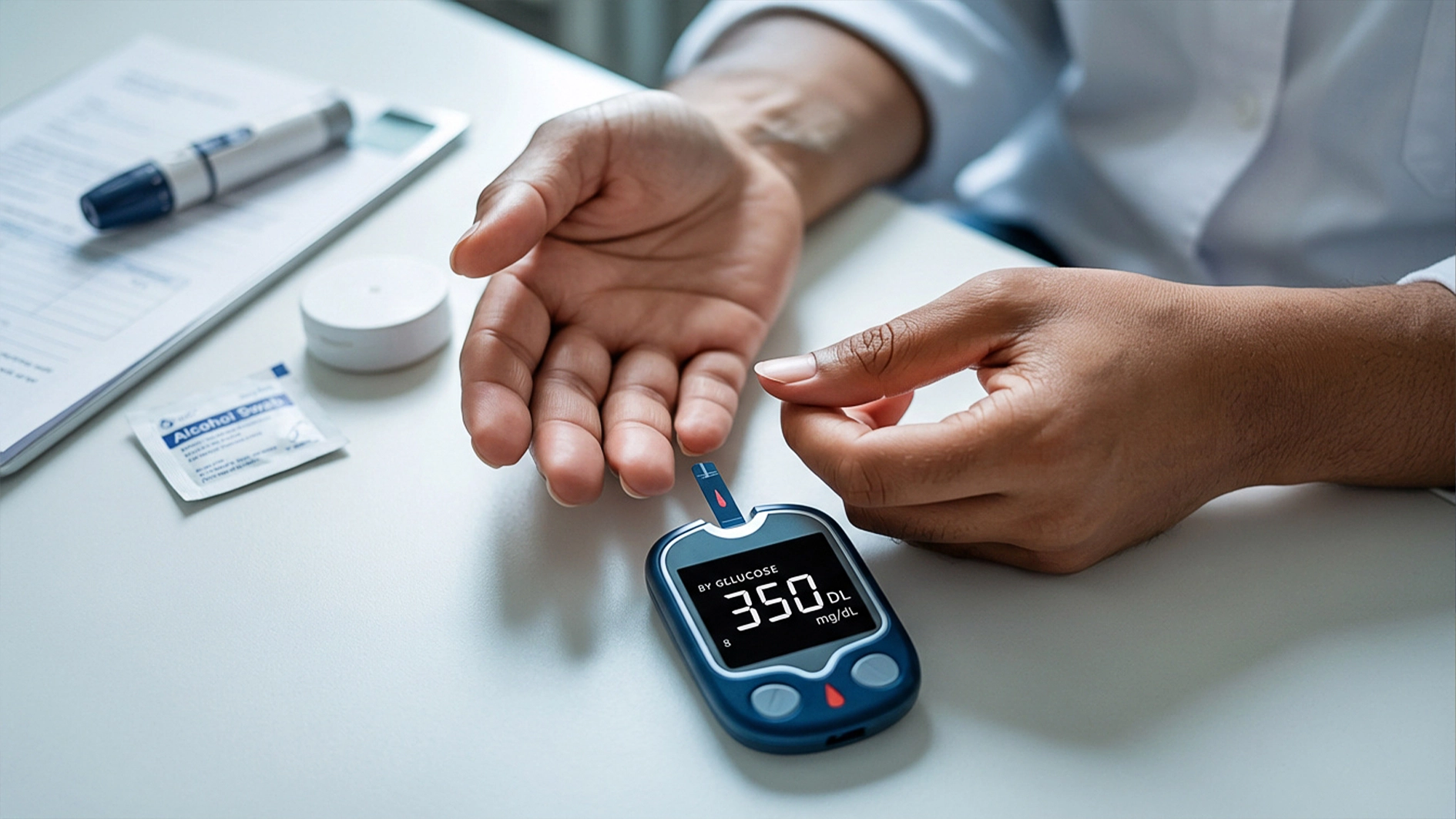
Aguoru noted that one of the key components of diabetes care is blood glucose monitoring which is the practice of measuring the amount of glucose (sugar) in the blood. “Blood glucose monitoring (BGM) is an important part of diabetes management. It helps people track how their blood sugar levels change in response to food, physical activity, medication and other factors affecting their health.
“A blood glucose meter makes this possible by measuring the amount of glucose in a small blood sample, usually obtained through a finger prick and applied to a compatible test strip. The result gives an indication of the person’s blood glucose level at that time. When done regularly, as recommended by a healthcare professional, these readings can help individuals identify patterns, recognise unusually high or low blood sugar levels and make more informed decisions about their care.”
Affordability, Supply
In Nigeria, the dependence on imported medical products also raises questions about affordability, supply and the ability to maintain consistent access. For a person who needs to test regularly, the cost of replacing test strips can be just as important as the initial cost of purchasing a meter.
In recent times, local healthcare manufacturing has become very relevant. Developing the capacity to manufacture essential medical devices within Nigeria presents an opportunity to strengthen domestic supply chains and contribute to the availability of products needed for long-term health management.
How can Nigeria move beyond importing essential healthcare products to developing and producing more of them locally?
While local production alone cannot resolve the challenges of affordability and access, building domestic manufacturing capacity is an important step towards a healthcare system that is better equipped to meet its own needs.
This is the standpoint of Aguoru who also revealed that one company contributing to this space is Colexa Biosensor. “Through its OnPoint blood glucose monitoring system. Colexa provides a locally manufactured option for people who need to monitor their blood glucose levels.”
Beyond individual companies and products, Aguoru stated that the drive for the growth of local production also aligns with Nigeria’s healthcare industrialisation agenda. Through the Federal Ministry of Health and Social Welfare and initiatives such as the Presidential Initiative for Unlocking the Healthcare Value Chain (PVAC).
“The Federal Government is pursuing greater domestic production of essential healthcare products, including medicines, diagnostics and medical devices. The initiative seeks to attract investment, strengthen local manufacturing capacity and build more resilient healthcare supply chains.”
Diabetes is among the top range non-communicable diseases (NCD) affecting the highly productive segments of the Nigerian populace and addressing its growing burden in the country would require a united effort that goes beyond awareness. Nigeria has taken some giant steps towards the prevention and control of diabetes in Nigeria, but the desired destination in the provision of a working system to reduce the growth has not yet been reached.
This calls for stronger healthcare systems, improved access to screening and diagnosis, affordable treatment and the availability of reliable monitoring solutions.
Thus, the emergence of companies such as Colexa Biosensor in the blood glucose monitoring space is part of this developing landscape. However, the true measure of progress will not simply be how much we can manufacture locally, but how effectively that capacity translates into accessible, quality and affordable healthcare solutions for Nigerians.
As Nigeria joined the world to observe World Diabetes Day on November 14, 2026 under the theme “Early Action on Diabetes”, the conversation must therefore extend beyond understanding diabetes to examining how we can build a healthcare system better equipped to prevent, diagnose and manage it.