
 Get Guardian on Google
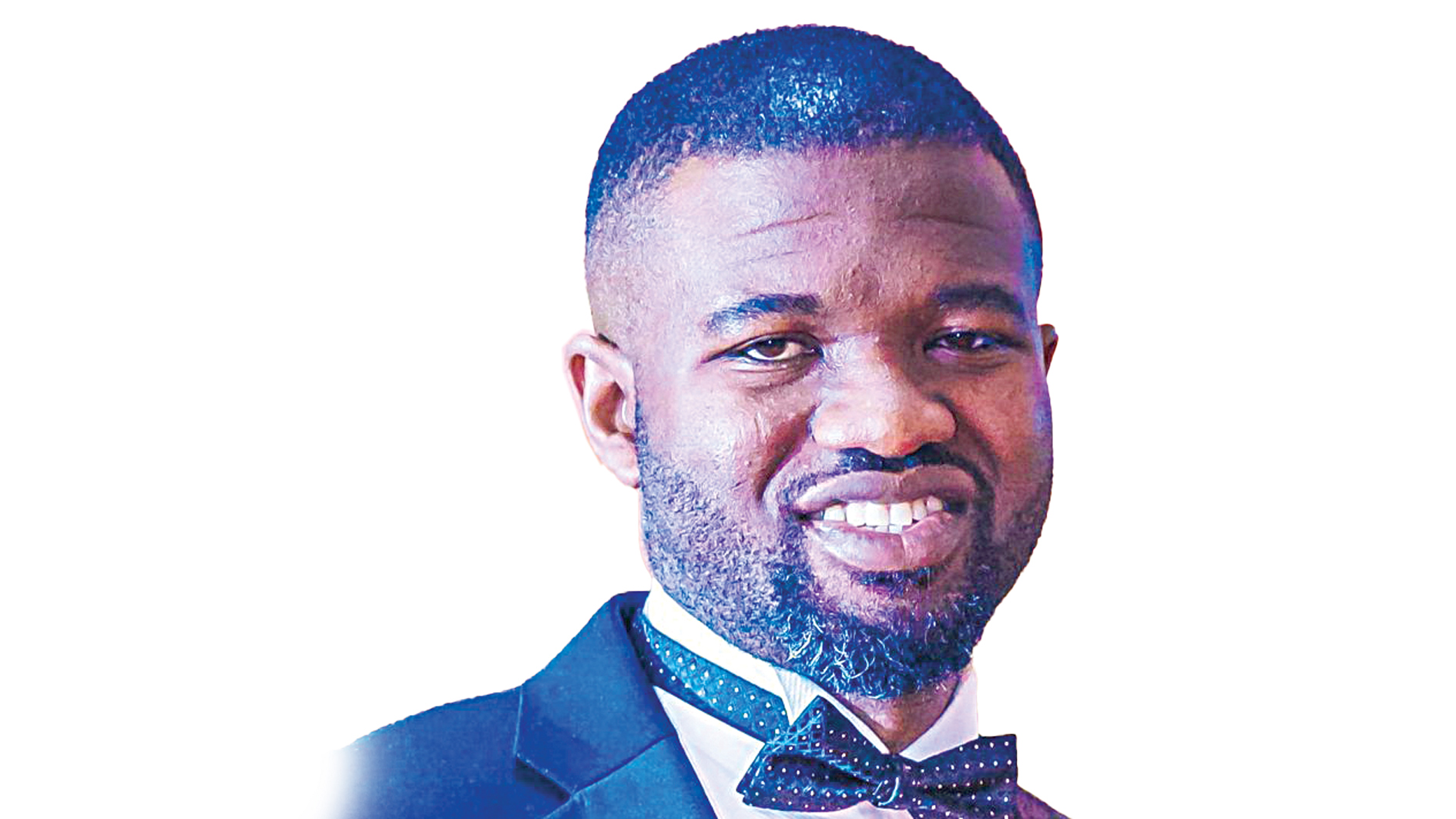
Nigeria’s emergency response system continues to falter under the weight of fragmented agency coordination, unreliable telecom networks and high power deficit. A UK-based telecommunications engineer, Oladipo Bewaji, in this interview with BERTRAM NWANNEKANMA, examines these failures and charts a path to reform.
How well does Nigeria’s current telecom infrastructure support emergency services?
We can do better. The purpose of telecommunications infrastructure in emergency situations is to connect people in remote locations to assistance when they need it. There is a concept known as C3, which stands for contact, command and control. The terminology may vary slightly depending on the organisation adopting it, but the principle remains the same. You cannot effectively manage emergencies without properly established C3 centres.
These centres should serve as fully staffed hubs that receive distress calls from the public and dispatch the necessary assistance. They should also function as coordination points for all emergency services.
Once such structures are in place, we can begin to monitor important performance indicators, including the percentage of calls answered, dropped calls and failed calls. These statistics, backed by proper organisation, will enable the government to demand higher standards from telecommunications providers through Service Level Agreements (SLAs).
Without a serious organisational structure on the part of the government, however, telecommunications companies, which are private investors, will continue to operate on a best-effort basis. I remember working years ago with Emperion West Africa (EW), an Internet Service Provider. I was excited about the opportunity and recall telling a friend in the UK that I had installed network services for banks using 500Mbps bandwidth. At the time, a bank branch using 500Mbps was considered fairly large.
My friend calmly responded that the bandwidth available in his flat was even higher. I could hardly comprehend it then. What made that possible in the UK was the country’s existing Public Switched Telephone Network (PSTN) and Integrated Services Digital Network (ISDN) copper infrastructure, which had been upgraded to deliver higher speeds to homes.
The lesson is that Nigeria also had an extensive network of PSTN infrastructure through NITEL. Unfortunately, as mobile telecommunications gained prominence, much of that infrastructure appeared to be abandoned. It should not have been allowed to go to waste.
The good news is that we can leverage newer technologies. The Internet speeds available on our mobile phones today are faster than what many banks used decades ago. Voice and data can now be transmitted over the same network at significantly lower costs through technologies such as Session Initiation Protocol (SIP).
The implication is that where fibre-optic or copper cables are unavailable, mobile masts can provide connectivity. Where terrestrial mobile coverage is absent, satellite communications, such as Starlink, can provide an alternative. With 4G networks, Wi-Fi calling is also possible.
What are the major telecommunications challenges facing emergency response agencies in Nigeria?
Telecommunications connects people to help, but it does not necessarily deliver the help itself. All stakeholders must work together. Government, civil society organisations and the public all have roles to play.
Take the UK, for instance. Its telecommunications infrastructure handles tens of thousands of emergency calls daily. However, every failed call must be investigated, even if it is just one. That is a matter of policy.
This is possible because clear boundaries of responsibility have been established among the stakeholders. The telecommunications carriers responsible for ordinary services are distinguished from those handling emergency services. Therefore, when a call fails, it is easier to identify the party responsible.
A telecommunications provider, for instance, can explain that a particular base station was unavailable because of a power failure at a specific time. Power supply, in this context, is largely the responsibility of the government.
If our leaders can demonstrate the political will and vision to consistently place value on every human life, they can sustain the mechanisms required for an effective emergency response system. It is a huge undertaking that demands discipline, commitment and proper coordination.
How effectively do emergency agencies use ICT to receive and coordinate distress calls?
Let me illustrate this with a chess game. If I tell you to move a pawn around the queen, there may be four pawns around the queen, leaving you to ask, ‘which pawn?’ But if I tell you from the United States to move the pawn on D3, you will know precisely which one I mean. There is no ambiguity.
I make this analogy in relation to the new postcode system recently launched by the Ministry of Digital Economy. The initiative deserves commendation because this kind of structural planning and data management is long overdue.
If properly implemented, the postcode system could address significant challenges in coordinating and delivering emergency services. Digital technology can identify locations anywhere in the world through geographical coordinates. However, translating that technical information into something ordinary people can easily understand and use is an important part of the solution that the postcode system offers.
Once the system is properly implemented, accurate and reliable location data will become available. With such data comes the opportunity to identify patterns, plan interventions, and deploy resources more effectively. Suddenly, emergency agencies will find it easier to determine where assistance is needed and how best to deliver it.
What roles can technologies such as artificial intelligence, geolocation, IoT and real-time data analytics play in improving emergency response in Nigeria?
It has often been said that modern technology offers developing countries enormous opportunities to catch up with developed nations. There is hardly a better example of this than AI.
AI allows technology to be adapted to specific needs and challenges. Take Nigeria’s peculiar kidnapping challenges, for instance. Nothing prevents the development of a mobile application powered by AI and designed to operate discreetly, using situational and environmental awareness to identify potential kidnapping situations.
Such an application could transmit geographical coordinates and other relevant information to the appropriate authorities without requiring victims to make distress calls themselves. With AI and existing technologies, our limitations are largely determined by our imagination and capacity to innovate.
Why is interoperability between telcos and first responders (police, fire, health etc) critical and what are the widest gaps right now?
It is extremely important. However, interoperability remains a grey area for telecommunications operators unless the government deliberately drives integration through clear policies and service-delivery standards.
Let me digress a little. I once listened to a respected Nigerian security expert who highlighted the challenges of intelligence sharing among security agencies. He explained how some agencies operate in silos, sometimes withholding intelligence because they would rather receive the credit for acting on it themselves.
This reflects an aspect of human nature that cannot simply be eliminated. Every conscientious worker wants recognition for hard work, and such recognition can serve as motivation.
This is why the government must prioritise digital information sharing, integration and collaboration among security and emergency response agencies.
Digital information-sharing systems can attach the names of contributors and timestamps to information. Where such intelligence proves useful, recognition can be traced to the person or agency that provided it.
Another critical aspect of proper organisation is the establishment of C3 centres. These centres can serve as coordination points for dispatching ambulances, fire services and police personnel. They can also become focal points for investments in emergency communication technologies.
Nigeria has an emergency number, 112.
How can telecommunications and emergency agencies make emergency numbers more reliable and accessible?
The numbers 911 and 999 are internationally-recognised emergency lines. The United States uses 911, which became particularly popular through the song by Haitian-American musician, Wyclef Jean, while 999 is the UK emergency number. Our collective objective should be to make 112 equally recognisable within Nigeria.
For that to happen, we must challenge the widespread perception that nothing works in the country. There must be a credible demonstration that the emergency number works and that calling it will result in assistance. Once people have confidence in the system, its popularity will grow.
Regarding reliability and accessibility, I have already emphasised the need to establish clear boundaries of responsibility.
For instance, it may be worthwhile to have dedicated carriers or clearly defined network arrangements for emergency and non-emergency services. Telecommunications operators such as Globacom and Airtel should be required to demonstrate that they can provide the necessary national coverage.
However, even when operators provide the service, there must be a mechanism for measuring their performance. Otherwise, there will be no basis for improvement.
Who collects statistics on incoming emergency calls? How many calls are received, how many are answered and how many fail to connect? These questions require actual figures, not assumptions.
We need digital infrastructure to collect and analyse such information, and private investors are unlikely to establish that infrastructure on behalf of the government without clear regulatory requirements.
It becomes a cat-and-mouse situation. Government is the cat, while private investors are the mouse. If the cat is too comfortable, weak or unwilling to enforce its authority, the mouse will have a field day, unfortunately, at the expense of the public.
How can emergency agencies combat social media misinformation, fake distress calls and manipulated media during crises?
Social media is a reality of modern life, and it has both advantages and disadvantages. Caution is therefore essential.
It can be an excellent tool for engaging the public because it allows information to be shared instantly and provides opportunities for live reporting. It can also be integrated into official emergency communication platforms.
However, during security emergencies and terrorist attacks, members of the public have a responsibility to protect themselves by moving away from danger where necessary.
Emergency responders, on the other hand, require accurate and sometimes classified information to operate effectively. Such information should not be circulated indiscriminately on social media.
There is also the danger of malicious actors infiltrating and hijacking online discussions to spread false information or compromise security operations.
For these reasons, I would not advocate excessive reliance on social media as a primary platform for emergency response. It should complement, rather than replace, secure and properly coordinated official communication channels.
Viral misinformation and fake calls have become the order of the day. How can we prevent them from derailing emergency response during crisis time?
Unfortunately, these are challenges that can only be minimised, not completely eliminated.
One of the biggest dangers is the diversion of scarce resources, both human and material, to incidents that may not be genuine.
This is another reason geolocation technology must be central to our emergency response system. It can help authorities verify the locations from which distress calls originate and identify suspicious patterns.
Knowing that their locations can be traced may also discourage people from making frivolous or malicious emergency calls.
When disasters, cyberattacks, or major outages hit, how can government and telcos guarantee that emergency lines stay open?
There is a lot that can be done. The first step is to establish critical infrastructure that can serve as backup communication channels during emergencies.
In many cases, legacy telecommunications infrastructure can support or provide backups for modern systems. For example, radio communication networks remain relevant in the UK, and this is something the Nigerian government should consider.
I once worked with Vodafone, where I observed a team whose responsibility was to support a sensitive government service. The team appeared to have very little routine activity. They could spend months without receiving a call. In fact, during my entire stay there, I did not witness them receive one.
However, the purpose of the team was to ensure that the service was available whenever a critical call came in.
Do we have the discipline to invest in backup infrastructure that sits idle most of the time, yet becomes indispensable in a crisis?
Once such infrastructure is established, government must also provide regular testing, simulation exercises and emergency drills to ensure that the systems remain functional. These exercises must be conducted consistently and their requirements strictly observed.
In the UK, for instance, emergency alerts are periodically transmitted directly to mobile phones. During severe weather conditions, such as storms, people in affected areas receive alerts warning them of impending danger.
The Nigerian government should engage telecommunications operators and explore how a similar nationwide emergency alert system can be developed and implemented.
Looking ahead, what urgent investments, technologies, and reforms are needed to build a faster, more coordinated emergency telecom system in Nigeria?
Unified Communications is the way forward. The days when voice, video and data services were treated and paid for separately are gradually disappearing.
Any investment in emergency communication infrastructure should be capable of integrating these three components to ensure seamless communication and information sharing.
I must also commend the investment in data centres by the Minister of Interior, Olubunmi Tunji-Ojo. Cloud infrastructure has become a mainstay of modern technology.
Emergency response call centres can have their communication services delivered through Contact Centre as a Service (CCaaS) platforms hosted on cloud infrastructure. This would provide flexibility, scalability and the capacity to coordinate emergency calls and dispatch services more efficiently.
At this point, I must acknowledge the resilience of Nigerians who have built and sustained some of the commendable telecommunications and digital infrastructure currently available in the country.
Believe it or not, we have a data centre in Nigeria that has achieved 99.99 per cent availability. The company received recognition for this achievement in the UK. There are also several other success stories in the fintech industry.
All these achievements have been recorded despite the challenges of unstable electricity supply.
Imagine what we could accomplish with reliable power infrastructure.