


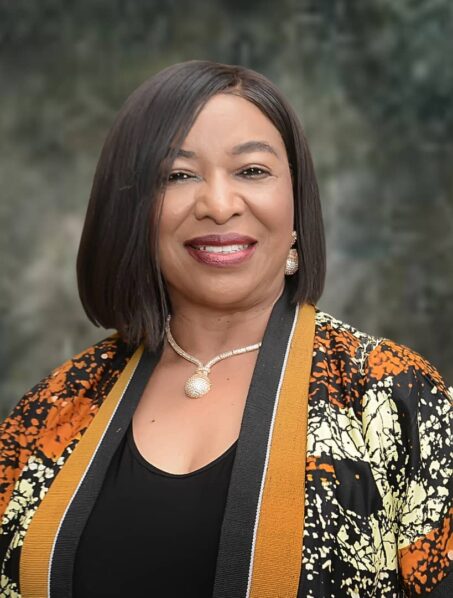
As the world marks the International Women’s Day (IWD), there are Nigerian women who in various capacities have made tremendous progress in their fields and are stepping up their game. One of such iconic women is Dr. Victoria Ekhomu the Group Managing Director/Chief Executive Officer (CEO), Transworld Security, President, School of Management & Security and President, Association of Industrial Security & Safety Operators of Nigeria (AISSON). Ekhomu was conferred with the Honorary Doctor of Science Honoris Causa (D.Sc.) in Industrial Security, Risk Management & Corporate Governance, by European-American University. She holds a Master’s Degree from the University of Pittsburgh and Bachelor’s degree from University of Lagos. Ekhomu has a Harvard Business School Certificate in Entrepreneurship in Emerging Economies. She is a member of ASIS Foundation Board of Trustees. Ekhomu has held various position in ASIS International, the world’s largest security body. She is the first female to attain Certified Protection Professional (CPP) in Africa. In this interview with GERALDINE AKUTU, she talks about the significance of International Women’s Day, gender equality and other sundry issues.
[ad]
The International Women’s Day is celebrated on March 8 every year. What is its significance to Nigerian women?
International Women’s Day (IWD), celebrated on March 8, holds significant importance for Nigerian women for several reasons. IWD serves as a platform to raise awareness about the challenges and inequalities that women face in Nigeria, including issues such as gender-based violence, limited access to education, healthcare disparities, and economic inequality. The day provides an opportunity to celebrate the achievements and contributions of Nigerian women across various fields, including politics, business, science, and the arts. It highlights role models who inspire future generations. IWD is a time for advocacy and activism. It mobilizes efforts to promote women’s rights, challenge discriminatory practices, and push for policies that support gender equality. Events and activities organized around IWD encourage community engagement and dialogue about women’s issues. These gatherings foster solidarity, support, and networking among women. The celebration allows for the discussion of specific local challenges faced by Nigerian women, such as early marriage, maternal health issues, and the impact of cultural norms on women’s rights. Many organizations and groups use IWD to launch or promote initiatives aimed at empowering women, such as skills training, educational programs, and health awareness campaign. IWD connects Nigerian women with a global movement advocating for gender equality. It reinforces the idea that the struggle for women’s rights is shared across borders and cultures. Celebrating IWD helps inspire young girls and women to pursue their dreams and engage in activism, fostering a sense of empowerment and ambition. In summary, International Women’s Day is significant for Nigerian women as it not only raises awareness about their struggles and achievements but also serves as a rallying point for continued advocacy and action toward gender equality and women’s empowerment.
Why are there still low female representation in the political space?
The low representation of women in Nigerian politics can be attributed to several interrelated factors. Traditional gender roles often prioritize men as leaders, which can discourage women from pursuing political careers. Societal expectations may also limit women’s participation in public life. Women often face economic disadvantages, including limited access to financial resources, which can hinder their ability to campaign effectively. Political campaigns can be expensive, and many women may lack the necessary funding or support. The political landscape in Nigeria can be challenging for women. Political parties may have male-dominated leaderships that do not prioritize women’s candidacies. Additionally, there can be a lack of internal party mechanisms to support female candidates. Women in politics may face threats, harassment, or even violence, which can deter them from seeking office. The fear of violence can be a significant barrier to participation. A case in point is the Senator Natasha’s current dispute with the Senate President Godwin Akpabio who she is accusing of intimidation and sexual harassment and refusal for him to table a crucial matter as important as the Ajakuta Steel Mill. This Steel Mill that should move Nigeria up and also provide employment for our teeming population, is step down except Senator Natasha succumbs to the President of the Senate’s sexual advances. Presently we have only 4 Female in the House and intimidating one of the four female Senators, who is even married, at such high level, sends the wrong signals to other women who might be interested in politics. Education and Lower levels of education and political awareness among women can also be a factor. In some areas, women may have less access to education and information about political processes, which can limit their engagement. While there are laws aimed at promoting gender equality, they may not be effectively enforced. The absence of quotas or affirmative action policies in political representation means that women’s participation is often not prioritized. The lack of female role models in leadership positions can perpetuate the cycle of underrepresentation. Women may not see pathways to political careers without visible examples of successful female politicians. Media portrayal of women in politics can also influence public perception and acceptance, often focusing on stereotypes rather than their qualifications or achievements. Addressing these issues requires a multifaceted approach, including legal reforms, educational initiatives, economic empowerment for women, and cultural shifts to promote gender equality in politics.
Recently, you were honoured by St Maria Goretti Old Girls Association for your outstanding contributions. How do you feel about that?
I am elated at the great honor bestowed on me as a Life Patron of St Maria Goretti Old Girls Association (SMAGOGA). I feel fulfilled and appreciated for the immense contributions I made to SMAGOGA and my Alma Mater, St .Maria Goretti Grammar School, Benin City, when I served five years as the Lagos Branch President and 4 years as the National President. However, being recognized for contributions, particularly in a supportive community like an alumni association, is typically a significant honor for individuals involved. It often reflects commitment and positive impact on the association and on the school.

[ad]
What should a woman do when she is confronted with obstacles in life?
When a woman encounters obstacles in life, several strategies can help her navigate these challenges effectively. Cultivate a mindset of resilience. Understand that obstacles are a part of life and can be opportunities for growth and learning. Reach out to friends, family, mentors, or support groups. Sharing experiences and seeking advice can provide emotional support and practical solutions. Take time to analyze the obstacle. Identify what is causing the challenge and consider various perspectives to better understand it. Define what you want to achieve. Breaking down larger goals into smaller, manageable steps can make it easier to tackle challenges. Create a strategic plan to address the obstacle. Consider potential solutions and the resources needed to implement them. Maintain a positive attitude. Focus on what you can control and remind yourself of past successes to build confidence. If you encounter setbacks, view them as learning opportunities. Analyze what went wrong and how you can improve moving forward. Take care of your physical and mental well-being. Engage in activities that promote relaxation and reduce stress, such as exercise, meditation, or hobbies. If obstacles are overwhelming, consider seeking help from a counselor or therapist. Professional guidance can provide coping strategies and support. Keep pushing forward, even when faced with difficulties. Persistence can often lead to breakthroughs and eventual success. Acknowledge and celebrate progress, no matter how small. This can boost motivation and reinforce a positive mindset. By employing these strategies, women can effectively confront obstacles and continue to pursue their goals and aspirations.
How optimistic are you about the future of the Nigerian Girl-child?
While I don’t have personal feelings or opinions, I can highlight some factors that contribute to optimism regarding the future of the Nigerian girl-child. There is growing awareness of the importance of gender equality and the rights of girls. Advocacy groups and campaigns are increasingly highlighting issues such as education, health, and safety. Efforts to improve access to education for girls are expanding. Programs focused on scholarships, mentorship, and community engagement are helping to keep girls in school. Some government initiatives aim to promote gender equality and empower women and girls. Policies supporting education and health can have a positive impact on the girl-child. The emergence of successful women in various fields can inspire the next generation of girls. Increased visibility of female leaders and role models can motivate girls to aspire to leadership and achievement. Many grassroots organizations are working tirelessly to address issues facing girls, from early marriage to education deprivation. Their efforts can lead to significant local change. International organizations and partnerships are increasingly focused on empowering girls and women in Nigeria. This external support can help drive progress. Technological Advancements: Access to technology and information can empower girls by providing educational resources and platforms for advocacy. While challenges remain, including cultural barriers and economic disparities, the combined efforts of individuals, communities, and organizations can create a more supportive environment for the Nigerian girl-child. Continued advocacy and action are key to sustaining and expanding this progress.
[ad]
As a security consultant, what is your take on the security situation in Nigeria?
The security situation in Nigeria is complex and multifaceted, characterized by various challenges, including insurgency, banditry, ethnic conflict, and kidnapping. Groups like Boko Haram and ISIS-affiliated factions have caused significant instability in the Northeast, leading to loss of lives and displacement. Violent crime, particularly in the Northwest and North-Central regions, has surged, with armed groups targeting individuals for ransom. Tensions between different ethnic and religious groups can lead to violence, exacerbated by competition for resources. The police and security agencies often struggle with inadequate training, funding, and resources, impacting their effectiveness. Corruption within security agencies can undermine efforts to improve safety and security, leading to a lack of trust among the public.
What should the government do to strengthen security in our society?
I strongly recommend investing in the training of security personnel and providing them with modern equipment can improve their operational effectiveness and responsiveness. Community Policing: Encouraging community involvement in security through neighborhood watch programs can help in gathering intelligence and building trust between law enforcement and communities. Strengthening intelligence-gathering and sharing among various security agencies can lead to more coordinated and effective responses to threats. Tackling underlying issues such as poverty, unemployment, and lack of education can reduce the appeal of joining extremist groups and criminal organizations. Improving the justice system to ensure swift and fair trials can deter crime and build public confidence in law enforcement. Educating the public on security issues and encouraging vigilance can empower citizens to report suspicious activities and cooperate with authorities. Collaborating with NGOs and community groups can enhance the government’s understanding of local issues and foster grassroots solutions. Engaging with international partners for training, resources, and intelligence can bolster Nigeria’s capacity to combat transnational threats. Fostering dialogue among different ethnic and religious groups can help address grievances and reduce tensions that lead to violence. By taking a comprehensive and multifaceted approach, the Nigerian government can strengthen security and create a safer environment for all citizens. Addressing both immediate security concerns and underlying socio-economic issues is essential for long-term stability.
What is your advise to women looking to go into the Security sector?
Pursue relevant education, such as degrees in security studies, criminology, law enforcement, or related fields. Specialized training programs can also enhance your skills. Seek internships, volunteer opportunities, or entry-level positions in security organizations, law enforcement agencies, or military service. Hands-on experience is invaluable. Build connections within the industry by attending conferences, workshops, and seminars. Joining professional associations focused on women in security can provide mentorship and support. Focus on acquiring both hard and soft skills. Technical skills like cybersecurity, risk assessment, and emergency management are important, but soft skills such as communication, leadership, and negotiation are equally crucial. Keep up with the latest trends and developments in security, including technological advancements and evolving threats. Continuous learning is key in this rapidly changing field. The security sector can be challenging, and resilience is essential. Be prepared to face obstacles and remain committed to your goals. Work to promote gender diversity within the security sector. Engage in discussions about the importance of women’s contributions and advocate for policies that support inclusion. Find mentors in the field who can provide guidance, share experiences, and help you navigate your career path. Look for programs specifically designed to empower women in security and defense. These can provide tailored skills training and networking opportunities. Don’t hesitate to take on leadership positions, whether in your workplace or through community initiatives. Leadership experience will bolster your confidence and credentials. By following these steps, women can effectively position themselves for successful careers in the security sector, contributing to a more inclusive and effective field.
[ad]
