

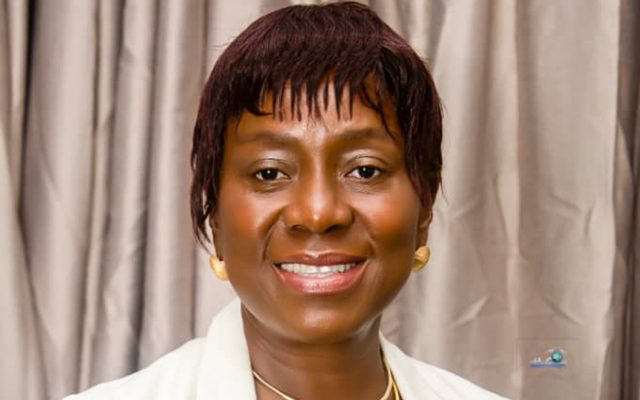
Benedine Eloka is Vice President, Clarion Shipping West Africa Limited, a Nigerian owned Maritime logistics firm. She is a seasoned Chartered Accountant, Logistics and Supply Chain Management Expert, a Chartered Arbitrator. Eloka is a graduate of Accounting from the University of Lagos, she also holds a degree in Laws (L.L.B.) from the National Open University of Nigeria (NOUN). In this interview, she speaks on her over 20 years of industry experience, a female industry leader proffering solutions to moving containerised cargoes within Nigerian ports and the West African sub-region.
Can you walk us through your background?
I come from a modest but visionary family that values discipline and hard work. I am an educationist, a chartered Accountant, a lawyer. I also studied Logistics and Supply Chain Management, and later pursued executive education in International Trade and Port Development. My inspiration came from seeing how much Nigeria loses annually due to inefficiencies in shipping and I wanted to be part of the solution. Today, I’m proud to lead Clarion Shipping as a woman transforming the tide.
As a female industry leader, how are you advocating for women and youth participation in maritime?
I am passionate about empowering women and youth. At Clarion, we run internship and mentorship programmes, particularly targeting female graduates in marine logistics and engineering. I also speak in schools, churches, and host training sessions. My legacy is to open doors wider for the next generation so that talent not gender determines success. What motivates me daily is purpose the vision of building something that outlives me and impacts generations. I balance my roles through strategic delegation, routine discipline, and surrounding myself with competent and passionate professionals who share the same mission.
What leadership values have guided your rise in the industry and your role at the helm of Clarion Shipping?

I lead with integrity, courage, and vision. In a sector filled with volatility, I’ve found that consistency, clarity, and compassion are essential. I also believe in mentorship and grooming successors because true leadership is about building others.The biggest hurdle has been credibility bias. In high-level discussions and negotiations, I had to prove my competence twice as hard. I overcame it by building an impeccable track record, prioritising safety compliance, and refusing to be discouraged by systemic bias. Staying on top requires knowledge, strategic alliances, and faith in oneself.
How would you assess the current state of Nigeria’s maritime sector and what reforms do you believe are still urgently needed?
The sector is promising but underperforming. Urgent reforms needed include customs process modernisation, decentralisation of ports, improvement in rail-port linkages, and a one-stop digital portal for maritime transactions to reduce human interference and corruption.
Hence, we prioritise local content in procurement, staffing, and partnerships. Over 90 per cent of our team is Nigerian. We offer support to SMEs through subsidised export logistics and we collaborate with vocational institutes to develop practical maritime training, thereby fostering employment and capacity-building.
What was your first major breakthrough in the sector and how did that lead to the founding of Clarion Shipping West Africa Limited?
Our first major breakthrough came during a high-stakes project involving the logistics and clearance of specialised industrial equipment in Nigeria. That success revealed a clear gap in reliable, indigenous shipping solutions. In response, we founded Clarion Shipping West Africa Limited with a mission to create a world-class, Nigerian-owned maritime logistics firm rooted in excellence, transparency, and resilience. We offer integrated maritime services port-to-port shipping, cargo consolidation, inland haulage, customs clearance, and warehousing. Our base is Nigeria, but our reach spans West Africa, with connections to Europe and Asia through our global partnerships.
What makes Clarion Shipping stand out from other logistics and shipping companies operating in West Africa?
We stand out because we are fully indigenous, yet globally oriented. Our deep local knowledge, strategic investments (like our newly acquired vessel Ocean Dragon), and tech-forward operations position us as a bridge between regional efficiency and global standards.Through early adoption of documentation automation, streamlined cargo tracking, and timely vessel turnaround, we’ve reduced inefficiencies. We also partner closely with terminals and customs to ensure smoother operations and reduced clearance delays.
What are the key challenges your company faces in Nigeria’s maritime and port environment and how are you navigating issues like congestion, infrastructure gaps, and regulatory hurdles?
Key challenges include port congestion, infrastructure decay, and bureaucratic bottlenecks. We address these by optimising logistics scheduling, advocating policy reforms through industry forums, and adopting technologies that speed up internal workflows.
In 5 to 10 years, we see Clarion operating a fleet of vessels across the Gulf of Guinea, with logistics hubs in Accra, Abidjan, and Dakar. We’re also exploring container production, dry port development, and marine engineering partnerships as part of our expansion. I would digitise and decentralise customs clearance across all ports. This single change would revolutionise speed, reduce corruption, cut costs, and boost Nigeria’s competitiveness in global shipping.
