

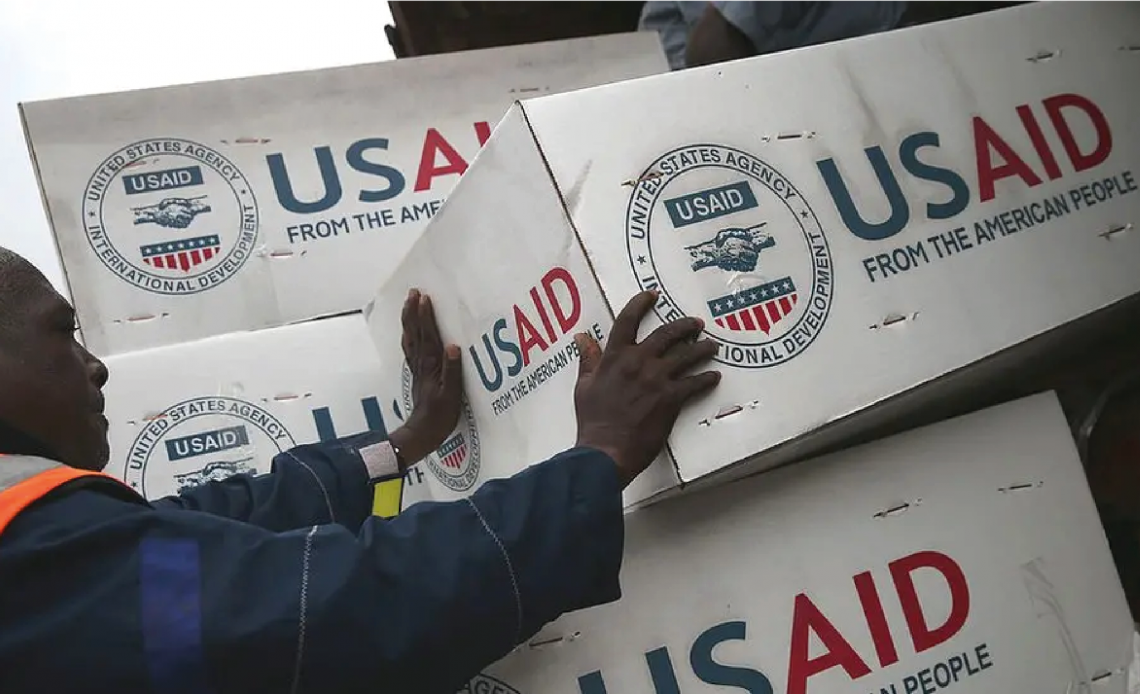
Across Africa, governments and civil society actors are recalibrating their development strategies following the abrupt freeze and cancellation of United States Agency for International Development (USAID) funding earlier this year, a move that has sent shockwaves through health, gender equality and social protection programmes on the continent, including in Nigeria.
The funding halt, announced in February 2025, led to the suspension and termination of a significant number of USAID-supported projects across Africa. While the United States has since signed a $1.6 billion, five-year health financing agreement with Kenya, stakeholders say the broader impact of shrinking global aid flows continues to expose the fragility of Africa’s dependence on external development financing.
According to Christabel Netondo, Senior Associate for Youth Engagement at Women Deliver, the moment has triggered a rare convergence of political will across African governments, civil society and youth movements to reclaim national ownership of health systems and development priorities.
“What we are seeing is African governments and civil society, across political divides, beginning to take deliberate steps to reduce overreliance on aid and reassert leadership over their own health systems. The USAID freeze was disruptive, but it has also forced long-overdue conversations about sustainability, sovereignty and accountability.”
In Kenya, she pointed to recent legislative reforms as a signal of this shift. The introduction of the Social Health Insurance Fund, which replaces the National Health Insurance Fund, is designed to expand access to healthcare services and products for citizens. “It shows how governments are coming together to rethink domestic financing for healthcare,” Netondo noted.
Nigeria, she added, faces a similar reckoning, particularly in the health and gender sectors where donor funding has long underpinned service delivery. With USAID-supported programmes affecting maternal health, sexual and reproductive health services and gender-based violence response, the funding freeze has renewed pressure on the Federal Government and state actors to increase domestic budgetary allocations and strengthen public health infrastructure.

Netondo cautioned, however, that the current crisis cannot be separated from the legacy of global development systems. “For decades, multilateral frameworks like those driven by the United Nations and the Sustainable Development Goals have shaped national agendas,” she said.
“But we cannot overlook the fact that some of these ratified global frameworks have adopted colonial practices and continue to be enabled by institutions that perpetuate inequalities, power imbalances and the deprioritisation of national development agendas.”
Against a backdrop of shrinking civic space, rising anti-rights rhetoric and declining donor funding, African feminist movements and youth leaders are stepping into the gap with renewed urgency. In November, as part of the lead-up to Women Deliver 2026, Sonke Gender Justice hosted the African Regional Convening in Nairobi, bringing together more than 200 youth advocates, policymakers, feminist leaders and grassroots organisations from across the continent.
The convening focused on advancing Africa-led solutions for gender equality and sexual and reproductive health and rights, at a time when donor uncertainty is threatening hard-won gains. It also formed part of a global consultation process led by Women Deliver to co-create a Feminist Playbook—an accountability-driven framework designed to challenge systems that have historically failed women and girls, while building new, feminist-centred structures.
Launched at the United Nations General Assembly in September, the Feminist Playbook has since been shaped through 15 regional consultations, with over 250 contributors worldwide. Netondo said the African convening demonstrated a clear appetite for collective action rooted in local realities.
“There is real hope in the way African actors are responding,” she said. “We are seeing committed players finding alternative solutions. Beyond governments re-examining national budgets for essential sectors, institutions like the Africa Centres for Disease Control and Prevention are being looked to double their efforts in spearheading the continent’s public health agenda.”
She also highlighted the growing influence of African philanthropy and innovative financing models. “Through platforms like the East Africa Philanthropy Network, actors—trusts, foundations, grantmakers and even non-grantmakers—are being convened to have honest conversations about the gaps in our systems and what must change,” Netondo said.
According to her, the path forward lies in rebuilding African sovereignty over development systems while diversifying funding sources. “It is very possible to fill these gaps,” she added. “The conversations are now geared towards restoring ownership of African institutions by African governments and people, while pursuing blended financing options that include multilateral grants and concessional loans to national governments.”
As Africa navigates the aftershocks of the USAID funding freeze, the moment is increasingly being framed not just as a crisis, but as an inflection point one that demands political courage, fiscal discipline and a decisive break from aid dependency.
Registrations are now open for Women Deliver 2026. More information is available at womendeliver.org/wd2026.
