

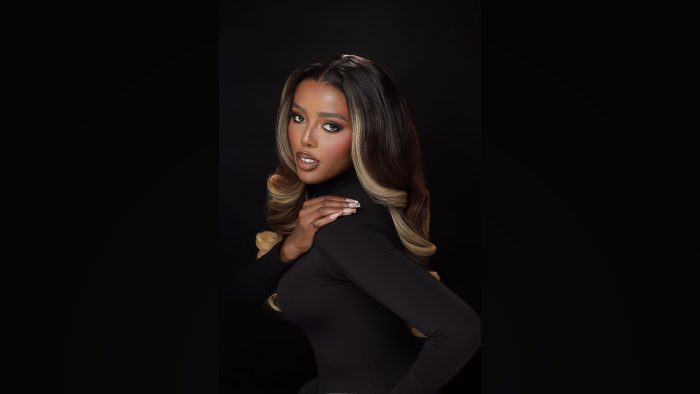
Khadija Omar is a Somali-Canadian model, beauty queen, and mental health advocate making history on the global stage. Born in a Kenyan refugee camp and later raised in Canada, she became the first hijabi contestant to compete in both Miss World and Miss Universe, representing Somalia and challenging traditional beauty standards worldwide. A graduate of York University, Khadija is also a content creator, refugee rights advocate, and supporter of organizations such as Smile Train Africa, using her platform to champion inclusivity, representation, and impact. In this interview, she shares her inspiring journey with Esther Ijewere
Childhood Influence
I was born in a refugee camp and moved to Canada in 2010 when I was 10 years old. Coming here, I was placed in ESL classes, learning English while also trying to adjust to a completely new environment. It was a big cultural shift, and at a young age, I was navigating different identities, my Somali background, Canadian culture, and trying to understand who I was within all of that. Growing up, I did struggle at times, especially with my hijab, because there wasn’t much representation in media of women who looked like me or reflected my experiences. I felt like I didn’t fully see where I fit.
Around the age of 12, I found makeup, and that became my way of expressing myself. It was more than beauty, it was my creative outlet and a space where I felt confident and free.
At the same time, I grew up watching pageants and always wondered why I never saw Somali women represented on those stages. That question stayed with me and slowly became a vision, not just to be part of that world, but to create space for Somali women to be seen, to share our stories, and to show that we belong in those spaces too.
My childhood taught me resilience, but more importantly, it taught me to dream without limits and to build what I don’t see.

The Defining Moment That Led Her to Pursue Miss Universe Somalia
It wasn’t just one moment, it was a combination of everything I had experienced growing up.
I’ve always been drawn to pageantry, and with every experience, I grew more in confidence, in how I communicate, and in understanding the impact I wanted to have. Pageants, for me, were never just about competing once and stopping. They were always about growth and creating opportunities beyond myself.
At the same time, I kept questioning why Somalia wasn’t consistently represented on global stages, and I knew I wanted to be part of changing that.
Miss Universe is one of the biggest platforms in the world, and I saw it as an opportunity to represent Somali women on a level where we’ve been underrepresented for so long. It became about more than just me, it became about opening doors and showing what’s possible.
Representing Somalia at Miss Universe
It felt like both a proud and emotional moment for me. When I first got into pageantry, I remember being told that a hijabi woman couldn’t do pageants, that it didn’t fit into that world. But I’ve always been someone who believes that if you truly want something, you can find a way to make it happen.
Growing up, I also saw how misunderstood the hijab was, especially in media and beauty spaces. There was often this narrative that women who wore it were limited or didn’t have freedom, and I wanted to challenge that.
Being on that stage was about showing that women who wear the hijab can take up space in any industry they choose, without having to change who they are.
In many ways, I was doing it for the younger version of myself, the girl who needed to see that it was possible.
Three Women Who Have Inspired Her Journey
The first is my mother. She is one of the strongest and most hardworking women I know. When we came to Canada, she was raising us while continuing her own education and building a future for our family. Watching her showed me what resilience and determination truly look like.
The second is Halima Aden. Seeing her step into the fashion and pageant world as a hijabi woman gave me a sense of possibility at a time when I was still figuring myself out. She showed me that you don’t have to limit yourself based on what people expect from you.
The third is Iman. She broke barriers in the modeling industry and redefined beauty on a global level. What inspires me most about her is how she carried herself with confidence and purpose while opening doors for others.
All three of these women represent strength, representation, and the courage to be the first.
The Message She Hopes Her Story Sends to Young Women and Girls
I want them to know that their dreams are not too big, even if they feel that way to everyone else.
I truly believe that if God places a vision in your heart, it’s because you’re capable of carrying it. Even when it doesn’t make sense to others, even when it feels unrealistic, that doesn’t mean it’s impossible.
I also want them to understand that identity is layered. You are allowed to grow, to evolve, and to explore different parts of yourself without feeling like you have to fit into one box.
So many people hold themselves back because they don’t see others around them doing what they want to do. But if something is in your heart, go after it fully. Don’t shrink your dreams to make them more comfortable for others.
Balancing Modeling, Influence, and Advocacy
For me, everything I do is connected. Modeling, content creation, and advocacy all come back to storytelling. I’m very intentional about how I show up and what I share, so it doesn’t feel like I’m balancing separate roles, it feels like I’m building one aligned vision.
Each part of what I do supports the other. Whether it’s through beauty, media, or speaking, it all ties back to representation, confidence, and helping other women see what’s possible for themselves.
Why Inclusivity and Diversity Matter in Beauty, Fashion, and Media
Inclusivity and diversity are important because they shape how people see themselves and what they believe is possible.
For a long time, many people, especially women from marginalized backgrounds, didn’t see themselves represented in these spaces. That creates a very limited definition of beauty and success. Expanding representation allows more people to feel seen, valued, and included.
Being a Woman of Rubies
What makes me a Woman of Rubies is that I don’t just want to exist in these spaces, I want to change them. Everything I do is intentional. I’m not only focused on my own journey, but on how I can create space and opportunities for others as well.
Her Goals and Key Messages for the Miss Universe Stage
My goal has always been to represent with purpose, not just presence. If I’m on that stage, I want people to see more than just a contestant. I want them to see a story of resilience, identity, and possibility.
I want to show that where you come from does not limit where you can go, and that you can embrace who you are fully while still chasing big dreams. More than anything, I want to leave an impact that goes beyond the competition itself.
Long-Term Vision Beyond Miss Universe
Beyond pageantry, I’m focused on building something long-term and impactful.
I’m currently working on launching my own brand, which I’m very excited about and plan to release in 2026. It’s something that reflects my journey, my creativity, and my passion for beauty and self-expression.
At the same time, one of my biggest goals has always been to create a platform for Somali women. Pageantry for me was never just about competing, it was about opening doors. I want to build an organization that allows Somali girls to have the opportunity, support, and structure to represent us internationally in a consistent and powerful way.
I want to create something that lasts beyond me, something that continues to grow and gives other girls the chance to step into spaces they may have never imagined for themselves.
