

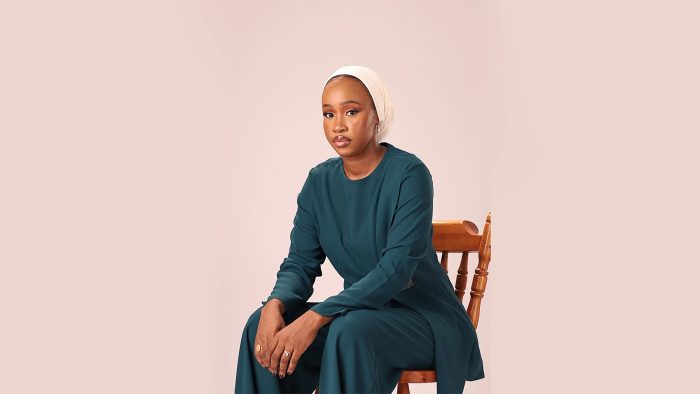
Zubaida is a sales specialist with over 10 years of experience across multiple industries. At Zoho, she plays a pivotal role in driving growth and fostering long-term partnerships within the SaaS industry. Her expertise lies in building strategies, playbooks and frameworks that empower teams to scale. She has developed a unique perspective on how technology can serve as a bridge for economic empowerment and professional advancement. In this interview, she speaks on thriving as a woman in the workplace as well as driving growth.
In your current role at Zoho, what does driving growth look like, particularly within emerging markets like Nigeria?
In Nigeria, we are operating within a large, diverse, and rapidly evolving market. At Zoho, we adapt our pricing to accommodate currency fluctuations while also building models that reflect the realities of different sectors. Driving growth goes beyond customer acquisition. It involves long term relationship management through high touch engagement, continuous value delivery, and building trust. We also see growth as enabling businesses to digitise sustainably by meeting them where they are and supporting their transition with the right tools and local context.
You are known for building strategies, playbooks, and scalable frameworks. What are the non-negotiables for any organisation looking to scale sustainably in today’s digital economy?
My non-negotiables start with data accuracy and visibility. These are critical for understanding what is working, what is not, and determining the next steps for scaling. I also prioritise adaptability within structured systems. While playbooks, scripts, and frameworks are essential for consistency, they must remain flexible enough to respond to changing market conditions. In addition, maintaining strong customer centricity and operational clarity ensures that growth is both sustainable and repeatable.
What specific opportunities exist today for women to participate meaningfully in the digital economy beyond traditional roles?
There are significant opportunities for women in areas such as data science, AI, and product management. Beyond these, the digital economy has created room for roles in growth strategy, digital entrepreneurship, and even no code or low code application development. There are also accelerators and knowledge platforms that actively support women who want to build careers in these fields, making it easier to access both skills and global opportunities regardless of location.
In your view, how can organisations intentionally design tech-enabled pathways that accelerate women’s professional advancement?
Organisations can accelerate women’s advancement by intentionally designing neutral talent systems that identify high potential employees based on performance data rather than gender. Beyond that, it is important to create clear career progression pathways, provide access to high impact projects, and invest in continuous learning. Flexible work environments are also essential, ensuring that women can balance care giving responsibilities without compromising their career growth. Technology can play a key role here by enabling transparency and reducing bias in decision making.
As a woman operating in a highly competitive, male-dominated sector, what barriers have you encountered, and how have you navigated them?
There can be various barriers across industries, and experiences may differ depending on the situation. In those situations, I remain consistent in offering my perspectives, contributing meaningfully to decisions, and ensuring that the work is delivered successfully. I have learned to focus on building strong expertise, maintaining consistency, and letting results speak over time. While these environments can be challenging, staying grounded in value creation and actively participating in decision making has helped me navigate them effectively.

How important is mentorship and sponsorship in closing the gender gap in SaaS and tech-driven industries?
Both mentorship and sponsorship are important, even though they serve different purposes. There are moments when guidance is needed to navigate challenges such as managing multiple roles or contributing effectively in the right settings, and mentorship provides that support. Sponsorship, on the other hand, creates access to opportunities and visibility. I have benefited from a strong support system of women who have shared their experiences and insights. More women need to be intentional about creating structured paths for others, who can then continue that cycle of support.
What trends are you seeing in how African businesses are engaging with global tech companies?
African businesses are becoming more intentional in how they engage with global technology providers. They are looking for partners who can offer local data residency, understand economic realities, and provide flexible pricing models. There is also a clear shift towards integrated ecosystems of applications rather than operating in silos. Beyond that, businesses are now more focused on measurable value, seeking solutions that can deliver efficiency, scalability, and long-term return on investment.
With rapid digital transformation, what skills should women prioritise now to remain competitive over the next five to ten years?
At the top of the list is a strong understanding and practical application of AI. AI is here to stay, and it is important to understand how language models and agentic systems can improve work, making it faster and more efficient. Alongside this, data literacy is becoming increasingly important. On the soft skills side, critical thinking and emotional intelligence remain essential. These are capabilities that AI cannot replace and will continue to be highly valued as technology evolves.
What does success look like for you now, beyond revenue and growth metrics?
Success for me is about being present in the process of creating and building things that will outlive me. It goes beyond revenue and growth metrics. It is about impact, the systems we build, the businesses we help transform, and the people we empower along the way. The journey matters just as much as the outcome, and success is ultimately defined by the value created and the legacy left behind.
