

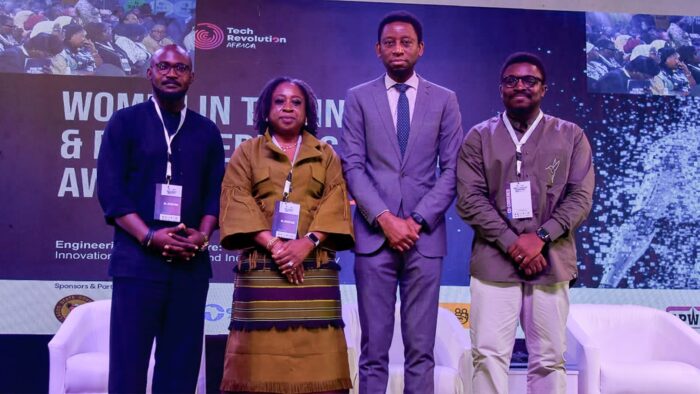
As technology continues to shape the future of work, industry leaders, policymakers, and development partners are intensifying efforts to ensure women are not left behind in Africa’s digital transformation.
This commitment took centre stage at the fifth edition of the Women in Technology and Engineering Summit (WITESA), where Womenovate, in partnership with the MTN Foundation, called for deliberate action to close the digital gender gap by expanding opportunities for women and girls in Science, Technology, Engineering, Agriculture, and Mathematics (STEAM).

Held at the MUSON Centre in Lagos, the summit, themed “Engineering Africa’s Future: Innovation, Infrastructure, and Inclusive Technology,” brought together stakeholders from government, the private sector and academia to examine practical pathways for increasing female participation in technology-driven industries.
Beyond conversations, the summit focused on creating access by connecting female secondary school and university students with industry professionals, exposing them to emerging technologies and mentorship opportunities designed to strengthen their confidence and career aspirations in STEAM.
Representing Lagos State Governor Babajide Sanwo-Olu, the Commissioner for Innovation, Science and Technology, Olatunbosun Alake, stressed that Africa’s technological advancement must be built on inclusion.
“Innovation and infrastructure alone are not enough; they must be inclusive,” he said, noting that initiatives such as WITESA provide young women with the visibility, mentorship and recognition needed to pursue careers in engineering, artificial intelligence, data science, renewable energy, advanced manufacturing and other emerging sectors.
The summit also highlighted the growing role of the private sector in advancing gender-inclusive innovation.
Speaking on MTN Nigeria’s commitment to bridging the digital divide, General Manager, Enterprise Marketing, Njideka Jack, said the company is embedding gender equity into its business strategy through deliberate investments in female leadership and entrepreneurship.
According to her, women currently make up 41.4 per cent of MTN Nigeria’s workforce and 46.4 per cent of its executive leadership, while thousands of female entrepreneurs have also benefited from the company’s empowerment initiatives, including its Y’ellopreneur programme.
“We are positioned at the intersection of innovation, infrastructure and inclusive technology, and our presence here reflects our commitment to creating sustainable pathways for women in tech,” Jack said.
For Womenovate, the summit represents more than an annual gathering. It is part of a broader movement to dismantle structural barriers that continue to limit women’s participation in technology and engineering while building a stronger pipeline of female innovators capable of driving Africa’s digital economy.
Chief Executive Officer of Womenovate and Convener of WITESA, Motunrayo Opayinka, said recognising women who have broken barriers in technology is essential to changing perceptions and inspiring future generations.
“This award celebrates individuals whose vision and dedication are rewriting the narrative of African technology. By recognising these leaders, we are encouraging more young women to see themselves as innovators and architects of Africa’s future,” she said.
The summit concluded with the presentation of awards to outstanding industry leaders who have contributed to scientific and technological advancement in Nigeria, including MTN Nigeria’s Chief Information Officer, Bukola Ajayi; Chairman of Access Holdings Plc and Coronation Group, Aigboje Aig-Imoukhuede; Chief Executive Officer of Future Software Resources Limited, Ude Enebeli; and Acting Chief Information Officer of MTN Cameroon, Nkemdilim Uwaje Begho.
