

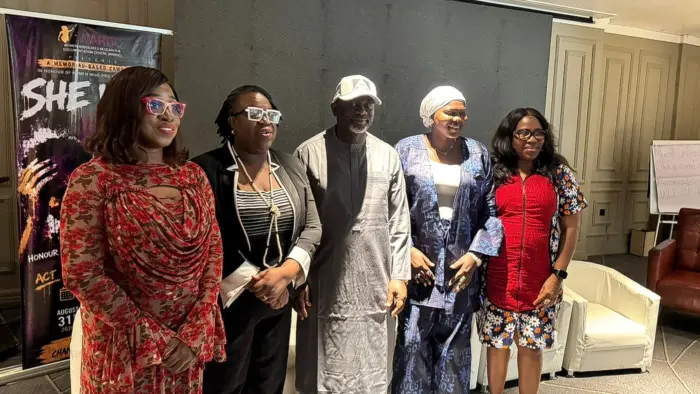
The Lagos State Government has advocated stronger grassroots sensitisation, counselling and improved access to quality healthcare to tackle the rising rate of maternal deaths.
This was disclosed on Monday by the Lagos State Commissioner for Youth and Social Development, Mobolaji Ogunlende, during a memorial and advocacy meeting convened in the state capital in honour and remembrance of women and girls whose lives have been lost as a result of unsafe termination of pregnancy.

Mobolaji, who was represented by Lagos Youth Ambassador Suliat Olaniyan, pressed for stronger grassroots education, counselling services, and healthcare access to reverse the trend of preventable maternal deaths.
Speaking through his representative, Mr Ogunlende described maternal mortality as an issue touching every family, not just a public health statistic.
“Every girl, every woman deserves access to safe, quality and respectful healthcare, especially during pregnancy and childbirth,” he said.
Beyond the personal tragedy, he argued, each death carries a ripple effect that weakens the social and economic fabric of entire communities.
“When we lose women, we lose the future of our society. These are mothers, leaders and role models,” Mr Ogunlende said. He singled out one danger in particular: women and girls turning to untrained providers who use unsafe methods to end pregnancies. “Some people still go to quacks who mix substances for them, leading to tragic and avoidable outcomes,” he said.
For the commissioner, the antidote starts at home, with families willing to talk openly rather than let fear silence young girls before it’s too late.
“We have counsellors, but many people do not make use of them,” he said. Getting people into those counselling sessions early, he added, is what stands between a manageable situation and a life-threatening one.
Parents, he said, also have a role to play in staying attuned to their children’s social circles, since peer pressure can quietly steer young people toward dangerous choices.
“If you notice anything unusual, talk to your child. Guidance and support can prevent many of these situations, this is not about religion; it is about life. If a child makes a mistake and is alive, there is room for correction but if the child dies, there is nothing to hold on to,” he said.
He added: “Maternal death is real. We must continue to educate our communities and ensure that people seek proper medical care,” he said.
Founder, Women Advocates Research and Documentation Centre (WARDC), Dr Abiola Akiyode-Afolabi, linked the crisis directly to Nigeria’s restrictive abortion laws, arguing that criminalisation pushes women into secrecy and shame rather than safety. She called for government-led awareness efforts to help women make informed decisions about their pregnancies.
She said, “We realize that unsafe abortion contribute alot to maternal death and this is because people are not put in a position where they can make informed choices on the issue of their pregnancy and also because we have laws criminalizing abortion to a large extent, so people then are stigmatize and they are seen as if they are doing what is immoral, illegal. Government should act, promote more awareness on how to address unsafe termination of pregnancy in Nigeria.”
Adding a local government perspective, Chairman of Ikeja Local Government Area, Olalekan Dauda, called for tighter collaboration between communities and health authorities, along with wider access to reproductive care.
He disclosed that facilities and personnel were available, but many residents remained unaware of services within their communities.
“As we speak, I have six staff members in the Ikeja Local Government Service, including nurses, matrons and counsellors, but people are not aware,” he said. Even with those resources in place, he admitted local government has more work to do. “Our best is not enough. We must continue to engage our people,” he said.
He called on religious leaders to lend their influence to the cause, noting how deeply young people trust their spiritual guides.
“These youths listen more to their imams and pastors. We need to build a community around this issue,” Mr Dauda said. The chairman then made the crisis personal, revealing that his own family came close to losing a daughter to the same silence he was warning against.
“I almost lost my daughter in a similar situation. She became pregnant and could not speak up due to stigma,” he said.
He warned that unregulated pills and homemade concoctions are becoming a daily risk for many young girls across the state.
“A lot of these girls are taking harmful substances daily. We need urgent action to save the girl child,” he said.
The memorial was organised by the Women Advocates Research & Documentation Centre (WARDC), alongside SOGON and the NMA Lagos Chapter, to honour women and girls whose deaths from unsafe pregnancy termination could have been prevented.
Survivors, grieving families, and advocates shared testimonies at the event, putting a human face on the stigma, healthcare gaps, and broken support systems the speakers described.
