 Follow Us on Google News
 Follow Us on Google Discover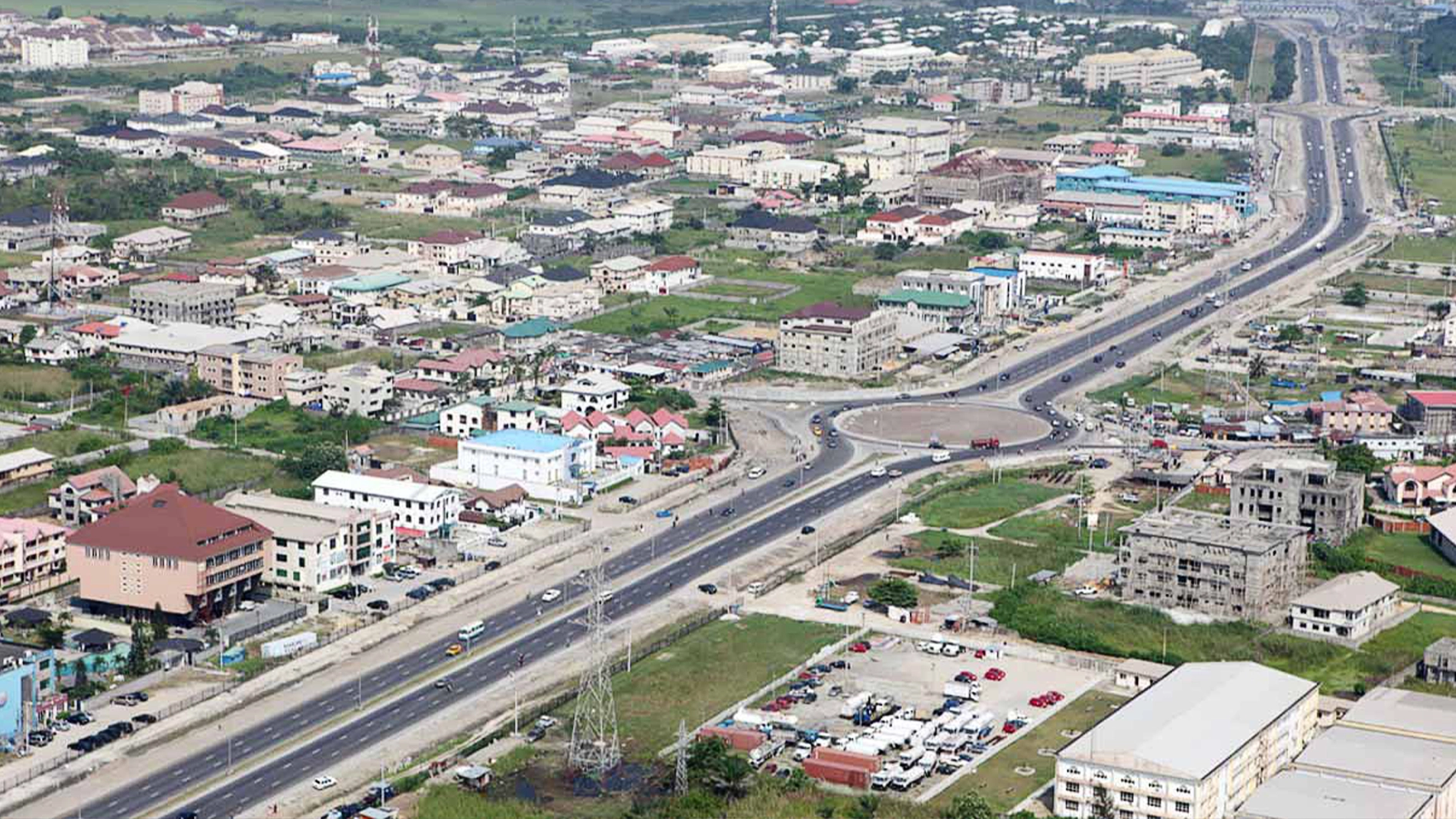
In Nigeria’s rapidly expanding cities and communities, farmlands that once provided food and livelihoods for generations are increasingly giving way to housing estates, commercial developments and other property projects. To slow down encroachments, town planners are pushing for strict development control, effective zoning, proper approval processes and the protection of agricultural and culturally significant lands, CHINEDUM UWAEGBULAM reports.
Amid Nigeria’s rapid urban expansion, the rush to develop residential estates is steadily transforming farmlands, family holdings and ancestral settlements, particularly on the fringes of major cities.
As developers and land speculators move into peri-urban communities in search of cheaper land, agricultural spaces are increasingly being converted to housing estates, roads and commercial developments, often ahead of adequate planning controls.
The trend is raising concerns about the effectiveness of land-use planning, zoning and development control in managing the country’s accelerating urban growth.
For town planners and other built-environment professionals, the challenge extends beyond farmland loss.
Uncoordinated estate development can produce sprawling settlements without adequate roads, drainage, water supply, waste management systems, and public facilities, while eroding ancestral lands and community identity.

As cities expand into surrounding communities, planners face the difficult task of meeting rising housing demand while protecting agricultural land, preserving cultural heritage and ensuring that new developments conform to sustainable land-use plans.
The implications are particularly evident in peri-urban areas, where weak development control has allowed estate projects to spread into agricultural and family lands with limited regard for existing land-use plans. In many communities, infrastructure is struggling to keep pace, while developments sometimes emerge before the necessary approvals are obtained.
For many families, selling inherited land has become an attractive economic option. Property that generates modest income from farming can fetch millions of naira when sold to an estate developer, providing immediate financial relief in a difficult economy.
But once family land is sold, subdivided and covered with concrete, it is rarely available again for farming, community expansion or other productive uses, raising concerns about what future generations will inherit.
Emerging evidence from some of Nigeria’s fastest-growing urban centres underscores the scale of the pressure. A 2025 satellite-based study of Lagos Metropolis found that urban farmlands declined significantly between 1984 and 2024. Farmland fell by 13.03 per cent between 1984 and 2013 and by another 21.79 per cent between 2013 and 2024.
The study found that farmland covered about 20,103 hectares in 1984, declining to approximately 13,674 hectares by 2024. Researchers also recorded substantial conversion of farmland to other uses and warned of possible implications for food security.
In Ikorodu, one of Lagos’ major growth corridors, the pressure is equally striking. Research published in Frontiers in Sustainable Cities found that agricultural land in the study area declined by 32.65 per cent between 1984 and 2016, while built-up land expanded dramatically.
Built-up land increased from about 1,819 hectares in 1984 to more than 14,580 hectares by 2016, reflecting the speed at which formerly rural and agricultural communities have been absorbed into the Lagos metropolitan region.
The researchers said the pattern had fragmented agricultural land, making farming increasingly difficult and threatening ecosystem services associated with food production.
The trend is not limited to Lagos. In the Greater Port Harcourt watershed, a land-use study found that agriculture was the principal source of land converted to urban development between 1986 and 2003.
About 422 square kilometres of agricultural land were converted to urban uses during the period, representing roughly 93.3 per cent of all land converted to urban development.
While national and international databases provide broad information on Nigeria’s agricultural land, there is no easily accessible, comprehensive public system that shows the volume of peri-urban farmland converted annually to housing estates and other real estate developments.
Town planners stress that the problem is not estate development itself, but the manner and speed at which it occurs.
They argue that housing expansion must be guided by properly prepared master plans, zoning regulations, and development control measures that protect agricultural and culturally significant land while providing room for urban growth.
Former President of the Association of Town Planning Consultants of Nigeria (ATOPCON), Dr Moses Ogunleye, attributed the trend largely to market forces of demand and supply.
“It is indeed worrisome. It is mainly the interplay of the market forces of demand and supply. As major cities expand, land in adjoining areas and suburbs is quickly taken up for various urban development activities. Such activities tend to command higher returns on investment than agriculture.
“This ordinarily should not be the case if town planning is effective. All human settlements are expected to have development plans or master plans to guide their growth. Such plans are, in effect, legal documents from which no individual, party or group should deviate.”
According to him, the long-term implications include conflicting land uses, disorderly development and inadequate infrastructure.
“It means that individuals or families are determining the use of large parcels of land. This is wrong. Globally, this is the statutory responsibility of town-planning or physical-planning agencies. What it means is that those engaged in this are considering only their personal financial interests. This should be curtailed. In such a scenario, there will be defective human settlement development.”
Ogunleye warned that poorly coordinated developments could eventually produce blighted neighbourhoods and worsen food insecurity.
“Since such lands are offered to buyers at will and for financial benefits, and no one coordinates their development, they will become blighted neighbourhoods or celebrated slums within a decade. With less land available for farming, food production will be hindered, leading to higher food prices.”
The former Chairman of the Lagos State Chapter of the Nigerian Institute of Town Planners (NITP) called for a comprehensive stocktaking of agricultural land around cities and major urban centres.
He urged state governments to prepare master plans for cities and regional plans covering entire states, with clear zoning for agricultural uses, plantations and reserves.
“Preventing the conversion of land hitherto used for farming to real estate development implies that the land must first have been appropriately zoned for such use,” he said.
Ogunleye also called for clear boundaries for cities, towns and villages, with surrounding areas designated for appropriate semi-urban, rural and agricultural uses.
A fellow of the institute and Managing Director of Envicons Team Limited, Barnabas Atiyaye, said Strategic Agricultural Protection Areas should be identified around rapidly growing cities and incorporated into master and regional development plans.
“Their protection must have clear legal, administrative and enforcement consequences. Any proposal to convert them to residential, commercial or industrial use should require compelling justification, proper assessment and approval by the relevant authorities.”
Atiyaye said authorities must also confront land speculation and political interference in land allocation, noting that professional recommendations were sometimes undermined by political considerations.
He urged state governments to deploy Geographic Information Systems (GIS)-based land-use databases, satellite imagery, development-permit tracking systems and regular field inspections, alongside sanctions for illegal subdivisions and unauthorised changes of land use.
He also called for an annual Agricultural Land and Urban Expansion Report that shows how much agricultural land has been retained or converted and where urban growth is occurring.
“Nigeria should not choose between houses for today’s population and farms for tomorrow’s population. The objective of town planning is to ensure that cities grow without destroying the economic, environmental and agricultural resources upon which their future depends.
“Food security must therefore be treated as a land-use planning issue, just as housing. A country that solves today’s housing shortage by destroying its food-producing land may simply be transferring today’s housing crisis into tomorrow’s food crisis,” Atiyaye said.
First Assistant National Secretary of the NITP, Dr Edmund Nwokaeze, said the situation reflected the consequences of neglecting orderly planning. “A properly planned city ought to have an urban development framework which will delimit the city boundary by virtue of its spatial development plan or zoning plan,” he said.
“The importance of that is the allocation of the various land uses, including agricultural land use, which should be maintained as proposed to dissuade abuse, misuse, overuse or underuse of land resources.”
Nwokaeze said the arbitrary conversion of agricultural land to residential estates could worsen the country’s urban crisis and threaten food security.
“Data show that several families are selling off their land because of supply-and-demand forces and the net value of the sale. The long-term implication is that such communities may face existential challenges as housing expansion continues to put pressure on land traditionally belonging to indigenous people,” he said.
He advocated the full implementation of planning laws, stronger enforcement of development controls, and a comprehensive land-use policy to curb haphazard development.
He also called for “clear-cut urban growth boundaries to curtail urban sprawl and the expansion of peri-urban areas into adjoining rural communities.”

