 Follow Us on Google News
 Follow Us on Google Discover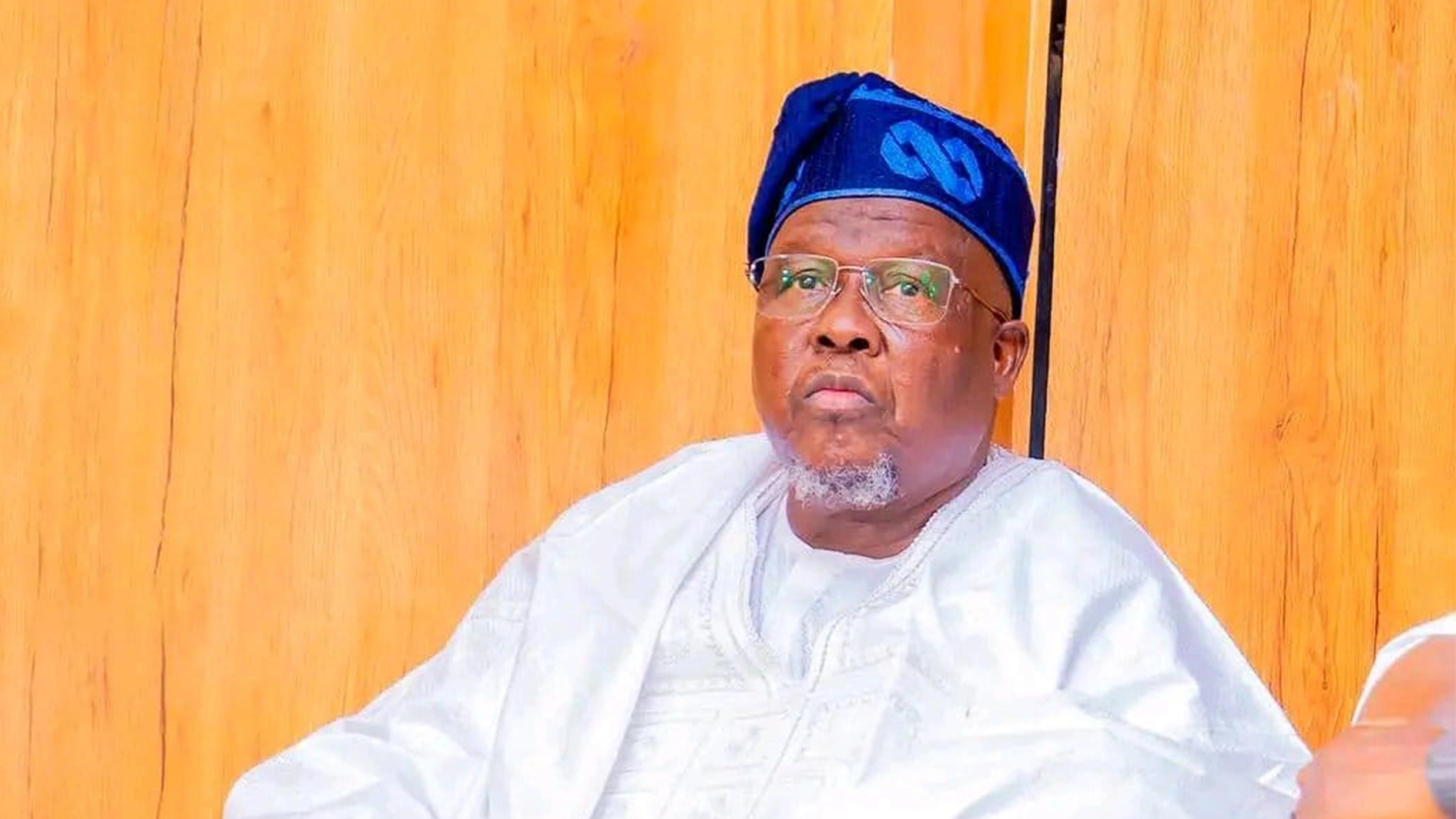
Special Adviser to the President on Political Matters, Ibrahim Masari, has said the All Progressives Congress (APC) is not jittery over the emerging opposition coalition ahead of the 2027 elections, insisting that the party remains confident of victory. In this interview with ADAMU ABUH, Masari dismissed claims that the North is opposed to President Bola Tinubu’s re-election, defended the retention of Vice President Kashim Shettima as running mate and offered insights into the President’s leadership style and political strategy.
There is a growing perception that the APC is jittery about the 2027 election and the possibility of losing power to the opposition. How seriously does the party view this threat?
The APC is a political party, and a serious political party must never take any election for granted.
But there is a difference between being alert and being jittery. We are on the alert, organised and confident. The President has always understood that elections are ultimately about the people. What we are doing is not merely preparing for an election.
We are working to consolidate the administration’s gains and ensure that Nigerians can see the connection between government policy and improvements in their daily lives. If you look at the economic numbers, the direction is encouraging. Nigeria recorded 4.43 per cent real GDP growth in the second quarter of 2026, compared with 4.23 per cent in the same quarter of 2025.
We are also seeing stronger activity across agriculture, manufacturing, oil and gas, and services. So, yes, we respect every political opponent and the democratic process. But the APC is not distracted. Our focus is on delivery, mobilisation and taking the message of the Renewed Hope Agenda to Nigerians.
How concerned is the APC about the emerging opposition coalition, particularly the possibility of Atiku Abubakar, Peter Obi and other major opposition figures eventually rallying behind a single presidential candidate?
There is nothing unusual about opposition politicians consulting with one another. That is democracy. If they decide to work together, that is their constitutional right. But I would not advise anybody in the APC to lose sleep over a coalition that is still being negotiated. Politics is not simply about bringing prominent names into one room.

You have to build an organisation, agree on a programme and leadership, establish structures across the 36 states and the FCT, and then convince millions of Nigerians that your alternative is better. The APC already has a national structure, elected officials at the federal and subnational levels, an incumbent President with a record of delivery and a clear programme for the next phase of the country’s development.
So, we respect whatever arrangement the opposition eventually produces. Our responsibility is to make our own case to Nigerians. And our case is increasingly based on measurable outcomes rather than promises.
The North was critical to Tinubu’s victory in 2023, but many northern voters are now grappling with inflation, high food prices, fuel costs and insecurity. What is the APC’s strategy to win back these voters?
The North is not being treated as an electoral statistic. It is an integral part of President Tinubu’s national development agenda. The administration understands the importance of agriculture, food security, transportation, security and rural infrastructure to northern communities. That is why the government is investing in agricultural production, mechanisation, roads, energy, education and social interventions.
For instance, the administration has announced a programme to deploy 10,000 tractors over five years, while agricultural interventions are being used to improve access to inputs, finance, irrigation and markets. Infrastructure projects such as the Sokoto-Badagry Super Highway and the Abuja-Kaduna-Zaria-Kano corridor also have enormous implications for commerce and regional integration.
The strategy, therefore, is simple: continue listening, continue investing and continue delivering.
President Tinubu is not interested in winning the North with slogans. He wants to win the confidence of northern Nigerians through development that they can see and participate in.
For the ordinary northern voter who says Tinubu’s reforms have made life more difficult, what is the President’s strongest selling point for seeking another four-year mandate?
The strongest selling point is that President Tinubu has not simply managed the problems of the Nigerian economy; he has confronted some of the structural problems that had constrained the country for many years.
The President has never pretended that reforms of this magnitude would be painless. But the important question is where the country is heading. Today, the economy is growing, foreign exchange conditions are more stable, investment confidence is improving, domestic refining capacity is expanding, and government revenues have increased.
The latest GDP figures show 4.43 per cent real growth in Q2 2026. The next phase is about translating that macroeconomic improvement into stronger household purchasing power, more jobs, lower transport costs, greater food availability and better public services. That is why the President is asking Nigerians for another mandate.
He is saying, in essence, we have laid the foundation; let us now consolidate it and deliver greater prosperity.
Is the retention of Vice President Kashim Shettima enough to consolidate Tinubu’s northern support, or does the APC need a broader political strategy to counter the realignment of northern political leaders around the opposition?
Vice President Kashim Shettima is an important part of the ticket, but the APC’s strategy is much bigger than the office of the Vice President. President Tinubu is President of all Nigerians. His political strategy is therefore national, not sectional.
We are engaging political leaders, traditional institutions, young people, women, business communities, professionals and grassroots organisations across the country.
The retention of the Vice President provides continuity and strengthens the ticket, but our real advantage is the work being done across the country. Political leaders can move between parties. That is part of democratic politics. What ultimately matters is the relationship between a government and its people. Our task is to ensure that Nigerians understand what this administration has achieved, what is currently being delivered and what the next four years can bring.
If the opposition succeeds in producing a single candidate with broad appeal across the North and South, what would stop that candidate from defeating Tinubu in 2027? And which states or regions does the APC consider decisive for the President’s re-election?
I would not approach the election by claiming that any particular region permanently belongs to the APC.
Nigeria is too dynamic for that kind of thinking. Every state matters. Every voter matters. Every community matters. The constitutional requirements for winning a presidential election also make it a genuinely national contest.
A candidate must secure the highest number of votes and satisfy the required spread across the federation. That means you cannot build a credible presidential victory on a single region alone. So, whether the opposition fields one candidate or five, our responsibility remains the same: to take our message to Nigerians everywhere.
The APC has a President who has demonstrated political courage, economic reform and a willingness to make decisions in the national interest. The question before voters will ultimately be: which candidate and which party do they trust to take Nigeria forward? We are confident in our answer.
You have had a close relationship with President Tinubu and, before the 2023 election, served as a placeholder for his presidential ticket. Were you ever pressured to retain the ticket rather than cede it to him?
No! There was no such pressure. It is important to put the issue in its proper context. My name was submitted as a placeholder to enable the party to meet the electoral deadline while the presidential candidate and the party concluded the selection of a substantive running mate. I understood the assignment from the beginning.
When the President decided that Senator Kashim Shettima was the right person to complete the ticket, I accepted that decision without hesitation. For me, politics has never been about occupying a particular position. It is about loyalty, service and the larger objective. I have known the President for a long time, and I understand his political character.
When you work with Asiwaju Bola Ahmed Tinubu, you learn that he places considerable value on people who can put the larger interest ahead of personal ambition. I was happy to play my part then, and I remain committed to playing my part today.
How would you describe Tinubu’s personality, temperament and relationship with those who work closely with him?
President Tinubu is a very focused person. He is politically experienced, intellectually curious and extremely attentive to detail, particularly when the issue before him concerns the future of Nigeria.
One thing I have observed over the years is that he listens. He may not always agree with you, but he gives people the opportunity to make their case. He also has a strong appreciation for people who are prepared to tell him what they genuinely think rather than simply tell him what they believe he wants to hear.
He is demanding because he has high expectations. But he also recognises hard work and loyalty. I would describe him as a leader who is very conscious of history. He understands that some of the decisions being made today will not be judged solely by what happens tomorrow, but by the kind of country they help build over the next decade.
That is why I believe his temperament is suited to this particular moment in Nigeria’s history. We are dealing with deep structural issues, and you need a President who is willing to make difficult decisions, stay the course and remain focused on the bigger picture.
Ultimately, I think Nigerians will judge President Tinubu by the results. And I am confident that as we move closer to 2027, more Nigerians will appreciate the significance of the foundation laid and the opportunities it creates for the next phase of our national development.

