
 Get Guardian on Google
For households already stretched by soaring transport fares and rising food and service costs, a token N66-per-litre reduction feels more like policy on paper than real relief. As the 30-day discount nears its October 31 deadline, many motorists and commuters say the promised relief has barely touched their daily lives, WALIAT MUSA reports.
For Lagos resident Bolanle Alebiosu, the rising cost of petrol is already a heavy burden, without the added hassle of hunting for a few designated filling stations just to save N66.
With fuel prices squeezing her budget, Alebiosu, like millions of Nigerians, is questioning the rationale for limiting dispensing outlets to NNPC Retail outlets. She said the savings are too small to matter, and if government truly wants to ease the pressure, relief should be available across all stations, not confined to a specific dispensing network.
Her frustration isn’t only about the token reduction per litre; it reflects the wider reality for consumers as official announcements of relief often fade at the pump, leaving everyday expenses unchanged when boarding a bus, planning tomorrow’s commute, or covering household needs.
For commuters, the strain showed up not just in petrol prices but in transport fares, during school runs, and in the rising cost of moving goods to markets. A discount that doesn’t reach transport operators or isn’t passed on to passengers leaves much of the burden untouched.
These are some of the troubling issues besetting the Federal Government’s 30-day petrol discount as it approaches its October 31 terminal date. Presently, the questions on the lips of many include: how much relief has reached ordinary Nigerians, and how many have barely felt it?

In The Guardian survey of over 30 respondents across the Federal Capital Territory (Abuja), Lagos, Edo, Abia, Bauchi, Borno, Ogun, Rivers, Oyo, Kwara, Osun and Imo states, at least 20 said they never benefited from the discount, while six said they were unaware of it. Three reported receiving a reduction on some or all purchases but said the discount they received was below N66 per litre.
For Adekunle Olawale, the clearest measure of relief is whether it has changed what he pays to move around.
“The 30-day discount to me is more like policy on paper because nothing changed. Transport fares have remained high. For crying out loud, how many NNPC fuel stations do we have in the country, and what can N66 do for any Nigerians? If the government wants to reduce fuel prices, going below N1,000 will make some sense,” he said.
His complaint captures the gap between a petrol discount and the broader relief many Nigerians are seeking. Even when a motorist receives a reduction, it does not automatically mean that transport fares will fall or that households will have more money left after meeting daily expenses.
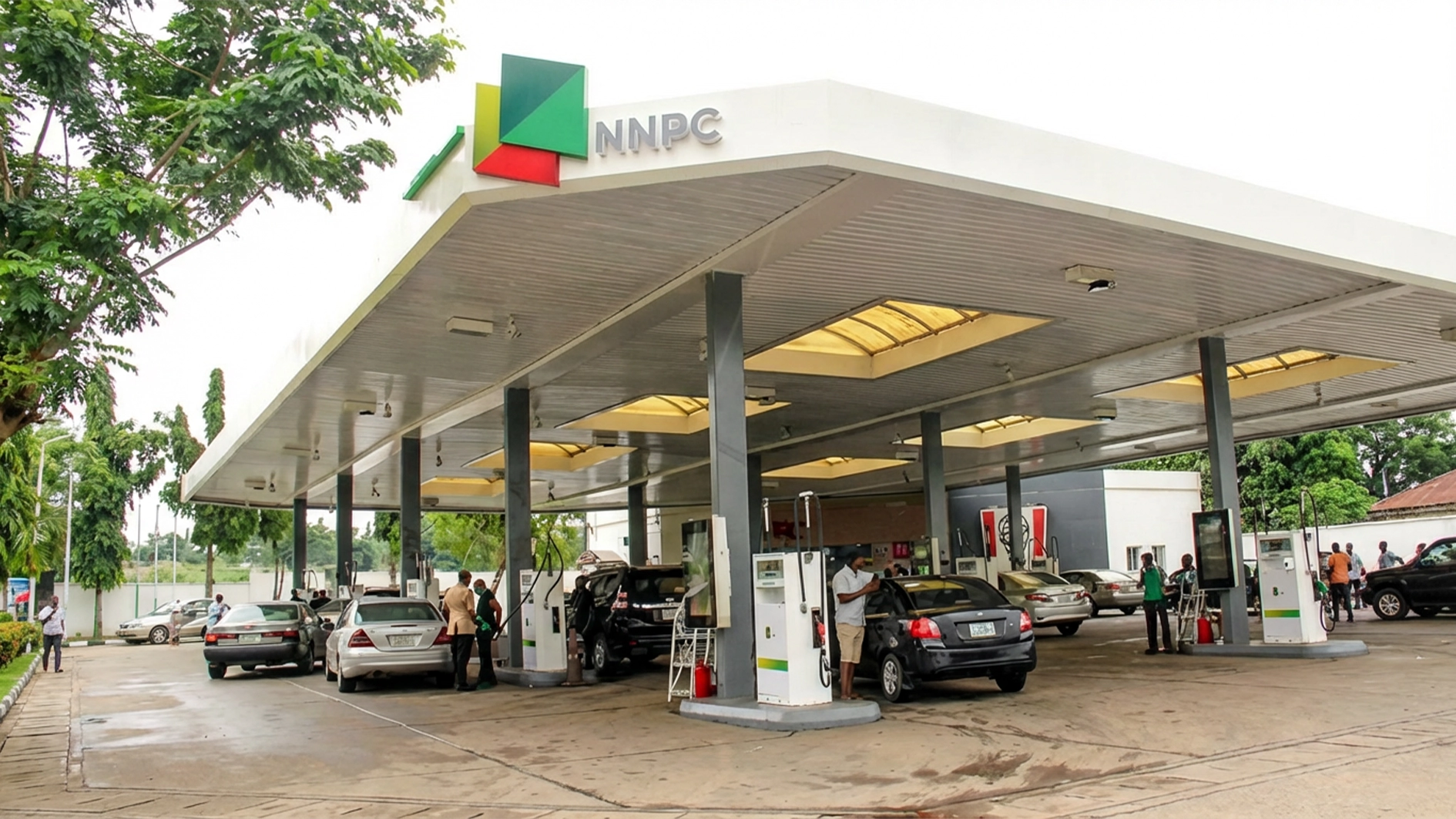
Since the discount began on October 1 as an NNPC Retail promo to mark the country’s 66th Independence Anniversary, customers using the company’s application access a reduction of N66 per litre at participating NNPC Retail outlets.
The Federal Government subsequently announced the discount as a temporary relief measure amid rising energy costs, and the campaign was extended to October 31.
But for some consumers, access to the offer has been a problem before they even reach the pump.
Adekunle Onabanjo, a driver, questioned how people without Android phones were expected to benefit from a discount linked to an application.
“They said they are using an app. Is it someone like me who doesn’t even have an Android phone that would have an app?” he asked.
His question highlighted a basic difficulty with using a digital platform to distribute relief. An application may make it easier to record transactions and manage a promotion, but it can also become a barrier for customers who do not have compatible phones, are unfamiliar with the technology or have difficulty completing registration.
The Guardian survey found that eight respondents were unaware of the NNPC application, while another eight had not downloaded or used it. Only three respondents reported successfully using it, although one person said registration and use had been difficult.
While these figures do not show the rate of app adoption nationwide, they do, however, suggest that among the people reached by the survey, awareness and use remained limited.
A respondent from Owerri, who reported using the application, said the process eventually worked, but the reduction received was below N66 per litre. Another respondent in Port Harcourt, who identified a station around Mercy Land Junction, said there had been “No price change.”
In the survey, 10 respondents reported encountering an NNPC Retail station that did not apply the discount, while five said they had not experienced that problem. Eight had not visited a station or lacked sufficient information to assess compliance. Asked more broadly about compliance, 11 said they lacked sufficient information, four believed some stations complied, and two said most complied.
The company has not provided figures in its response to The Guardian on the number of participating stations, customers using the application, transactions completed or litres sold under the promotion.
An Abuja respondent, Usman Alkali, questioned why transport fares had not changed despite the announcement; Olawale Oseni similarly said he noticed no meaningful difference in the fare he paid to travel out of Abuja.
For households whose incomes are already stretched to cover food, transport and other essentials, the difference between a small saving and a substantial reduction matters. A discount that is difficult to access or too limited to alter daily expenses may not feel like relief, even if some customers benefit from it.
Energy expert, Dr Ayodele Oni, said the intervention should be viewed as modest relief rather than a cure for the wider cost-of-living crisis. He argued that its commercial funding arrangement was important because the cost was being borne by NNPC Retail rather than public funds.
“It is fair to call the relief modest, and nobody is claiming it is a cure. What is worth noting is how it is funded. The discount comes out of NNPC’s retail margin rather than public funds, so it gives some relief without reopening the subsidy hole the country spent three years closing,” he said.
Oni said the savings could have a greater effect if commercial transport operators benefited and passed them on to passengers. An operator buying around 40 litres of petrol daily could save about N2,600 a day, or roughly N79,000 over a month, if the full N66 reduction applied to every litre purchased.
That is a conditional estimate, not evidence of savings already made by transport operators. It assumes the operator buys that volume every day at an eligible NNPC Retail station and receives the full discount on every litre. It also does not establish that passengers have paid lower fares as a result.
Responding to The Guardian’s inquiries on the discount, the NNPC spokesperson, Andy Odeh, said the discount was a commercial promotion, and not a government-funded subsidy. The company said NNPC Retail was bearing the cost and would assess customer response and commercial performance before deciding whether to conclude or extend the campaign.
“The N66-per-litre discount is a promotional initiative introduced by NNPC Retail on October 1 to mark Nigeria’s 66th Independence Anniversary. Product discounts are part of our customer engagement activities, and this is not our first campaign.
“NNPC Retail bears the full cost as a commercial decision. The campaign does not depend on government funding or reimbursement, directly or indirectly. Any cost beyond the retail margin remains NNPC Retail’s responsibility,” he said
According to the Finance Minister and Coordinating Minister of the Economy, Taiwo Oyedele, the NNPC supplied about 70 million litres of petrol to the market monthly. If the N66 discount were applied to all 70 million litres, the potential value would be N4.62 billion for a month.
NNPC’s position is that the offer is commercially funded and does not involve government reimbursement. The estimate should therefore not be presented as public expenditure or as proof that the company incurred that amount.
The wider challenge is that a reduction at selected filling stations cannot by itself resolve the pressures driving up the cost of living.
Petrol prices affect transport, the distribution of goods and the operating expenses of businesses. A short-term discount may help some customers, but it does not automatically lower the cost of supplying fuel or ensure that savings reach households that do not buy it directly.
Professor Wumi Iledare, a petroleum economist and executive director of the Emmanuel Egbogah Foundation, said an intervention should be judged by who bears its economic cost and who receives the benefit, rather than the label attached to it.
“I would call it a subsidy-equivalent risk unless the incidence is demonstrated otherwise. The test is not the name attached to the policy. The test is who bears the economic cost and who receives the benefit,” he said.
Iledare said temporary relief should be targeted, time-bound, transparent, independently auditable and fiscally capped. He also warned against weakening competition in the downstream market by making NNPC a government-directed price setter.
“The policy objective should remain affordable energy—not artificially cheap petrol. That distinction is fundamental to preserving the gains from deregulation while addressing the immediate welfare consequences of high energy prices,” he said.
The don argued that more durable relief would require measures that reduce the cost of supplying fuel and moving people, including domestic crude supply to local refineries, reducing avoidable distribution costs, targeted support for vulnerable households and transport operators, expanded compressed natural gas infrastructure and investment in mass transit.
He said the constraints facing CNG users included the availability of stations, reliable gas supply and financing. Those issues require investment and coordination rather than simply asking consumers to switch fuels.
Such changes will not resolve immediate financial pressure overnight. But they address the underlying costs that a temporary retail discount can only partly offset.
The challenge for the government is therefore twofold: to establish what the 30-day campaign has delivered, and to explain what other measures will help consumers when the promotion ends.
As the deadline approaches, the question on the lips of motorists and commuters is whether the discount will end, continue or be replaced by a different intervention.