

Stakeholders across the health, corporate and development sectors have called for stronger institutional policies, improved access to healthcare and community-driven education to address the challenges women face during menopause.
The call was made at the 2026 Menopause West Africa Conference, held at the Landmark Event Centre, Lagos, where medical experts, policymakers, corporate leaders, women’s organisations and wellness practitioners gathered to examine the impact of menopause on women’s health, careers, productivity and overall wellbeing.
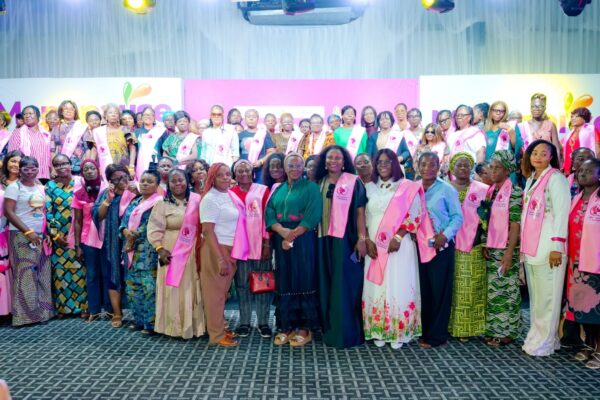
The conference, which focused on advancing awareness and practical support for women navigating midlife, also witnessed the inauguration of 120 Menopause Champions tasked with taking menopause education and advocacy into communities across Nigeria.
Speaking at the event, Chairman of the Menopause West Africa Organising Committee, Clifford Okwesi, stressed that conversations around menopause must move beyond awareness to deliberate institutional and community action.
“Our goal is to ensure that women do not have to navigate menopause in silence or without support. We must take credible information into our communities, encourage open conversations and work with healthcare professionals, employers, women’s organisations and public institutions to make menopause support more accessible,” he said.
Okwesi noted that the conference was designed to build a collective response to the persistent silence, misconceptions and inadequate support systems surrounding menopause.

Veteran Nollywood actress, Patience Ozokwor, who was among the prominent personalities at the gathering, urged women to become advocates for menopause education, particularly at the grassroots.
Addressing the newly inaugurated Menopause Champions, Ozokwor encouraged them to take the message into their communities, ensuring that younger women are adequately informed about menopause before experiencing the transition.
She emphasised the importance of conversations across generations, noting that women should not have to navigate menopause without adequate knowledge, understanding and support.
As part of its community outreach strategy, the organising committee announced plans to extend menopause education to 3,000 churches and other places of worship across Nigeria, leveraging faith-based and community networks to address misinformation and improve access to reliable health information.
President of the Association of West African Societies of Obstetrics and Gynaecology (AWASOG) and former Commissioner for Health in Abia State, Professor J.I. Brian-D Adinma, led a menopause masterclass, providing medical insights into the transition, its symptoms and available management options.
The session also offered participants an opportunity to seek professional guidance on concerns surrounding their physical and reproductive health during midlife.
Lagos State Commissioner for Health, Professor Emmanuel Akinola Abayomi, was represented by the Director of Family Health and Nutrition at the Lagos State Ministry of Health, Dr Abosede Wellington, underscoring the importance of integrating menopause education and support into broader public-health conversations.
Bringing an international perspective to the discourse, Founder of Women of a Certain Stage, United Kingdom, Lauren Chiren, highlighted the consequences of inadequate menopause awareness in professional environments.
Drawing from her personal experience, Chiren recounted how she resigned from a senior professional role after mistaking menopause-related symptoms for signs of early-onset dementia.
Her experience subsequently inspired the establishment of Women of a Certain Stage, an organisation supporting women and employers through menopause education, workplace advocacy and initiatives aimed at improving institutional standards.
Chiren stressed the need for organisations to recognise menopause as a workplace wellbeing concern and equip managers with the knowledge required to support affected employees without discrimination or stigma.
A major highlight of the conference was a panel discussion titled, “Policy, Practice, Power & Perception: Rethinking How Institutions Support Women Through Menopause.”
Moderated by Editor of Guardian Woman, Ijeoma Thomas-Odia, the session featured Health Manager at Renaissance Africa Energy Company, Dr Funmi Daramola; Head of Talent at Wema Bank, Dr Jumoke Aleoke-Malachi; and Chairperson of FIDA Nigeria, Epe Branch, and Principal Counsel at Brooks & Wells Legal, Mrs Uchenna Ogwo.
The panellists examined the intersection of women’s health, workplace productivity, leadership and institutional responsibility, highlighting the need for policies that acknowledge the realities of menopause without undermining women’s professional competence or career advancement.
Discussions also centred on improving workplace awareness, strengthening management practices and creating environments where women can access appropriate support without fear of stigma or unfair treatment.
Participants emphasised that menopause should not become a barrier to women’s career progression, leadership opportunities or economic participation.
Beyond workplace concerns, the conference explored the mental, emotional and physical dimensions of menopause.
Clinical Psychologist at PsychMindGlow, Oluwagbemisola Osoba, addressed the psychological and emotional changes that may accompany the transition, while Founder of Happy Heart Fitness, Saula Babatọpe, popularly known as Bobbie Tee, led a fitness and movement session highlighting the importance of physical activity in promoting midlife wellbeing.
The gathering also attracted representatives of several women’s and professional organisations, including the National Council of Women’s Societies (NCWS), International Federation of Women Lawyers (FIDA), Customs Officers’ Wives Association (COWA), Medical Women’s Association of Nigeria (MWAN), and Women Discipleship Network.
Representing the National President of COWA, Mrs Kikelomo Adeniyi, Mrs Anani of the Tin Can Command delivered a goodwill message reaffirming the association’s commitment to promoting women’s health and wellbeing.
The message emphasised that menopause should not be experienced in isolation, while calling for stronger collaboration among healthcare providers, families, employers and community organisations.
Another highlight was the Pause & Flourish Lounge, an interactive wellness space featuring activities and resources covering women’s health, beauty, skincare, fitness, mental wellbeing and lifestyle.
The lounge provided opportunities for participants to engage with wellness professionals, explore relevant products and services, and learn practical approaches to maintaining their wellbeing during midlife.
Similarly, the Pure Stories Studio, hosted by Women Radio (WFM), created a platform for women to share personal experiences and reflections on menopause, bringing lived realities into the broader advocacy conversation.
Conference sponsor MenoFix also distributed 1,000 herbal capsules to participants as part of its support for the initiative.
Organisers maintained that the conference represents more than an annual gathering, describing it as part of a broader movement to improve menopause literacy, strengthen support networks and encourage institutions to respond more effectively to women’s health needs.
They reiterated that sustaining the momentum would require continuous community engagement, collaboration with healthcare professionals, workplace reforms and stronger partnerships with public institutions.
