
 Get Guardian on Google
Welcome, dear reader, and thank you for stopping by. This article is the result of months of research into world language data and years of experience writing about how Nigerians speak, trade and argue (lovingly, mostly) in more than 500 tongues. So which is the most spoken language in the world? The honest answer depends on how you count, and the counting is where things get interesting. I have leaned heavily on the SIL language catalogue known as Ethnologue, whose 2026 edition is the reference most researchers, journalists and governments use when they rank languages by speakers.
Here is the short version before we go any further. By total speakers, English wins. By native speakers, Mandarin Chinese wins by a mile.
Everything else in this piece is about why both statements are true at once, and what it means for a Nigerian student in Ibadan, a trader at Seme border or a nurse in Enugu preparing a Canada application.
I first became properly curious about this during a long, sweaty afternoon on the Lekki-Epe Expressway. A Chinese site engineer, a Hausa driver, a Yoruba foreman and I were all stuck beside the same broken-down truck, and we managed the entire negotiation (who would push, who would call the mechanic, who would buy the cold drinks) in a cheerful mix of Pidgin, broken English and hand signals. Four people, at least five languages between us, and yet the language that carried the day was not any of our mother tongues. That afternoon taught me more about how “most spoken” works than any chart ever has.
What Are the Top 5 Most Spoken Languages in the World?
Let us start with the list itself, because that is what most people actually want.
According to Ethnologue’s 2026 ranking of total speakers (native speakers plus people who use the language as a second or third language), the top five are English with about 1.49 billion speakers, Mandarin Chinese with about 1.18 billion, Hindi with about 611 million, Spanish with about 561 million and Modern Standard Arabic with about 335 million. French sits just outside the top five, a whisker behind Arabic at roughly 334 million.
That is a striking gap at the top. English and Mandarin together account for more than 2.6 billion speakers, while the third language on the list has fewer than half of Mandarin’s total. Rather like the Super Eagles and the Black Stars on a good day, the top two are in a league of their own, and everyone else is fighting for third place.
What surprises many of my readers is how differently these five languages got where they are.
English spread through empire, trade and, later, Hollywood, the internet and the business world. Mandarin is overwhelmingly a home language, with around 988 million native speakers, most of them in China. Hindi grows because India’s population is young and large, and because millions of Indians who speak another mother tongue learn Hindi for work and television. Spanish travelled with Spain’s colonial project across Latin America and now has more native speakers than English does. Modern Standard Arabic is the odd one out: Ethnologue counts essentially no native speakers at all, because Arabic speakers grow up with a local dialect (Egyptian, Gulf, Sudanese and so on) and learn the standard form at school, in the mosque and through the news.
The global race has reached our own airwaves too. In September 2026, Nigeria’s international broadcaster added Mandarin as its ninth broadcast language, with a weekly 30-minute programme that splits its time between teaching the language and covering news. Mandarin joined English, Hausa, Igbo, Yoruba, Fulfulde, Kiswahili, French and Arabic, which is quite a statement about where Abuja thinks the world’s conversations are heading.
French deserves a special word here, because no country on Earth is surrounded by French quite the way Nigeria is. Every one of our land neighbours (Benin, Niger, Chad and Cameroon) uses French as an official language, and more than half of the world’s French speakers now live in Africa. That is why the Federal Government runs a dedicated immersion institution at Ajara, Badagry, and why its leadership has been pressing for universities to send all their French students to the national French Language Village instead of to unaccredited centres across the border. I have written before about why so many Nigerians speak French, and the short answer is geography: when your four closest neighbours speak it, French stops being a foreign language and starts being a business language.
Is English or Spanish the Most Spoken Language in the World?
This is one of the most searched questions in the whole topic, and it is a fair one. If you have ever watched a Spanish-language football broadcast or a Mexican telenovela dubbed into English on a Saturday afternoon, you will know Spanish feels enormous.
So is it bigger than English? Yes and no.
By native speakers, Spanish beats English comfortably. Ethnologue puts native Spanish speakers at about 487 million, against about 372 million native English speakers. That makes Spanish the second most common mother tongue on Earth, behind only Mandarin.
By total speakers, English wins by a landslide. Roughly 1.12 billion people speak English as a second or additional language, compared with only about 75 million second-language speakers of Spanish. Put simply, Spanish is a language people are born into, while English is a language people choose (or are pushed into) for school, work and travel.
Nigeria is a textbook example of that second category. Very few Nigerians are born speaking English as their only home language, yet English runs our courts, our banks, our university lecture halls and our national examinations. In October 2025, the Minister of Education went further and made English the medium of instruction and assessment across Nigerian schools, reversing the 2022 National Language Policy that had required pupils to be taught in their mother tongue for the first six years of basic education.
Not everyone is happy about that, and I understand why.
The Nigerian Academy of Education has warned that scrapping mother-tongue instruction could damage learning outcomes, and plenty of linguists agree that a child learns to read faster in the language they dream in. The government’s counter-argument is practical: with hundreds of languages across our states, finding qualified teachers for every local tongue has proved close to impossible. Whichever side you fall on, the policy pushes even more Nigerians into the second-language English column of Ethnologue’s spreadsheet, which helps explain why English keeps growing while its native-speaker base barely moves.
Is there a twist? Of course there is (this is a language article, after all). The English that most Nigerians speak is not quite the English of Manchester or Michigan. It has its own rhythm, idioms and vocabulary, and I have explored that in detail when looking at the kind of English other countries speak like Nigerians. The total of 1.49 billion lumps all of those Englishes together, from the Queen’s English of a Lagos law chamber to the brisk business English of a Kano textile dealer.
What Are the Big 7 Languages, and Where Does Nigeria Fit?
Ask five linguists what the “big 7” languages are and you may well get five different answers (linguists, like aunties at a wedding, rarely agree on the seating plan). There is no official list. Some people mean the six official languages of the United Nations plus Portuguese. Others mean the seven languages of the Group of Seven richest economies. Most search-engine answers, however, simply mean the seven languages with the most total speakers.
That is the definition I use here, because it is the one you can check. On Ethnologue’s 2026 figures, the big 7 are English, Mandarin Chinese, Hindi, Spanish, Modern Standard Arabic, French and Bengali. Each has well over 250 million speakers, and together they are spoken by a clear majority of the planet.
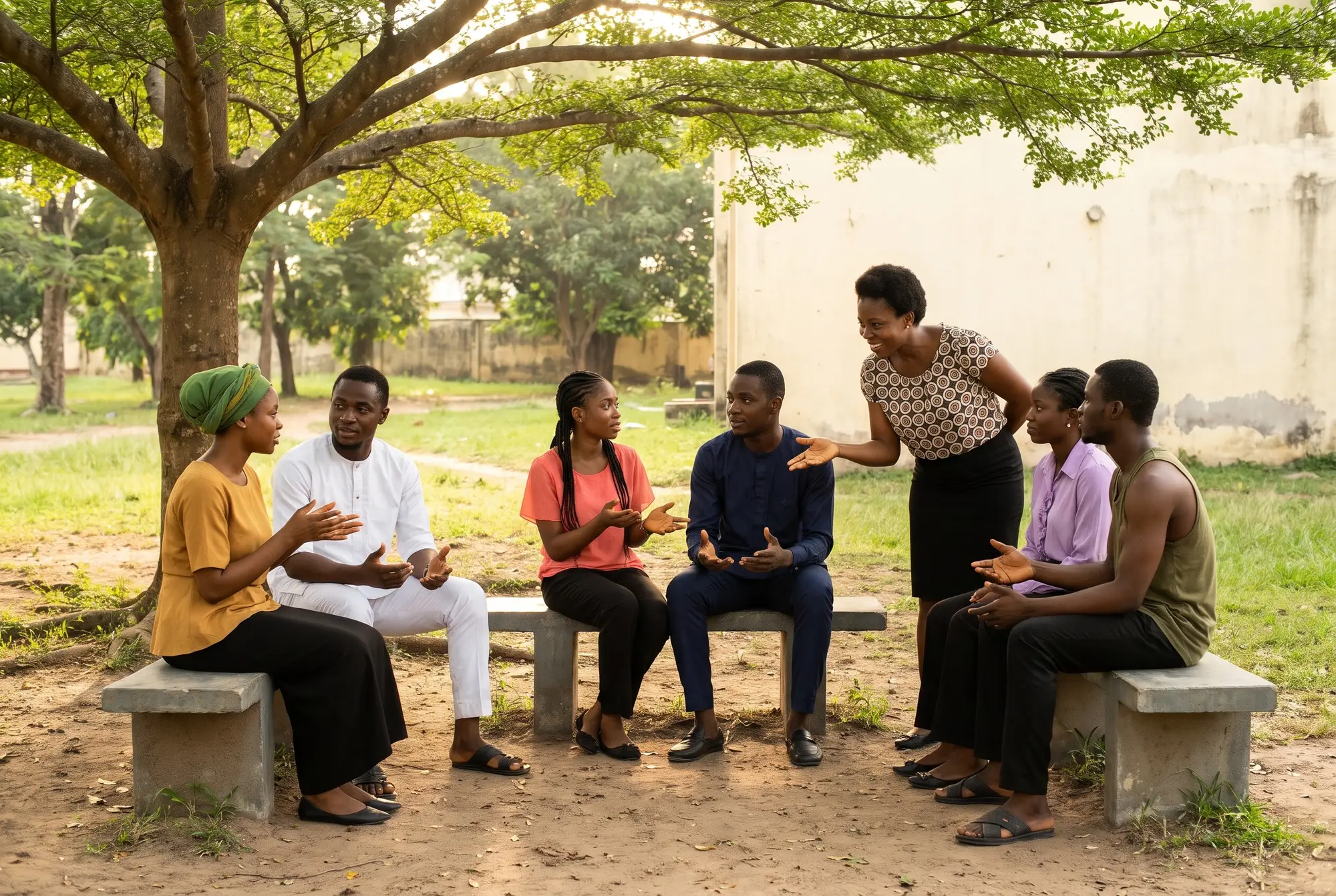
So where does Nigeria fit? Closer than you might think. Two of the big 7 (English and Arabic) are already part of daily life here, a third (French) surrounds us on every land border, and a fourth (Mandarin) is arriving through Chinese-built railways, ports and factories. Meanwhile two of our own languages sit in the global top 20, which is not something many countries can say.
How the Big 7 Languages Compare With Nigeria’s Largest Languages in 2026
| Global rank | Language | Native speakers (millions) | Second-language speakers (millions) | Total speakers (millions) | Presence in Nigeria |
|---|---|---|---|---|---|
| 1 | English | 372 | 1,121 | 1,493 | Official language of government, law and schooling |
| 2 | Mandarin Chinese | 988 | 194 | 1,183 | Taught at Confucius Institutes; weekly VON broadcast since 2026 |
| 3 | Hindi | 347 | 264 | 611 | Small Indian community; Bollywood films loved across the North |
| 4 | Spanish | 487 | 75 | 561 | Official in Equatorial Guinea, our maritime neighbour |
| 5 | Modern Standard Arabic | 0 | 335 | 335 | Quranic schools and optional senior secondary subject |
| 6 | French | 75 | 258 | 334 | Official in all four land neighbours; NFLV immersion in Badagry |
| 7 | Bengali | 234 | 43 | 274 | Rarely heard in Nigeria |
| 14 | Nigerian Pidgin | 5 | 116 | 121 | Lingua franca of markets, campuses and the South |
| 20 | Hausa | 58 | 36 | 94 | Dominant language of the North and the Sahel trade routes |
Source: Ethnologue, 29th edition (2026). Figures are rounded estimates, and Ethnologue itself stresses that language and dialect boundaries are open to debate.
The table makes one thing plain: the biggest languages are not the ones with the most native speakers, but the ones that the most people bother to learn. Nigerian Pidgin, with a tiny native base and a huge second-language following, behaves exactly like English does on a global scale.
Look again at Arabic. Zero native speakers of the standard form, yet 335 million people can use it, many of them Nigerians who learnt it through Islamic education in Kano, Sokoto, Maiduguri or Ilorin. And notice Bengali, with nearly a quarter of a billion native speakers, yet almost no footprint in our country. Size alone does not make a language matter in your life; proximity, trade and faith do.
Which Is the Most Spoken Language in the World?
Here is the direct answer, without the hedging.
English is the most spoken language in the world, with about 1.49 billion total speakers in Ethnologue’s 2026 edition, of whom only about 372 million are native speakers. Mandarin Chinese is the most widely spoken first language, with about 988 million native speakers and roughly 1.18 billion speakers in total. The rest of the top ten by total speakers are Hindi, Spanish, Modern Standard Arabic, French, Bengali, Portuguese, Indonesian and Urdu, and the most spoken African language on the global list is Nigerian Pidgin, in 14th place with about 121 million speakers.
That one paragraph covers the question most people type into Google. But it is worth unpacking the entities hiding inside it:
- Total speakers count everybody who can hold a conversation in the language, native or not, and this is the measure Ethnologue uses for its headline ranking.
- Native (first-language) speakers count only people who grew up speaking the language at home, and on this measure Mandarin leads, followed by Spanish and then English.
- Macrolanguages such as “Chinese” or “Arabic” bundle several distinct varieties together, which is why some older lists put Chinese at well over a billion native speakers.
- Lingua francas such as English, Swahili and Nigerian Pidgin have far more second-language speakers than native ones, which is exactly what pushes them up the total-speaker rankings.
Speaking of Pidgin, it deserves a proper round of applause. When the Guardian’s Azeez Kareem reported on Pidgin’s place in the Ethnologue rankings in 2025, plenty of readers were astonished to learn that our everyday street language sits ahead of Egyptian Arabic, Swahili and Hausa. The 2026 figures keep it at 14th in the world, with about 121 million speakers, but only around 5 million of those learnt it as a mother tongue. The other 116 million or so picked it up in markets, motor parks, barracks, campuses and WhatsApp groups. If that is not a language built by the people, I do not know what is.
Hausa, for the record, sits at 20th place with about 94 million speakers, of whom roughly 58 million are native. For a fuller picture of how our own languages compare with the rest of the continent, my earlier guide to what languages Nigerians speak maps the major ones state by state.
What Are the Top 3 Languages to Learn and Speak in Nigeria Today?
Now for the practical part. If you are a Nigerian who already speaks English and at least one local language, which three languages give you the best return on your time and money?
My answer, after years of watching friends, cousins and colleagues try (and sometimes abandon) language courses, is English to a professional standard, French, and then either Mandarin or Arabic depending on your career. That might sound like cheating, since you already speak English. But “speaking” English and writing polished, persuasive professional English are two very different things, and the second is what wins scholarships, visas and jobs.
French is my clear second choice for most Nigerians. It is spoken by every country that shares a land border with us, it is an official language of the African Union, ECOWAS and the United Nations, and it is the language Canada tests for its francophone immigration streams. A cousin of mine in Port Harcourt spent the better part of a year preparing for the French test for Canadian immigration, and the registration fee alone at Alliance Française de Lagos is now in the region of ₦600,000 to ₦700,000. Expensive? Yes. But compared with the cost of a failed application, she considers it the best money she ever spent.
Mandarin is the wild card. Chinese firms build and operate a growing share of our infrastructure, and a Mandarin speaker with an engineering, logistics or procurement background is a rare and valuable creature. In September 2025, an FCT education official announced that Mandarin had been added to the senior secondary curriculum, but a Guardian investigation by Amarachi Okonkwo found that the published curriculum document did not list it, so check with your child’s school before you buy a textbook. For adults, short courses at the Confucius Institute at the University of Lagos are far cheaper than you might fear; its 2025 summer programme cost ₦25,000 to register.
Arabic makes more sense than Mandarin if your work touches the Gulf, Islamic finance or the Hajj and Umrah travel business. It also opens doors to North Africa, which is often overlooked by Nigerian traders.
So how do you actually go about it? Here is the approach I recommend to anyone who asks me.
- Decide why you need the language, whether for migration, business, faith, study or pure curiosity, because the reason determines how good you need to get and how fast.
- Choose one language at a time, and resist the temptation to start French, Mandarin and Spanish in the same January (I have seen that resolution collapse by Valentine’s Day more times than I can count).
- Take a placement test at a recognised centre such as Alliance Française, the Confucius Institute or the Nigeria French Language Village, so you start at the right level and do not waste money repeating basics.
- Budget realistically in naira, setting aside roughly ₦25,000 to ₦150,000 per course level depending on the institution, plus exam fees that can run from ₦25,000 for a school-level certificate to ₦700,000 for an immigration test.
- Practise for at least 30 minutes every day, using free radio programmes, podcasts, films with subtitles and language exchange groups on WhatsApp or Telegram.
- Find real speakers to talk to, whether that means chatting with traders at Seme or Idiroko, attending Chinese New Year events in Abuja, or joining a francophone church service in Lagos.
- Sit an internationally recognised exam (DELF or DALF for French, HSK for Mandarin) within 12 months, because a certificate turns a hobby into a line on your CV.
One more thought before we leave this section. If you have ever wondered whether foreigners find our own languages difficult, you might enjoy my piece on whether Nigerian is a hard language to learn. It turns the question around, and it is a useful reminder that tonal languages like Yoruba and Igbo are every bit as demanding as Mandarin.
Final Thoughts on the Most Spoken Language in the World
So, which is the most spoken language in the world? English, if you count everybody who can use it, with about 1.49 billion speakers. Mandarin Chinese, if you count only the people who grew up speaking it, with nearly a billion. Spanish, Hindi, Arabic, French and Bengali complete the big 7, and Nigerian Pidgin and Hausa hold their own in the global top 20, which is a quiet triumph for a country that rarely gets credit for its linguistic muscle.
The deeper lesson is that languages grow when people find them useful. English rules because the world uses it for business and study. Pidgin thrives because Nigerians use it to get things done across ethnic lines. French matters to us because our neighbours speak it, and Mandarin is rising because Chinese capital is building our railways. If you want to choose a new language wisely, follow the usefulness, not the headcount.
And please, whatever you learn next, do not let your own mother tongue slip. A Nigerian who speaks fluent English, decent French and the language of their grandparents is richer than any ranking can measure.
- Ask an elder in your family to teach you ten proverbs in your mother tongue this month, and write them down before they are lost.
- Switch your phone’s language setting to the language you want to learn for one week, to see whether you can live with it before you pay for a course.
- Raise the place of Nigerian languages at your next PTA meeting, so your child’s school keeps at least one on the timetable under the English-only policy.
Related Articles
If the Ethnologue table made you wonder how our continent ranks on its own, I have looked closely at the most spoken language in Africa, where Arabic, Swahili, Hausa and Pidgin all make a claim depending on how you count. And if the section on Nigerian English caught your attention, my guide to which country speaks English like Nigeria explores the accents, idioms and shared history that link us with Ghana, Sierra Leone, Liberia and beyond.
Key Takeaways
- English is the world’s most spoken language by total speakers (about 1.49 billion), while Mandarin Chinese has the most native speakers (about 988 million).
- The big 7 by total speakers are English, Mandarin, Hindi, Spanish, Modern Standard Arabic, French and Bengali, and Nigerian Pidgin (14th) and Hausa (20th) are the strongest Nigerian entries on the global list.
- For most Nigerians, professional English, French and either Mandarin or Arabic offer the best career and migration value.
Frequently Asked Questions: Which Is the Most Spoken Language in the World?
Which is the most spoken language in the world?
English is the most spoken language in the world, with about 1.49 billion total speakers according to Ethnologue’s 2026 edition. Mandarin Chinese comes second with about 1.18 billion speakers, although it has far more native speakers than English.
What are the top 5 languages spoken in the world?
The top five languages by total speakers are English, Mandarin Chinese, Hindi, Spanish and Modern Standard Arabic. French narrowly misses out on fifth place, sitting only about one million speakers behind Arabic.
Is English or Spanish more widely spoken?
English is more widely spoken overall, with about 1.49 billion speakers compared with about 561 million for Spanish. Spanish, however, has more native speakers, with about 487 million against roughly 372 million for English.
What is the most spoken language in the world by native speakers?
Mandarin Chinese has the most native speakers in the world, with about 988 million people speaking it as a first language. Spanish is second on this measure and English is third.
What are the big 7 languages?
There is no official list, but the term usually refers to the seven languages with the most total speakers. On Ethnologue’s 2026 figures these are English, Mandarin Chinese, Hindi, Spanish, Modern Standard Arabic, French and Bengali.
What are the top 3 languages to learn?
For global reach, English, Mandarin Chinese and Spanish are the three most often recommended. For Nigerians who already speak English, French and either Mandarin or Arabic usually offer better value because of our neighbours and trade links.
Which language is the fastest to learn for a Nigerian English speaker?
Languages closely related to English, such as French, Spanish, Portuguese and Dutch, are usually the quickest for English speakers to learn. The US Foreign Service Institute estimates about 600 to 750 classroom hours for these, against roughly 2,200 hours for Mandarin or Arabic.
Where does Nigerian Pidgin rank among world languages?
Nigerian Pidgin ranks 14th in the world by total speakers, with about 121 million users in Ethnologue’s 2026 edition. Only around 5 million of those are native speakers, which makes it one of the clearest examples of a lingua franca on the planet.
Is Hausa one of the most spoken languages in the world?
Yes, Hausa is the 20th most spoken language in the world, with about 94 million speakers. Roughly 58 million of those speak it as a first language, mainly in northern Nigeria and Niger.
How many languages are spoken in the world?
Ethnologue records a little over 7,000 living languages around the world. Nigeria alone accounts for more than 500 of them, which places it among the most linguistically diverse countries on Earth.
Will English remain the most spoken language in the world?
English is likely to stay on top for the foreseeable future because its second-language base keeps growing through education, business and the internet. Mandarin, Hindi and French are all growing too, with much of French’s growth taking place in Africa.
Does Nigeria teach Mandarin in schools?
Mandarin is taught at Confucius Institutes and in a number of FCT schools through Chinese Corners, and some private schools offer it as an elective. Its status as a nationwide senior secondary subject remains unclear, so parents should confirm with individual schools.