

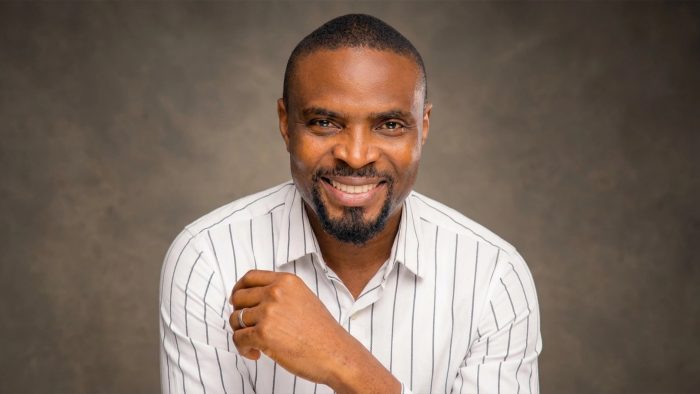
Dr. Alexander “AlexGREAT” Akhigbe is a sustainability leader, social entrepreneur, and development practitioner with over 15 years’ experience advancing environmental responsibility, circular economy solutions, and the Sustainable Development Goals (SDGs) across Africa. He is Founder and CEO of the African Clean Up Initiative, delivering clean-up and awareness projects and convening nine Africa Cleanup Conferences in Nigeria, Ghana, and Togo. He convenes the Nigeria SDG Awards and Women SDG Advocates Conference, serves as UN POLAC Peace Ambassador, ISWA member, and chairs Nigeria’s CSO SDG Strategy Group. An International Visitors Leadership Programme (IVLP) alumnus, he contributed to Nigeria’s 2025 Voluntary National Review (VNR) and mentors entrepreneurs through Fate and Tony Elumelu Foundations. In this interview, he speaks on community mobilisation for environmental impact.
Take us through your work and passion for environmental sustainability
I was born and raised in Ajegunle, Lagos, Nigeria where I had firsthand experience of the consequences of environmental neglect. Growing up, flooding caused by blocked drainages was a constant reality. Whenever it rained, our home was always flooded. It was a difficult and formative experience that exposed me early to how poor environmental practices affect human dignity, health, and safety. Those childhood experiences shaped my passion for environmental sustainability. I came to understand that environmental issues are not abstract, they directly impact education, livelihoods, and quality of life, particularly in underserved communities. This conviction led to the establishment of the African Clean Up Initiative (ACI), an organisation committed to raising environmentally responsible citizens across Africa. Over the past 16 years, our work has evolved from clean-up exercises to systems-level interventions, combining community mobilisation, education, circular economy, peacebuilding, and policy advocacy. Sustainability, for me, is ultimately about people, how we live, what we value, and the systems we build to protect future generations. Our focus has always been on changing mindsets, strengthening systems, and empowering communities to take ownership of their environment.
How have you been raising environmentally responsible citizens?
We approach raising environmentally responsible citizens as a culture, not a campaign. We achieve this through consistent, community-driven programmes implemented across the communities we work in. We have built a strong nationwide network of passionate volunteers and community champions across multiple states in Nigeria who drive local action and sustain impact at the grassroots level. Through the schools, communities, women’s groups, and youth networks we have worked with, we integrate environmental sustainability into our model. Our approach focuses on community engagement, incentive-based recycling, environmental education, and advocacy, ensuring that people do not just understand environmental sustainability but actively practice it. Over time, this helps embed environmental responsibility as a shared value and way of life.
Implementing projects across Nigeria’s six geopolitical zones comes with complexity. What operational model made this possible?
We operate a decentralised, partnership-driven, and volunteer-led operational model. At the core of this structure are our state volunteer coordinators and community leaders, who drive project implementation at the grassroots level across Nigeria’s six geopolitical zones. While local teams lead execution, the ACI National Office provides strategic direction, quality standards, coordination, and technical support. This balance allows us to maintain consistency while respecting local context, which is critical for nationwide impact. In addition, we deliberately collaborate with organisations that share our values, ethics, and commitment to impact. Partnership is central to our work, in line with SDG 17, which emphasises collaboration as a catalyst for sustainable development.
How do you balance grassroots mobilisation with policy-level engagement in ACI’s work?
Balancing grassroots mobilisation with policy engagement is critical because government policies can significantly influence the effectiveness and sustainability of our work. In the past 16 years of operation as African Cleanup Initiative (ACI), we have deliberately worked closely with government institutions to understand emerging policies and position our interventions to align with national priorities while maintaining our mission. My involvement with national SDG processes, including serving on the Core Working Group for Nigeria’s Third Voluntary National Review (VNR) and currently chairing the Nigeria Civil Society Organisations Strategy Group on SDGs, allows us to take grassroots realities directly into policy conversations. At the same time, policies become more meaningful when communities see themselves reflected in them. That bridge is where ACI operates. Grassroots mobilisation remains one of ACI’s strongest pillars. Through years of consistent engagement, we have built trust within communities and established ACI as a credible voice for the people on environmental sustainability and SDG-related issues.
How did you secure community trust in low-income areas when introducing recyclable-based school fee payments?
Trust was built through listening, transparency, and consistency. Before implementation, we engaged closely with parents, community leaders, and school owners to understand their concerns and co-create a model that respected their dignity. The process was kept simple, inclusive, and transparent, ensuring that every participant clearly understood how the system worked. The RecyclesPay Educational Project which represents recyclable-based school fee payment was born out of a dual need to reduce the number of out-of-school children and to address poor waste management that contributes to flooding and environmental degradation. By allowing parents to pay school fees with recyclables, we transformed waste into value and education into a shared community responsibility. As families saw their children remain in school and communities experienced cleaner environments and reduced flooding risks, trust grew organically. Over time, RecyclesPay became more than a project, it became a model for linking education, environmental responsibility, and social impact.
In practical terms, how can Nigeria accelerate SDG delivery?
First, SDGs must be localised; translated into state, local government, and community-specific priorities. Second, we need stronger multi-stakeholder collaboration, breaking silos between government, civil society, private sector, and academia. Another major gaps I have observed is that many Nigerians are still not sufficiently aware of what the Sustainable Development Goals represent or the role they can play in achieving them. This lack of awareness makes grassroots participation challenging. To accelerate SDG delivery, Nigeria must invest in massive grassroots advocacy and education, particularly within schools and local communities, to demystify the SDGs and translate them into everyday actions people can relate to. We must also deliberately invest in women and young people as drivers of implementation. Finally, Nigeria needs to move from policy conversations to intentional execution, supported by data, monitoring, and accountability. When people understand the SDGs and see their role in them, delivery becomes faster and more sustainable.

What role do young people play in sustaining the outcomes of initiatives like Africa Cleanup Conference and Peace Festivals?
Young people are central to the work of the African Clean Up Initiative. We are privileged to have a largely youth-driven volunteer base across Nigeria, with young people serving in leadership, coordination, advocacy, and implementation roles. Young people are the continuity and conscience of these initiatives. Through platforms like the Africa Cleanup Conference and Peace Festivals, young people are not just passive participants, but active player in taking the conversations back to their campuses, communities, and digital spaces, ensuring continuity beyond events. By equipping them with leadership skills, networks, and visibility, we are investing in a generation that sees sustainability, peace, and civic responsibility as normal and not optional.
Finally, how do you want your work to be remembered by communities, institutions, and history?
I want my work to be remembered for building systems, not just projects; for restoring dignity, not just delivering interventions; and for proving that Africans can design solutions that meet global standards. If communities remember that they were empowered, institutions remember that collaboration worked, and history records that sustainability became a lived culture rather than a slogan, then I would consider my life’s work meaningful. Ultimately, I want to be remembered as someone who believed deeply that every moment counts and acted accordingly.
