

As conversations around youth unemployment, entrepreneurship, and vocational education continue to shape Nigeria’s development agenda, educators and industry professionals are increasingly working together to expose young people to practical skills and emerging career opportunities. Across Nigeria, vocational education is gaining renewed attention as schools and private-sector leaders explore new ways of preparing students for a rapidly evolving economy.
One such initiative recently concluded in Lagos under the leadership of Adanma Awolo, Founder of BRS Wig Academy, whose three-school outreach programme introduced secondary school students to Technical Wig Construction as both a creative discipline and a viable entrepreneurial pathway.
What happens when students are encouraged to look beyond conventional career paths and discover opportunities within creativity, technical skills, and enterprise?
For 86 secondary school students across three Lagos schools, that question was answered through a free educational outreach programme that combined vocational learning with practical industry exposure. Rather than simply demonstrating a craft, the initiative introduced students to professional standards, modern production techniques, and the possibilities that exist within Nigeria’s growing beauty and creative industries.
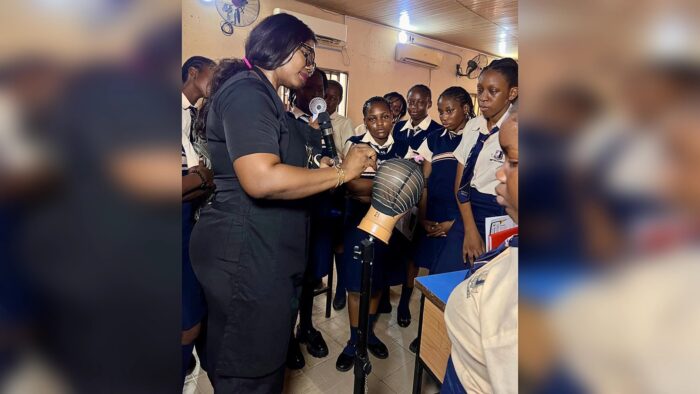
Delivered between June 3 and June 18, 2026, the Introduction to Technical Wig Construction workshop series was conducted free of charge at Lakefield College, Regal Star College, and Liberty Bells School. Through demonstrations, interactive discussions, and hands-on learning, students explored entrepreneurship, technical craftsmanship, and career opportunities that often receive little attention within traditional classroom settings.
For Adanma, however, the initiative was never simply about teaching students how to construct wigs. It was about expanding their understanding of what is possible.

“Too often, students leave school without ever being exposed to the industries and opportunities that exist around them,” she said. “My goal was to help them understand that vocational skills, creativity, and entrepreneurship are not alternatives to success. They are pathways to it.”
That philosophy reflects her academic background in Business Education at the University of Benin, where vocational and technical education emphasizes entrepreneurship, workforce preparation, practical learning, and skills development.
Years after graduating, Adanma continues to apply those same principles through her work as an educator and creative industry practitioner. Through BRS Wig Academy, she has become known for promoting structured Technical Wig Construction methods while introducing learners to professional production standards that emphasize precision, consistency, craftsmanship, and innovation.
Rather than teaching a craft in isolation, her approach encourages learners to understand the relationship between technical competence, creativity, entrepreneurship, and long-term career development.
Throughout the workshop series, students explored the technical foundations of wig construction while learning about self-employment, value creation, business development, branding, and opportunities within the beauty sector. The programme encouraged participants to see vocational skills not simply as manual trades, but as professional careers capable of generating innovation, economic value, and sustainable livelihoods.
A defining feature of the outreach programme was its emphasis on exposing students to authentic industry practices.
Instead of relying solely on classroom explanations, participants interacted with professional-grade materials and equipment commonly used within the industry.
Through the support of Toupee Corporation, a premium hair extensions supplier based in Hanoi, Vietnam, students were introduced to high-quality hair bundles in various lengths and textures alongside a completed wig used during practical demonstrations. The sponsorship allowed participants to experience the level of quality expected within professional production environments.
Students were also introduced to precision polymer wig blocks, modern tools increasingly recognised for improving structural accuracy, consistency, and precision during wig construction. By demonstrating equipment currently used by professionals, the workshops provided valuable insight into contemporary production methods while reinforcing the technical nature of the profession.
“It was important that students experienced the industry beyond theory,” Adanma explained. “We wanted them to see the standards, tools, and materials used by professionals so they could understand the level of skill, craftsmanship, and innovation involved.”
The response from participating schools was overwhelmingly positive.
School representatives praised the initiative for exposing students to practical career pathways rarely incorporated into conventional classroom learning. A representative from Liberty Bells School described the programme as a “rare event,” highlighting the unique opportunity it gave students to engage directly with an experienced educator and industry practitioner.
Beyond the workshops themselves, the initiative demonstrated the growing importance of collaboration between schools and industry. By bringing together educational institutions, private-sector partners, and vocational educators, the programme created learning experiences that connected classroom education with real-world professional practice.
As Nigeria continues to seek sustainable solutions to youth unemployment and economic empowerment, programmes such as the Introduction to Technical Wig Construction workshop series illustrate how creative vocational education can complement formal schooling. Early exposure to practical skills, professional standards, and entrepreneurial thinking equips students with broader career awareness while encouraging innovation and self-reliance.
For Adanma, however, the programme’s success cannot be measured simply by attendance figures or completed workshops.
It is measured by the conversations it started. “If a student leaves with a broader view of what their future could look like, then we’ve achieved something meaningful,” she said. “Education should inspire curiosity, build confidence, and help young people recognise opportunities they may never have considered before.”
While the three-school outreach programme has concluded, Adanma says it represents only the beginning of a broader vision to strengthen the connection between education and the creative industries. Through future collaborations with schools, educators, and industry partners, BRS Wig Academy hopes to expand similar initiatives that introduce more young Nigerians to vocational learning, entrepreneurship, and creative careers.
For the 86 students who participated, the experience extended well beyond learning the fundamentals of Technical Wig Construction.
It became an introduction to possibility, a reminder that creativity, technical skills, and entrepreneurship can work together to transform futures, unlock potential, and open doors far beyond the classroom.
