

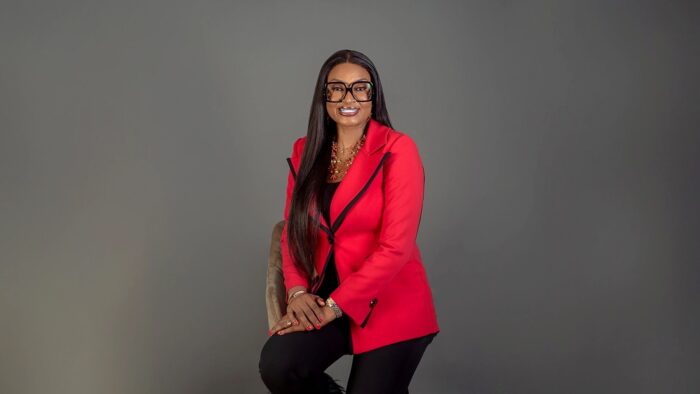
Dolly Ohanyere is a Lawyer, certified Neuro-Linguistic Programming (NLP) Practitioner, Leadership Coach, and Relationship and Marriage Counsellor with a passion for helping individuals and couples build thriving relationships and realise their fullest potential. She is the Founder of Thrive360 Limited and The Healthy Marriage Hub, and the Author of The Becoming Collection – six books at the intersection of identity, purpose, relationships, healing, and daily living. With expertise spanning human capital development, emotional intelligence, behavioural change, and relational health, Dolly works with individuals, couples, and organisations across Nigeria and beyond – equipping them with the tools, frameworks, and mindset shifts that produce lasting transformation. In this interview she speaks on transforming families and societies especially women.
You often speak about identity, purpose and relationships. Why is it important for women to understand who they are before making major career or relationship decisions?
This is the core of my teaching. The framework that I use is: Start Right, Choose Right and Marry Right. God designed identity before purpose, purpose before partnership, and partnership as the completion, not the beginning, of the journey. Adam’s identity was rooted in God and before He created Eve, He gave Adam work to do. He placed Adam in the garden with a specific mandate. Adam had an assignment, a calling, a specific and irreplaceable role in the world God had created, and that assignment was given, established and active before God said it was not good for man to be alone.
Identity, purpose and relationship are not three separate conversations; they are one conversation in the right order, and the order matters. If you don’t start right, you can’t choose right. If you don’t choose right, you can’t marry right. It is that simple. When a woman does not know who she is, she will define herself by whoever chooses her. When she does not know her purpose, she will adopt someone else’s vision for her life and call it love or loyalty. I always say, you cannot choose well from a wound. You cannot choose a career that is truly aligned with you if you do not first know what you are aligned to. You cannot choose a partner who sees you if you have not yet done the work of seeing yourself.
Every major decision made without a rooted identity is a decision made from fear, performance or what feels familiar, not from what is actually true. For women specifically, we are socialised to define ourselves in relation to others daughter, wife, mother, employee and so on. The world gives us relational identities before we have had the chance to build an internal one. The work of returning to yourself to the original, to who you were before the world had its say is not selfish; it is foundational.
What led you to being an author?
I actually prefer to describe myself as a writer because I have been writing for years. I recently found a notebook I wrote in 2019 and discovered I had listed all the books I wanted to write up to 2035. I didn’t even remember writing it. Earlier this year, during a counselling session, I mentioned that I write far more than I speak. I had written so much that had never been shared. I was encouraged to stop holding back, and that conversation became the turning point. Some of the manuscripts had been sitting in my email drafts for years. I even discovered unfinished books simply by searching for titles that came up during conversations. That experience reminded me that writing had always been part of my journey; I simply needed to complete the work.

Tell us about The Becoming Collection. How are the six books interconnected?
They all speak to one another because they all begin with identity. The first two books focus on purpose. It Was Always There explains that purpose is already inside us and needs to be uncovered, while Seen from the Start helps parents recognise and nurture purpose in their children. I made both books free because I don’t want purpose discovery to become something people cannot access. The next two books are for singles. The Mirror encourages honest self-examination before choosing a life partner, while Meaningful Choosing provides a framework for making relationship decisions from wholeness rather than fear or loneliness. The final two books, Wells and Encounters and its devotional, focus on healing. Together, the six books tell one story. Identity is the foundation; from identity comes purpose, relationships and healing.
Many women reach a point where they feel stuck in their careers. How can a woman recognise when it is time to change direction or reinvent herself?
The feeling of being stuck is not a problem to be solved; it is information to be read. The first thing I tell any woman who comes to me at that crossroads is this: the discomfort you are feeling is not a sign that something is wrong with you. It is a sign that something in you has outgrown the container you are currently in. There are three signals I always look for. The first is what I call the Sunday evening feeling. When the thought of Monday morning produces dread rather than neutral anticipation consistently, not occasionally, that is not tiredness; that is misalignment. Your body is telling you that where you are spending the majority of your waking hours is no longer where you belong. The second is the absence of growth. When you have stopped being stretched, when you can do the job in your sleep, when nothing about it challenges or develops you anymore, you have not plateaued; you have finished. The question is not whether to move; the question is where. The third, and this is the one most women, often overlook, is the persistent pull towards something else. The idea you keep returning to. The work you do for free because it does not feel like work. The conversation that lights something up in you that your current role does not. That pull is not distraction; it is direction. It deserves to be taken seriously.
How can women identify and protect their non-negotiables at work and at home without being consumed by guilt?
Your priority ladder has to be clear and, at the same time, flexible. Life does not ask for your permission before it changes on you, so flexibility is not a nice-to-have; it is how you survive the moments you did not see coming. You have to know what your non-negotiables are. The woman who has decided in advance what her non-negotiables are in both areas can adjust without guilt because she knows what she is protecting even when she has to shift. Non-negotiables are the things that, if removed, would cost you your health, your marriage, your sense of self or your relationship with your children. They are rooted in your values, your faith, your safety and your sense of self. They are not preferences. Preferences are nice to have, but non-negotiables are must-haves. The woman who is clear about her non-negotiables in both spaces can say no to everything else without guilt because she knows what she is protecting. Identify yours. Protect them fiercely. Negotiate everything else.
What should women understand about ambition, money and building financial independence early in their careers?
Your ambition is not too much. You have simply been in rooms that were too small for it. Women are socialised from an early age to shrink to be capable but not intimidating, to want but not too visibly, to lead but gently enough that no one feels threatened. And so, we learn to edit ourselves and present a contained version of what we are actually capable of because the full version feels like too much of a risk. What I wish women would embrace earlier is that the discomfort other people feel in the presence of your ambition is not your responsibility to manage. Your gifts were not given to you to be made comfortable for other people. They were given to you to be used fully without apology.
On money, know your numbers and know your worth. They are not the same thing, but they are both essential. Too many women arrive at critical financial moments salary negotiations, business decisions and investment choices without the information they need because somewhere along the way they absorbed the idea that money was not a feminine conversation.
It is a deeply practical conversation about freedom about the ability to make choices, to leave what needs to be left, to build what needs to be built and to give generously without depleting yourself. A woman who understands her finances is a woman who cannot easily be trapped. Learn the numbers, know your value in the market, negotiate without guilt, and build not just income but wealth the kind that gives you options.
Why do you believe women should learn to set boundaries in both their personal and professional relationships?
Choose people who choose you back in every area of your life. This sounds simple. It is not simple. Many of us have been trained by wound and culture; the particular pressure that sits on women to be accommodating, to be strong, to be available, to be endlessly generous, to pour into connections that do not pour back, and to stay in professional relationships that diminish us because leaving feels disloyal. Some of us have been built to tolerate personal relationships that cost us more than they give because the alternative is the discomfort of the boundary. What I wish women would learn earlier is that a boundary is not a wall; it is a definition. It says: this is who I am, this is what I will accept and this is what I will not accept. The people who are right for your life will respect the definition. The ones who cannot are showing you something important about whether they belong in it.
