

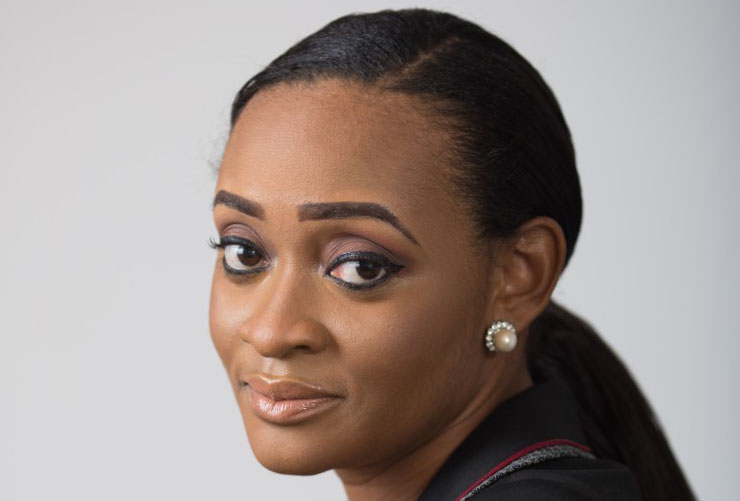

Ola Oladele is a Chartered Financial Analyst (CFA) Charterholder. The graduate of accounting started her career in Treasury as a Naira dealer at Kakawa Discount House and moved to trading money market and fixed income securities at FBNQuest Merchant Bank. Before moving on to establish OlerOladele.com, her last role was at Parthian Partners Limited as a member of the executive management team, recording successes, including launching the first ever Nigerian Treasury bills investment app and successful commercial paper and bond issues.
At OlerOladele.com, she founded an exclusive investment community, the Money Wit Club, which facilitated personal finance workshops. Also recently, she launched The Money Wit Show, a prime-time personal finance education radio show that airs across Nigeria and on all major podcast streaming platforms.
As a prolific speaker on finance, investing and economy related matters, Oladele is also on the faculty of Tekedia Mini MBA and Joseph Business School, Lagos. On the back of her work as the pioneer Chair of the gender diversity committee of the CFA Society Nigeria, she is an alumnus of the Oxford Executive Leadership Programme and was listed as one of the top 100 career women in Nigeria in 2021 by ‘9to5 Chick’. In this interview with IJEOMA THOMAS-ODIA, she speaks about the importance of financial literacy for women.
Take us through your illustrious career path.
I studied accounting in University of Lagos, and by the time I got to final year, I knew that debit and credit was not for me. Thankfully, for my National Youth Service Corps (NYSC), I got into the treasury of Kakawa Discount House and my career in finance started. Post-NYSC, my life as a securities trader was cast in stone. I traded Naira interest rates, derivatives, treasury bills and bonds. I went on to manage the Balance Sheet at FBNQuest Merchant Bank before moving on to Parthian Partners Limited as a broker and in executive management level. After five years at Parthian and with successes like deploying the first retail treasury bills investment app in Nigeria and successful commercial paper and bond issuances, I started OlerOladele.com, my own financial wellness company.
What informed your passion delving into investment and personal finance?
Growing through the years, I saw a trend – a lot of very intelligent and accomplished people keep making the same avoidable money mistakes. Some of the signs being salary increases but staying broke or in debt, always losing money to ‘bad investments’, not being able to account for money that passes through their accounts, and not planning for retirement.
[ad]
I realised that because we start engaging with money from an early age, people assume that they were born with good money management skills, and despite seeing poor outcomes, they just keep hoping. I also realised that the little tips to fix these poor outcomes that seemed so obvious to me, were not so obvious to a lot of people so I decided to share them with the world.
What does financial wellness mean in your terms?
Financial wellness is when an individual or household has achieved a level of financial stability and security that allows them meet their financial goals and handle financial challenges. It is not just about having a lot of money, but positioning oneself for challenges of life. It is a combination of making money, investing, insurance, estate planning and everything in between.
Through the Money Wit Club, how are you driving your vision?
Whilst exchanging time for money (that is working) is a good foundation for financial wellness, history has shown us that the surest way to build wealth is by investing. We all know this, but some have invested and lost money and some don’t invest for fear of losing money. I founded the Money Wit Club to help working class professionals learn about investing and invest in a sustainable (and profitable) way. At the Money Wit Club, we explain the various asset classes, show you how to invest in each of them and keep track of market happenings that could affect your portfolio whilst keeping you accountable. Attaining financial wellness is a journey, not an event and we show you how to navigate your different seasons of life to preserve your wealth.
In an economy where the dollar rise is significantly impacting on the naira currency, how are you championing your cause to reflect our current realities?
When you see clouds gathering, you know it is about to rain. The current happenings in the Nigerian economy have not been surprising. Within our community, we keep track of policies and news, interpret their expected impact on the economy and provide guidance on positioning members’ finances and investments appropriately. There has never been (probably never will be) a time of complete economic stability, but being able to predict and navigate economic challenges is what we preach and teach.
What is your take on women and their financial literacy awareness?
I believe that apart from the general dearth of financial education, women are burdened with some peculiar financial challenges that we need to keep talking about and educating ourselves on how to navigate them. These challenges led us to create the girl talk segment in our radio show where we highlight financial gaps specific to women and provide tips to resolving them.
You are quite passionate about gender parity. What have been some of your activities in this line?
I honestly believe in equal opportunity for both genders. A woman shouldn’t be punished for going on maternity leave or for leaving the office at 5pm to focus on the family. What this means is that the subjective measures of performance need to give way for objective deliverables at work. For four years, I served as the pioneer chair of the gender diversity committee at the CFA Society in Nigeria. In the financial services industry, we find an almost 50:50 male, female ratio at the early career stages, but women begin to drop off as we go higher into management and then almost disappear at executive leadership levels. To address this, we set up mentoring programmes and initiatives that are still in place till today.

What do you consider bad investment or bad finance management?
When it comes to bad investment, I believe that there is inherent risk in all investments and always a chance of losing your money. With this mindset, for me, a bad investment is one that impacts you so severely that you are handicapped either mentally, financially or both ways. It’s not just about losing money, but also how that loss impacts you. For me, bad finance management is putting all your eggs in one basket, not thinking long term, no insurance, no estate planning, living beyond your means, borrowing to spend or lack of financial goals. There are a lot of things beyond our control, but our choices make a difference in the impact of those events on us.
In your expertise, how can the nation drive financial inclusion and create social economic opportunities especially for women?
We fundamentally need better policies, improved implementation of existing ones and partnerships between public and private institutions. Here are some practical tips that can be implemented: promote the adoption of digital financial services, such as mobile banking and digital wallets, to reach underserved populations, including women in rural areas; implement financial literacy and education programmes to empower women with the knowledge and skills necessary to make informed financial decisions; encourage the growth of microfinance institutions and provide access to credit for women entrepreneurs and small business owners. It is also important to review and revise regulations to ensure they are gender-sensitive. This might include changes in property ownership laws, inheritance rights, maternity rights and legal protection against gender-based discrimination in financial matters. You need to create programmes to foster women’s entrepreneurship by providing training, mentorship, and networking opportunities and offer tax incentives and subsidies to businesses that promote gender diversity and equal pay. This can encourage businesses to hire and retain more women. There’s so much to be done in this regard
What advise do you have for women who struggle with getting a hold of their career?
Every good thing in life requires some form of sacrifice. In building your career, be intentional about defining what it would take to achieve your career goals and begin to position yourself for it. Your goal should be to increase your bargaining power, but in order to do that, you must be excellent and top notch in what you do and also be seen as being indispensable. Once you are excellent and also known as excellent, you can begin to negotiate for flexibilities.
What is your life mantra?
My life’s mantra is a verse from the Bible- ‘Seek first the Kingdom of God and all other things will be added unto me’.
