

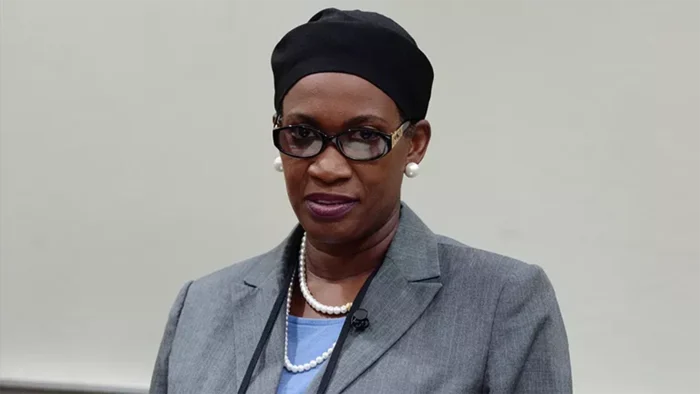
Justice of the Supreme Court of Nigeria, Hon. Justice Helen Moronkeji Ogunwumiju, has called for a far-reaching reimagining of Nigeria’s justice system to make it affordable, accessible, trauma-informed and responsive to the lived realities of women and girls, insisting that access to justice must no longer be treated as a privilege but as a fundamental promise of nationhood.
Delivering a keynote address titled “Breaking Barriers, Building Futures with Women and Girls” at the 25th anniversary celebration of the Women Advocates Research and Documentation Centre (WARDC), Ogunwumiju urged government and justice sector institutions to prioritise survivor-centred responses to gender-based violence, expand legal aid for indigent women, deploy mobile and community-based justice mechanisms to rural areas, and strengthen enforcement of existing laws, particularly the Violence Against Persons (Prohibition) Act.
According to her, justice for women and girls must be “trauma-informed, survivor-centred and delivered with dignity,” warning that systems that doubt survivors, delay cases or pressure women into silence do not dispense justice but perpetuate harm. She stressed that the first response to a woman in distress should be support, not suspicion, and protection, not prejudice.
Speaking at the anniversary event held under the theme “Breaking Barriers, Building Futures with Women and Girls,” the Supreme Court Justice identified uneven enforcement of laws, poorly trained investigators and prosecutors, high legal fees, social stigma and discriminatory cultural practices as major obstacles confronting women seeking redress. She noted that despite constitutional guarantees and legislative advances, many women and girls still live in fear—of violence, of stigma, of not being believed, and of being blamed.
Ogunwumiju argued that justice must “travel to the people,” particularly to rural communities where the majority of Nigerian women reside. She recommended innovations such as mobile courts, safe reporting hubs, survivor support centres, community leader trainings and technology-driven case tracking systems to reduce delays and prevent secondary victimisation. Recalling the story of a rape survivor who abandoned her case after trekking for days to reach a police station, she said justice that is distant or unaffordable is justice denied.
The jurist also underscored the link between economic dependence and limited access to justice, observing that many women remain in abusive marriages simply because they cannot afford to leave. She called for stronger enforcement of women’s property and inheritance rights, as well as fair division of assets in divorce proceedings, noting that courts are making gradual progress in this area but must do more to dismantle discrimination based on sex, tribe or financial status.
Drawing from her judicial experience, Ogunwumiju cited a landmark custody case in which she overturned a High Court decision that favoured a wealthy father over a less affluent mother, describing the ruling as discriminatory and rooted in wrong assumptions about gender, tribe and economic power. “Each parent has equal rights,” she maintained, emphasising that justice must be blind to wealth, ethnicity and patriarchal bias.
While acknowledging persistent barriers, the Supreme Court Justice celebrated the resilience and contributions of Nigerian women, noting their growing presence across sectors—from the judiciary and legal profession to business, medicine, engineering and community leadership. She pointed out that women currently occupy six of the 20 seats at the Supreme Court and that Nigerian women lawyers are being called to the Bar in numbers comparable to their male counterparts.
Despite these gains, she cautioned that structural inequalities continue to frustrate even the most committed advocates and institutions. Justice, she said, must be affordable, understandable and close to the people if it is to serve women and girls meaningfully.
Ogunwumiju paid glowing tribute to WARDC, describing the organisation as one of Africa’s most respected voices for gender equality, human rights and institutional reform. Founded in 2000 by Dr. Theodora Akéode-Afolami, she said the organisation has, over 25 years, provided legal aid to thousands of women, trained judges, magistrates, police officers and community leaders, influenced national policy through research, and helped shift the national conversation “from charity to rights, from sympathy to justice, and from token inclusion to institutional transformation.”
She noted that WARDC’s work, including advocacy around the domestication and implementation of key human rights frameworks and its efforts to build male allyship, stands out even more sharply against the backdrop of persistent discrimination and silence around women’s rights.
Calling on lawmakers, policymakers, judicial officers and civil society actors to rise boldly to the task, Ogunwumiju challenged stakeholders to collectively build a justice system that hears every voice, protects every woman and girl, and guarantees dignity without discrimination. “A society cannot progress when half of its population is left unheard, unprotected or divided,” she said, adding that Nigeria stands at a pivotal moment in its history.
As WARDC marked its silver jubilee, the Supreme Court Justice urged renewed commitment to a future where women and girls can report violence without fear, navigate the legal system without barriers, and walk with confidence, dignity and hope. “Justice should not be selective, and rights should not be negotiable,” she concluded, pledging continued collaboration towards justice for all.
