

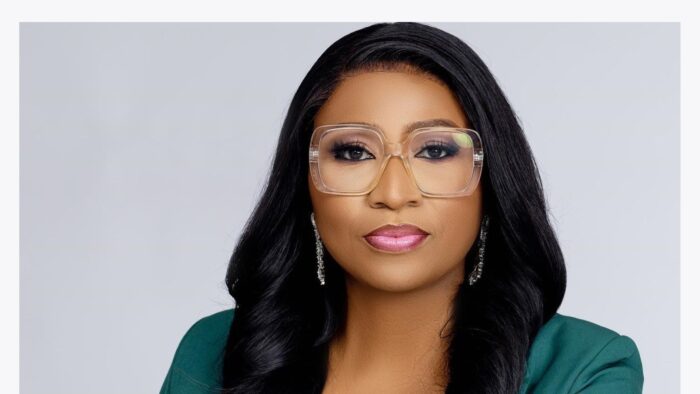
Dr. Morayo Afolabi-Brown is one of the top female thought leaders in the Nigeria media industry with expertise in communications, high-level management and implementation. She holds a PHD in Philosophy from Prowess University USA; a Master’s Degree in Marketing and Media Communications from Pan Atlantic University, Lagos and a Bachelor’s Degree in Political Science with a minor in African Studies from Rutgers University, New Jersey, USA. She also holds certifications in Advanced Leadership, Public Relations, Public Speaking, Content Development, Script Writing, Time Management, and Neurolinguistic Programming. She is amongst the top 25 Most Influential Women In Journalism Africa (WIJA). The Queen of Talk TV as she is popularly called is the host of ‘The Morayo Show’. Prior to this, she was the host of ‘YourView’ on TVC where she hosted over 2,500 episodes before she resigned. In this Interview with MARIA DIAMOND, she speaks about the technicalities involved in having women fit into leadership roles in male dominated sectors, the importance of career consistency and the necessity for more women to vie for political positions in the leadership of Nigeria.
After several years hosting ‘YourView’ on TVC and having risen to the level of Managing Director in the organisation, what made you decide it was time to leave?
THE first time it occurred to me that it was time to leave was when ‘YourView’ turned 10 in the year 2023. I wanted to mark this landmark recognition of YourView being such a huge success and I try to push for the ladies of the show to be celebrated, but at the time I think TVC wasn’t ready for it and I didn’t know why. Then it occurred to me that perhaps it was time to start conceiving the idea of having my own show where I can have better control. However, by December of that year I became the Managing Director TVC Entertainment and I wanted to do so much more, but even with that position I still had restrictions. Then I knew it was time to leave for good. I realised I have invested almost 20 years in the media industry and I’ve done a good 12 years in television. I have built enough social capital to bet on myself and so I decided to start my own show.
Was ‘YourView’ solely your idea or TVC’s?
Yes, it was wholly, completely and totally my idea. I created it. I recruited all the ladies – I auditioned them. I designed what the show was going to be about. I had my producer supporting me. I had lived in the US back in the 90s, and I was there when they started ‘The View’ hosted by Barbara Walters on television where she gathered actresses, journalists, and different people together – a talk show featuring panel of women discussing current issues, interviewing politicians and celebrities, and I told myself that when I got to Nigeria, I would do something like this. So that was where I got the concept from. I wanted a show similar to that where we have different women from different backgrounds coming together and just share their views about society, health, lifestyle, governance etc. So that was the concept of the show and I created it, but of course I didn’t have the intellectual property because I created it as a staff for the company and I couldn’t claim intellectual property for the show.
Tell us about the transition from ‘YourView’ to ‘The Morayo Show’?

The transition was beautiful because I had given 12 years of myself into ‘YourView’. I hosted the show; I brought in all the women on that show. I’m proud of the work that they do. I think we’ve matured to the point where it was time for me to move on. I didn’t see myself being there for the rest of my life from day one. I knew that at some point I had to migrate to other things. For me, it was always the dream to hand over YourView at some point. So, starting my own show was me pursuing my own dream – having something different, which I believed that if God gave me the grace to start with YourView, He would also give me the awesome grace to start my own show and He did with ‘The Morayo Show’.
When you conceived ‘The Morayo Show’, what was the ideology behind it?
The Morayo show is still evolving. When we started the show, the objective was to have regular Nigerians in the audience sharing their views. So, it’s like YourView on a higher level – not just four/five women. Now we have 100 people sharing their thoughts, their views on society and helping them to understand things better. So, when they speak their mind, I bring an expert to help them clarify. The idea is to educate these Nigerians, make them see things differently and in doing that we bring joy, happiness, love, laughter to them. Then we crown it up with the celebrity guest just to make it more fun. But the real authentic aim is to bring the person on the street on the show, hear their views about life, marriage, children, parenting, religion, governance, and then the professionals and experts we bring on the show will educate them, re-enlighten and redirect their thinking. The truth is if the middle class are getting reoriented, getting exposure and are not carrying along those at the bottom, we are wasting our time. A society cannot be built up down, a society is built ground up. So, we must carry everybody along. We must give the average Nigerian a platform of expression.
Are there specific thematic preoccupations for ‘The Morayo Show’?
The initial idea was to make it fluid, but coming in season three we are making it a bit more thematic where every day we have a direction on specific topics such as health, children, family, women empowerment etc. We want to have a more defined structure.
Having been in the talk show space for years, some even call you “The Queen of Talk TV”, how has this career path shaped your personality and character?
Well, it has helped me to be more responsible. When people call you the Queen of Talk TV, you have to carry a lot of responsibility to the people who believe in you. So, it has helped me to be more resolute in ensuring that I stay focused on my vision, I don’t look left, I don’t look right, I stay in the talk show space that I do.
Does being the daughter of Alao Aka Bashorun have an influence on your personality?
Perhaps it does. My father was an activist. Activism in our house was normal. I have a brother who is also an activist – he is a politician. So, it’s in me to ask questions, it’s in me to challenge the status quo, it’s in me to believe that there’s so much more a society can be. That is who I am – it is my DNA. My father raised me in a home where we discussed newspapers and society. He made sure we heard the 9-o’clock news and I always saw people come to the house asking my dad his views on different things – politics etc. So those things really shaped the kind of person I am today.
What drives your passion for general interest and soft power journalism?
I think it’s just my optimism about Nigeria. I really believe that Nigeria will be better and I believe that Nigeria will be better in my lifetime. This drives me. I keep asking myself the same question: Morayo what role are you playing to make Nigeria better? How can you contribute to make Nigeria better? What is your show going to do differently? That optimism inside me is my constant drive to play my part in making sure this nation is better.
Would you agree to the argument that success is handed over to women on a platter of gold as opposed to most women’s testimony of having to work twice as hard as men to attain success?
Nobody hands success over to women; we work hard for everything we get. I used to work at HiTV and I worked my butt off.
I worked really closely back then. We were in charge of the Premier League before DStv took over. We were the foremost cable station in Nigeria at the time. I was the one in charge of content acquisition and also sponsorship. I remember working to the point where even my CEO at some point said Morayo what type of car do you want? You are working really hard and he blessed me with a Prado at the time. So, I don’t think anybody is handing success over to me. I had shown my worth. I think women have to work twice as hard as men because there are expectations. A lot of things happen to us, we have to go through a lot of things outside work. We have to go through pregnancy stages, maternity leave, we have issues of life, family, children, in-laws and so many things we carry as women. So, we have to work twice as hard and even harder to meet up with our male counterparts. Women today are studying hard, they are not sitting back waiting for someone to give them something, they are doing double degrees, they are doing extra classes, they are going for conferences, they are renewing their skills. Women are going above and beyond expectations to become better, nobody is handing over anything and we are working hard to get what we have today.
As a leading woman in your field, are you of the opinion that there are peculiar challenges that most women aiming for the top encounter that wouldn’t be the case with men?
Yes, women face those challenges. I will share a story. For many years I was Deputy Director in the organisation where I worked. I wanted to become the Director and I worked really hard. I tried my best to make my boss know how much work I have done to deserve that position and when I didn’t get through eventually, frustration caused me to resign. When I wanted to leave, my boss told me I had to find someone to replace me and I hired a man as Head of Programmes to take over for me. Three months after I left, he became Director. I was shocked because I worked so hard and I didn’t get an opportunity to be Director, but this man I had hired as Head of Programmes immediately got the position. I called the man and asked how it happened and he told me that he and the boss hung out at a club in South Africa and he told him that he wanted to be Director and the boss said sure, when they get back to Lagos and that was it. This shows that there are certain things as a woman that I couldn’t get even with hard work but men know how to get these things away from work. Obviously, there are certain relationships men build with themselves that women can’t get through by mere hard work. This man I replaced myself with, got the same Director position I worked several years to attain but couldn’t within three months after hanging out with the CEO in South Africa.
How did your experiences affect the way you see success and ambition?
For me, success means impact. I believe the shows I’ve done from ‘Yourview’ to the other shows that I don’t host but I co-produced are all about the impact. This is how I measure success. I believe success is measured with the amount of impact you’ve been able to make, the amount of impact you’ve been able to spread across generations, especially for women. I’ve seen people tell me that when they were in primary school, they used to watch me on TV, when they were in secondary school, they also watch me, now they’re graduates and they are still getting impacted by my shows. With this, I have been able to impact a full generation of young people and they’ve chosen the career in media because of me. That does it for me – that is how I measure success.
How do you think women in the media can influence Nigerian women to attain greater heights especially in political leadership even as the country braces up for the 2027 elections?
We will continue to reiterate the necessity for women to support other women. When it comes to politics, I think the major issue with women’s involvement and participation is fear. A lot of women are afraid of failing – the fear of if I do it will I succeed? Will I make it? This is where the women in the media come in to play their role. Women in the media have the responsibility to support women in politics by giving them a platform. I believe women can do better in leadership than only four women in the senate right now. The reason why women don’t get into politics is because they don’t have the tools and they don’t have enough resources. As a media person, I know that every woman in the media has a resource to support another woman in politics by making their platforms available to support them.
You have had to deal with strong public reactions based on context and intent being lost in presentations on your shows even in recent times. How do you deal with the misconceptions and criticisms without being deterred from doing your job with excellence and profoundness?
These things will happen when you do a live show which is what I do. I will say things that perhaps I didn’t plan to say and it comes out the wrong way. It is a live show not a recorded show so you don’t get the privilege of cutting off or filtering. This is why I have come to accept the lows as I do with the highs. The format I’m used to is the live show and with this, mistakes will happen and I have come to own it and accept it. Wherever I need to apologise, I do so. Wherever I feel that I did not do anything wrong I stand my ground and move on. I try really hard not to focus on the comment session. For many years I don’t read comments but because ‘The Morayo Show’ is new, I read my viewers to know what we’re doing right or wrong. Perhaps this is why I am now being affected a bit, but usually I’ve grown a very thick skin. I have been in this industry for 20 years and I think I know what can hurt me and what cannot hurt me. So, I’ve been able to grow enough skin to handle it.
As you build this new chapter, what do you want ‘The Morayo Show’ to be known for?
I really want ‘The Morayo Show’ to be known as a show that provides a platform for both the rich and the poor Nigerian. I want to be known as a leveller when it comes to issues of our society. My show had created a level platform for us to converse. I feel that there’s so much distance between the rich and the poor and we’re in the same nation, we’re in the same traffic, we’re experiencing the same electricity issues but because some people have a bit of privileges, it seems that they’re better than the others. The truth is, we are all going through the same thing both the rich and poor. So, the idea is, when we come together in one room ‘The Morayo Show’ we drop all our privileges and we are one Nigeria together.
What impact would you say your shows across platforms have made on women?
As a woman, I have been able to stir up conversations across Nigeria and Africa. Through my shows, I have been able to stir up the consciousness of women to know that they have a voice to speak up. What I have done in the last 13 years is to bring women from different backgrounds and tell them they have a voice, make them believe their experiences matter, you can teach somebody – you don’t have to speak the most fluent English, whatever knowledge you have based on experience is enough to teach the next person.
How do you strike a balance between intense busy work schedules and your personal life?
I have a husband who is very hands-on with us so it’s easier. Initially, he wasn’t really into this whole production but eventually he has seen the industry, he’s now part of it; we do a show together so he’s very much involved. Both of us have been able to strike a balance that works for the two of us.
What is your advice for young girls and women who look up to you as a role model?
If there’s anything to know about me, it is the fact that I am consistent in the job I’ve been doing from day one. I’ve had many offers to do so many other things, I have actually tried other things, but this is the one I’ve picked and I have stayed on it. So, women say they do multiple things which is great, but among these multiple things, pick that one thing you have passion for and become an expert at it and eventually the consistency will pay off.
‘Women can say they do multiple things, which is great but among these multiple things, pick that one thing you have passion for and become an expert at it and eventually the consistency will pay off.’
