

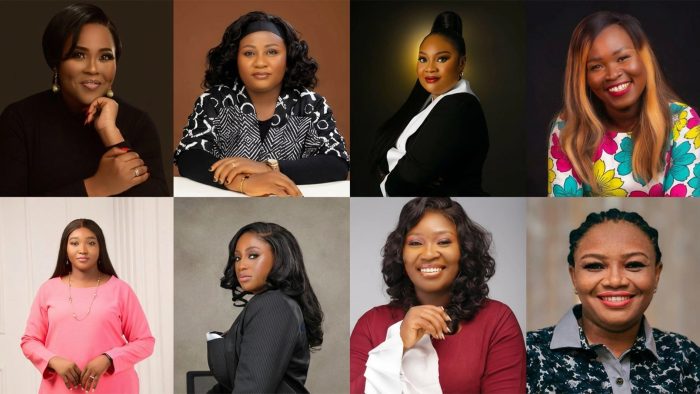
The role of women in any society cannot be overlooked. They play key roles as nurturers, builders and multipliers in their natural capacities coupled with driving and shaping the economic, political, and social spheres of a society. Women make up nearly half of the nation’s population, despite facing challenges like patriarchal norms, unequal rights, and limited access to resources. In this report, Nigerian women from diverse fields speak on changes they hope to see in 2026.
For Founder and Chief Executive Officer of Herconomy, Ife Durosinmi-Etti, Nigerian women are no longer asking for permission, they’re demanding access. Access to capital without degrading collateral requirements. Access to investment opportunities that aren’t scams dressed up as quick wins. Access to financial systems that see them as capable wealth builders, not charity cases.
“In 2026, women want economic stability they can actually plan around, not policies that shift overnight, erasing months of careful saving. They want legitimate investment vehicles offering real returns, not platforms that disappear with their money. They want financial education that respects their intelligence and addresses their unique challenges as business owners, mothers, and household managers.
“Beyond money, women seek peace of mind. The kind that comes from knowing an emergency won’t wipe out everything they’ve built. The kind that emerges when savings grow predictably and loans don’t come with impossible terms. They want authentic connections, communities of women building wealth together, not competing in artificial scarcity. They want personal growth that compounds: financial literacy leading to better decisions, better decisions building confidence, confidence creating generational change.
“Nigerian women don’t want handouts. They want what they’ve always deserved: fair access to the tools that build lasting wealth and unshakeable independence.”
Founder, Women in Leadership Advancement Network (WILAN), Abosede George-Ogan, said that Nigerian Women want a just and inclusive society where their needs are prioritised. “A key instrument in demonstrating that the nation prioritises women’s needs will be the passing of the Reserved Seats for Women Bill which is currently in the NASS as part of the ongoing constitutional amendment process.
“The passing of this bill will be a strong signal that Nigeria is serious about women’s political representation and by extension, serious about women’s well-being and economic prosperity.”
Executive Secretary Women in Successful Careers (WISCAR), Ekemini Akpakpan said, “in 2026, what women want is very simple, even though actualisation may not be easy. And this is where male allyship comes in, right? It’s time for men to recognise that they still hold disproportionate influence in places of decision-making. It’s time for them to recognise that they are the ones that experienced work life first.
“One of our popular male allies is the CEO of Sterling Bank, Mr. Abubakar Suleiman. I once heard him say that when the workplace was designed, it wasn’t designed with women in mind because women were not in the room at that time. It dates way back to the cradle of civilisation in Athens, when women were at home and men went out to vote in the assembly; that’s what it was called at that time.
“So, we need allyship because of this privilege that they have. We need them to use their influence to question outdated norms, to redesign systems, and make room consistently for women to thrive, not as a favour, but as a recognition that half of the population deserves to be considered in how the world works.
“So, for me, it’s very simple: in 2026, the systems need to recognise our lived realities as women. We want our competence recognised without having to suppress our humanity, our care responsibilities, our bodies, the seasons of our life. We need to realise that women come with all of this. And so, there is a need to design institutions and workplaces with us in mind, and not as an afterthought.”
Founder, Fohalep Academy Limited, Oluseyi Adolphus said women want representation in decision-making. “We want increased representation in leadership positions and decision-making, both in government and private sectors. It’s so important to me that women are given the opportunity to lend their voice.
“Also, access to finance. We want to see policies promoting affordable credit and financial inclusion that can help women-owned businesses thrive. I would also like to see affirmative procurement policies for Nigerian women, something like the implementation of policies that support women-owned businesses in public procurement. That can boost our economic participation.
“We want improved access to quality education. We have gradually moved from vocational training to digital training. So, access to quality education in the digital space can enhance the employability and competitiveness of women in the job market. And I say digital because as women, we have family responsibilities. So, I would like to see more job opportunities that are women and family-friendly, especially for the Nigerian woman.”
Executive Director, Ashake Foundation, Adegbile Mayowa stressed that women want systems that truly support them. “Every day, we work with widows, young women, and emerging entrepreneurs who are trying to build sustainable livelihoods. What they need isn’t pity at all. They need real assets, access to finance, to skills, to markets, to mentorship, and the confidence to grow.
“From government to policymakers, we want policies that are practical and measurable, especially around economic empowerment, education, healthcare, caregiving, and digital inclusion. Implementation matters. Women should feel the impact in their homes and businesses, not only hear it in speeches, on radio, or on social media. No, we need to feel it in our homes and in our businesses.
“Nigerian women simply want a country that recognises their contribution and makes it easier for them to thrive, to survive, to grow, to prosper, so that the next generation can do even so much more.”
For Co-founder Thirty32 Media and Communications, Dotun Soyemi she noted that women want an economy where earning more actually improves the quality of life. “A stronger, more stable currency is non-negotiable for economic planning and productivity. For businesses earning in naira but operating in a dollar-priced ecosystem particularly in media, technology, and creative industries, currency volatility undermines forecasting, savings, and growth. The expectation that everyone should simply “earn in dollars” is neither realistic nor equitable. What businesses and individuals need is macroeconomic stability that enables predictable planning.
“In parallel, Nigeria must move beyond policy rhetoric to execution. The country is saturated with well-intentioned frameworks especially those meant to protect and advance women, but weak, slow, and opaque implementation has rendered many ineffective. Outcomes should not require public outrage or social media pressure to trigger action. What is required is governance that delivers fast, fair, and transparent results.
In 2026, women need working emergency systems, reliable roads, quality healthcare, and genuinely accessible education. These should not feel aspirational or elite. A system that works would restore national pride and reduce the emotional and economic tax of daily life. Alongside these expectations from government, Nigerian women must also make a decisive move: take up space without waiting for permission or validation. Whether returning after a career gap, starting a business, or launching a long-delayed idea, this is the year to act.”
Executive Director, Beyond the Classroom Foundation, Raquel Kasham Daniel further informed that Nigerian women want safety and better healthcare, because without these two everything will become much harder, “women want to live in a Nigeria where we are protected from violence, discriminations and situations that put our lives at risks. We want communities where girls can walk to school safely, workplaces where harassment isn’t ignored and neighbourhoods where families and children are safe.
“Healthcare is a huge part of this. So many die from preventable illness and basically when they can’t get access to medical care. I believe Nigerian women want a society where hospitals are equipped, nurses and doctors are trained and available to attend to women’s maternal health, including affordability. Beyond this, Nigerian women want policies and programmes to help our businesses to grow, and opportunities for our voices to be included in decision making spaces.”
While founder, Blooming Amazons, Tolulope Tunde-Ajiboye said women want stability in fuel and dollar prices which aids women in managing and planning the home. She also wants the government to encourage local manufacturing and I want to see more women going into production, fashion and tech. “I want to see Nigerian brands thrive. Today, when you go on the red carpet, you see typically all the dresses including wedding dresses which are Nigerian made. In the past, when one is getting married you think of going to the foreign brands, but now you’re looking for a Nigerian fashion designer who can come up with something stunning.
“I would also like to see more women’s participation in governance, inclusivity, and also the boldness for women to come out to say, ‘I want to contest.’ 2027 is just around the corner. I’m hoping a lot of women will get into parties, get active in politics, and do it well. We also don’t want to do it dirty. We also don’t want to be a pain in the neck for the men so that they give us room to shine.
“Also, the film industry, we have seen a rise in women making blockbusters and earning from it, Funke Akindele’s had gotten about 1.4 billion, and Toyin Abraham’s about 700 million and even on YouTube, Bimbo Ademoye’s movie, is making waves. I like that women are playing in that space and they are making good movies. I’d like to see more women do more of that, and I also like to see the government supporting in that regard as well including private and public sector partnership, financing.”
