

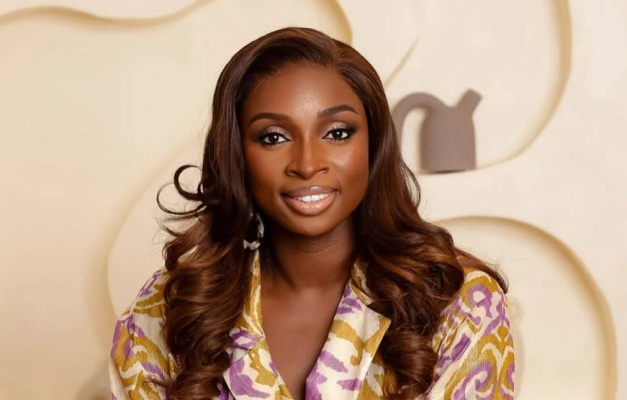
In a recent episode of the Life to a Teee podcast, Olumide Ayeni—the Nigerian rap titan known as Ghost of Show Dem Camp—joins host Tope Ajala for a candid masterclass on surviving today’s volatile Nigerian economy. Ayeni’s message to the modern creative is clear: “You have to diversify, because one income stream is not enough anymore.” This philosophy of multi-dimensional growth is the cornerstone of the podcast’s mission.
In an era where building wealth feels more daunting than a complex engineering exam, Life to a Teee pulls back the curtain on the “hushed realities” of success. The show offers more than just backstories; it provides a roadmap for maximizing potential while navigating the very real threats of burnout, career stagnation, and the mental health toll of life at the top.
The debut season features 11 episodes of deep-dive conversations with industry leaders. Whether exploring identity with Yetunde Bankole-Bernard, legacy with Show Dem Camp, or the intersection of marriage and ambition with Godwin Tom, the series is a masterclass in witty, relaxed, and high-impact dialogue. Underpinned by Tope Ajala’s extensive background—ranging from executive roles at FTSE-listed giants like WPP and UBS to her philanthropic work with Levelset and Saif Hands—the podcast stands as a definitive resource for the next generation of Nigerian mavericks.
Catching up with The Guardian, she welcomes us into her world where she’s driven to explore life to a T; piggybacking on her inspiration behind the show; detailing her perspectives on Africa Uninterrupted; and sharing her thoughts on how we can build a future that’s tailored for the progress of the Nigerian youth.
What were your strongest or core motivations in starting the podcast?
I’ve listened to thousands of podcasts over the years, and while you always walk away with something, I could never see myself in the people who were being interviewed. They were billionaires, and they were the same people—the Oprahs, the Bills of the world. They weren’t everyday, unsung heroes. And about 10 years ago, I created a company called Level Set, which was about connecting people to executives across the world and underrepresented talent across the world so that they could see themselves in the future of the country, the future of the world.
And that’s been successful. You know, it’s still going on, and I realised that that’s still a very small portion of people. How do we then give them access to people who are exactly like them: the executives, individuals, entertainers, doctors, lawyers, everyday people who are redefining what it means to be successful, and then also giving the next generation the blueprint of what success truly looks like? It’s not glittery, it’s not glamorous. You have to work hard. You’re going to miss birthdays, you’re going to miss weddings, you’re going to miss funerals. Are you willing to do all of this to become successful?
Because oftentimes we see social media as a space where everyone’s life is perfect, but the point of my podcast is to tell you and show people, especially the generation coming after us, that it’s not perfect. You might burn out, but how do we give you the tools to make sure that you become successful in any field that you choose, whether you want to become the MD of Sony, whether you want to become an aerospace engineer, whether you want to become an entertainer, what are the tools you need to actually become successful, and are you really committed?
So, you know, that was my biggest motivator, and I wanted to do it across the world, and I wanted to do featured specials in certain countries. So this season was heavily based in Nigeria because I’m Nigerian born and raised, and I lived in the UK most of my life. I’ve also lived in the US, and now I have been shuttling Lagos as well. I wanted people to see that it’s across the world. I want Nigerians to see themselves in the people, in my guests, and most of them are my friends, which makes it easier, because thankfully, I have a lot of hardworking, successful friends.
As someone who engages successful people and industry leaders, why do you think there’s so much of the opposite right now?
I think it’s twofold, right? The first reason is that there’s a lot of instability and generally a lot of poverty in the world. This is not to solely blame our government because I don’t want to do an entire season interviewing some of our government officials, but it’s our infrastructure. Our infrastructure is severely flawed.
We also have a generation and a population that is predominantly young. Think about the population of Nigeria. It’s predominantly under 30s, but the people in power are over 50 and over 60. So, on the voice of the young people and the ability to showcase that they can also have an impact in the country, I think we could do a better job there. I definitely think we could do a better job empowering that generation to realise that you guys are the future. You guys are the reason that the country will be successful. Like our generation—yes, they ran it, and I say “our” not me in my 50s—yes, they ran Nigeria, they controlled Nigeria. But actually, the youth is the future of Nigeria.
So, you know, one of the reasons we are seeing the opposite is that I genuinely don’t think they know that, and they’re not given the tools to become that. And that’s the driving force for me; I wanted people to see less of the glitter and the glam. Because one thing Nigeria has, and Nigerians have, and this is what I’ve noticed in my podcast: we have drive and ambition, but can we execute?
The difference between the people who are successful and the people who aren’t is: some people just say “I want to be successful” and don’t have the tools, don’t have the resources, don’t have the drive. And then for some, they do. In one of Godwin Tom’s episodes, we learned that Godwin’s father cleaned homes for rich people. And he was lucky to have someone like the boss that his dad worked for who saw something in him and took him under his wing. There are not that many people who take their workers under their wings. And I’m a big advocate of: if you’re going to have staff, make sure they leave your house with something. Make sure they leave your house with education. Make sure they leave your house with something so that they can then pour into their kids, right? So, they get to break the cycle.
I think there are two types of Nigeria that we see: one that is currently governed by a generation that needs to understand that the next generation requires them to hand over the baton of power, and also give them the skills in order to help fund the country. And then the second piece of it is: some people are lucky. Some people are born into wealth. Let’s call it what it is.
There is this phrase in your profile, “Africa Uninterrupted.” What inspired it?
I think ‘Africa Uninterrupted’ came as a result of people saying “Africa Rising.” A lot of people kept on saying Africa is rising. And I’m like, that sounds like we’ve been dormant and not doing anything. That sounds like we’ve been dormant and not fighting back. And the truth is, Africa is the superpower of the world. The world is only now realising it.
We think about Ghana and the influx of investments that have gone into Ghana. We think about Nigeria, the influx of people in the diaspora who are coming back. People are just opening their eyes. And I think if people need Africans to do what we know how to do right, then we become an uninterrupted country. We become an uninterrupted continent. We become the superpower that we truly are.
Our banking system is one of the best in the world. Believe it or not, Nigerians won’t believe it, but as someone who’s lived in multiple countries, our banking system is one of the best in the world. I can send you money and it will land in your account instantly. I can’t do that in the US. I cannot do that in the US. If I’m in London, they’ll tell me it’ll take four hours.
So one thing I’ve realised is that Africa solves African problems. And then you have people who bring international experiences to Africa, and that’s why I say: if you leave Africa alone, but you are invested, and you want to invest in the country, we will become something that has never been seen before, especially this generation to come. They are ambitious, they are educated, they are driven, and they are gaining education.
We are solving African problems for African people, and I think it’s only a matter of time until the world catches up.
In an era where everyone is rushing to make money as a social media creator. What are your thoughts on this shift, especially with its effect on the brain drain gap across other industries?
I’m a marketing executive. So, for me, I love the fact that it’s a creator-led economy. However, what I want to encourage people is: creators look very different, right? So you could be a creator in the medical field, educating people about the medical field. You could be a creator in the real estate field, educating people about the real estate field. You can actually be your own brand.
As a marketer, one of the trends we are seeing is brands investing in individuals, because you become the brand. So it’s easier for brands to invest in you because you’ve now amassed millions of followers. But for me, as a brand person, as a brand marketer, I’m looking at your ability to influence and help me grow my company.
So, yes, I love the creator-led economy because you ultimately have to be your own brand. But I want to preface this, and this is where people go wrong: you have to build something before you become your own brand.
You have to build. I can talk about the things I can talk about because I’ve worked in entertainment, I’ve worked in tech, I’ve worked in advertising, and I’ve worked in media for 15+ years. I’ve influenced millions of people all over the world via all the projects and programs, and things I’ve done. I have something to stand on.
What I’m finding right now with the creator economy is that people want to create with no real depth. And you actually need a little bit of depth and a little bit of knowledge in order to influence. You can’t just be a creator and not have real influence and impact, and that comes from having built something.
So one of the reasons the podcast was created was so that people can see that these people aren’t overnight successes. These are people who have worked, pivoted, changed, failed, succeeded, failed again, and now they’re all still building their brands. Some of them have, you know, 5,000 followers, but they manage a billion dollars in funds. Some of them have a million followers and they have less actual, tangible impact.
So we have to understand that the creator economy is fantastic because you have to learn how to build your own brand. But you also have to build something on your brand, or else it falls on nothing. And that’s the challenge, because social media tells us everything should be flashy, everything should be entertaining—and all of that is good. But you can literally be a creator or an influencer, if you want to call it that, by having actual expertise and knowledge.
Imagine if someone just did content on cars, and you wanted to become a mechanic. Who are you going to follow? The person creating content on cars, right? But it’s really important to understand the difference between your actual impact and just being a creator.
And as a creator, you’re a business. So as long as people see the creator economy as a business economy, then we’re going to see a thriving economy. If people are just creating because they want to eventually be seen, because they eventually want to become successful, and that’s where I find a lot of people fail, because there’s no strategy there. There’s no depth in what they’re building.
So with Life to a Teee right now, are you also exploring other content distribution formats apart from podcasts?
Yeah, the podcast has been going on for over a year. We’re hoping to do a live show in January next year. Currently working with different partners to see who wants to host us, partner with us, so we can—so people can have this experience in person.
I also understand—I would say to people—I understand my privilege, right? My privilege is the fact that I have people within my world who are willing to open their doors for me. And I have access to a lot of people who work really, really hard, and all I have to do is send out a message and say, “Hey, I would like to do this.” But I want to welcome people into that space. I don’t want it to just be people who know each other. I want people who are ambitious, who are driven, and who want to have access to these same people to come into the room and enjoy a live show.
Finally, what is the vision for Life to a Teee in the long run?
I think about my daughter. I have a two-year-old. If I weren’t here tomorrow, what would she search for about me? What would the internet say? Would it say I was silent during a crisis, or would it say I was loud? Would it say I stood up for something, or I stood up for nothing?
You know, Life to a Teee was birthed so that we can redefine success on our own terms. I don’t want a generation of burnt-out individuals, managers, or executives. I want people to know that if I want to become this, these are the steps I have to take to become that. But also, how do I balance it? How do I figure out what balance looks like—if I’m a man, if I’m a woman, if I’m a mother, or if I’m grieving? What does navigating success look like—truly? Not the Instagram one, not the TikTok one. What does redefining success with this generation look like?
And it’s really important for us to tell our stories. Only we can tell our stories. There’s a reason we all know, let’s say, Godwin Tom’s story. There’s a reason we all know Waje’s story. Seyi Tinubu. I want us to tell our stories before the world tells it. And if we don’t tell our stories, then when we pass on, no one will know what we built, why we built it, what we were doing. So Life to a Teee is how you live your Life to a Teee while redefining success.
